


When K-pop stars post snack hauls and your TikTok feed keeps showing you mysterious rice treats, it's time to dig deeper. Traditional Korean snacks aren't just aesthetic. They're a window into centuries of flavor, texture, and cultural meaning that modern viral trends only scratch the surface of.
What Is a Traditional Korean Snack?
A traditional Korean snack falls under the broader category of Hangwa, a general term for traditional Korean confections that use natural sweeteners like honey or grain syrup instead of refined sugar. These treats are deeply rooted in Korean cultural history, traditionally served during holidays, ancestral rites, and royal banquets.
Think chewy rice cakes, honey-soaked yakgwa cookies, crispy gangjeong puffs, and dried squid for the savory crowd.
The key ingredients include glutinous rice flour, honey, sesame oil, ginger, and chestnut, resulting in naturally sweet, nutty, and delicate textures. Traditional methods emphasize steaming for glutinous rice items and frying for snacks like yakgwa. These aren't your grab-and-go convenience finds. They're the kind of snacks grandparents still make by hand and serve with green tea on special occasions.
This guide covers history, taste profiles, and exactly where to find these snacks in the US, whether that's H Mart, Amazon, or your local Korean bakery, plus how they connect to viral Korean snacks and K-food trends.
Fair warning: I'm going to name a lot of specific snacks. Don't worry if you can't pronounce them. I'll walk you through each one with stories and descriptions that make the flavors obvious.
A Hanok Memory: How I Fell For Traditional Korean Snacks
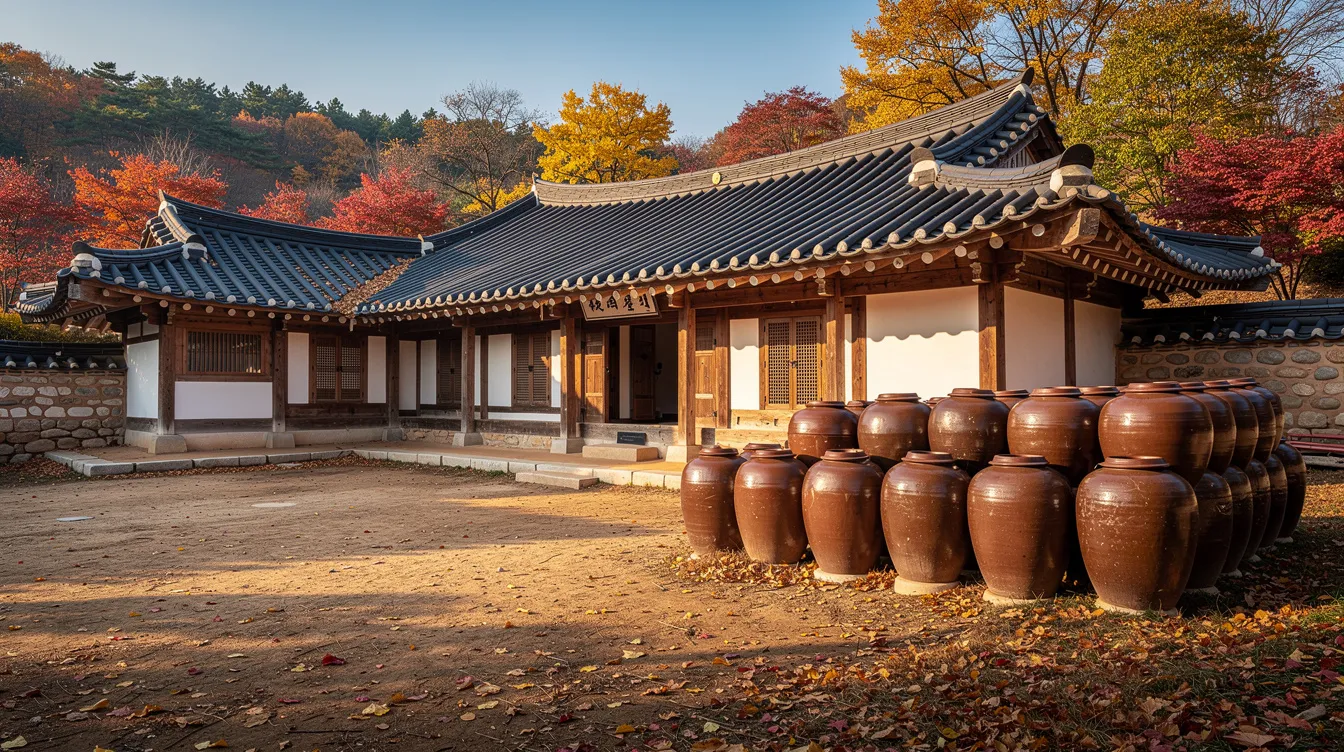
Around 2015, during a crisp early autumn weekend, I escaped Seoul for a retreat to a farmhouse in the Jeolla region. The property had been owned by the same family for over three generations: grandparents, their adult children, and a handful of energetic grandkids who treated me like an interesting curiosity.
The kitchen became my classroom. Outside, large clay fermentation jars lined the courtyard, holding doenjang and kimchi. Inside, the grandmother stood over a bubbling pot of yaksik while simultaneously frying yakgwa in fragrant sesame oil. The woodsy smell of pine mixed with honey and toasted rice. Kids ran in and out grabbing scorched rice shards while I sat cross-legged, sipping barley tea with tiny pressed cookies arranged on a wooden tray.
I remember warm rice puffs straight from the pan, slightly too hot but impossible to wait for. That weekend taught me that Korean snacks aren't just food. They're memory, ritual, and family compressed into every bite.
Many of those same snacks now show up neatly boxed at H Mart, and the flavors still take me right back.
Classic Rice-Based Snacks: Chewy, Sticky, Completely Addictive
Glutinous rice flour and steamed rice form the backbone of traditional Korean snacks. The signature chew comes from high amylopectin starch content. Tteok, the umbrella term for rice cakes, is central to Korean life milestones, appearing at birthdays, weddings, and ancestral ceremonies.
You'll find most of these at Gwangjang Market in Seoul, at major chains like E-Mart, and at Korean supermarkets in the US.
Songpyeon: Half-Moon Rice Cakes For Chuseok
Songpyeon is a type of Korean rice cake traditionally eaten during Chuseok, the mid-autumn festival. These small, steamed beauties get their subtle foresty aroma from being cooked over pine needles, a technique dating back to the Goryeo dynasty.
Fillings range from sesame-sugar to sweet red bean paste or chestnut. The night before Chuseok, families gather to shape songpyeon together. Folklore says making pretty ones predicts beautiful children and good fortune.
For US readers, the texture is pleasantly chewy with a light, earthy sweetness. Much less sugary than typical American desserts. Look for frozen songpyeon in H Mart freezers, often sold in assorted pastel colors.
Yaksik: Sticky "Medicine Rice" Studded With Nuts And Jujube
Yaksik literally translates to "medicinal food." This glutinous rice snack combines sugar or honey with soy sauce and sesame oil, studded with chestnuts, pine nuts, and dried jujube. The jujube adds a caramel-like fruity sweetness that balances the savory elements.
Traditionally eaten during Jeongwol Daeboreum (the first full moon of the lunar year), yaksik now appears year-round in Korean bakeries. The taste hits like a cross between sticky rice pudding and a chewy granola bar, cooked down until glossy.
At the farmhouse, I ate a still-warm square wrapped in parchment as a mid-afternoon snack. It remains one of my favorite Korean food memories.
Gangjeong: Crispy Rice Puffs For Celebrations
Gangjeong is a sweet rice puff snack that resembles modern rice crispy treats, often filled with nuts, seeds, or dried fruits. The process involves frying or puffing rice, then binding it with thick syrup made from honey, malt, or rice syrup.
Korean gangjeong tends to be lighter and less greasy than similar snacks, with a toasty rice aroma. Find rectangular cuts at Namdaemun Market or gift-boxed versions at department stores. At H Mart, look for "gangjeong" or "rice puffs" in the traditional snack aisle. Some brands are less sweet and pair wonderfully with coffee or tea.
Ppeongtwigi: Old-School Korean Pop Rice
Ppeongtwigi is dramatic street theater turned snack. Plain rice or wheat grains get sealed in a pressure drum and blasted at up to 200°C, exploding into large, light disks with a satisfying bang. This was a 1980s and 1990s street staple, and older Koreans remember waiting for the traveling vendor with the popping machine.
At the farmhouse, the grandfather kept a tin of ppeongtwigi as his TV snack. The taste is barely sweet, just toasty and neutral. US readers can find bagged "Korean popcorn" labeled ppeongtwigi at Korean markets. Great with peanut butter, chocolate spread, or cream cheese.
Nurungji: Scorched Rice You Actually Want To Eat
Nurungji is the crunchy golden crust that forms on the bottom of a traditional rice pot. What started as a by-product became a beloved snack. At the farmhouse, the grandmother scraped the pot, broke it into shards, and sprinkled sugar on top for us to nibble like crackers.
Koreans also steep nurungji in hot water or roasted barley tea to make a mild, toasty drink served after meals. Modern nurungji comes as pre-toasted rice discs in markets, staying crispy for days. Try it as a crunchy topping on soup or salads, or dip pieces into honey for a simple dessert.
Nongshim Ugua Rice Crunch Snack
For a modern twist on rice-based snacking, Nongshim Ugua rice crunch offers that same satisfying crispy texture in a convenient packaged format. These light, airy puffs come in multiple flavors, from classic savory to lightly sweet, making them accessible for newcomers and nostalgic for those who grew up with traditional rice puffs.
Available at most H Mart locations and online. The texture stays crispy without being heavy, making it easy to eat by the handful while binge-watching your favorite K-drama.

Tea-Time Bites: Cookies Your Korean Grandma Would Serve
Traditional "cookies" in Korea are delicate, not-too-sweet, and designed for pairing with tea, whether green tea, barley tea, or grain teas. At the farmhouse, the grandmother set out a wooden tray with tea and neatly arranged bite-sized cookies on the warm floor.
Many tea snacks are tied to ceremonies, holidays, and ancestral rites. The same sweets used to honor ancestors at Jesa gatherings get enjoyed casually with afternoon tea. Traditional Korean snacks prioritize health and natural aesthetics, often shaped like flowers or fruits.
Yakgwa: Honey Cookies With A Medicinal Name
Yakgwa is a traditional Korean honey cookie made with flour, honey, and sesame oil, often shaped like flowers and historically associated with health benefits. The name breaks down to "yak" (medicine) and "gwa" (sweet treat), reflecting old beliefs about honey's restorative properties.
The texture is dense, chewy-crumbly, and honey-forward with ginger warmth and sesame aroma. A few pine nuts typically garnish the top. Traditional methods involve deep-frying wheat dough in sesame oil before soaking in a syrup of honey, ginger, and rice wine.
At the farmhouse, the grandmother kept a tin of homemade yakgwa served with roasted barley tea. US readers can find individually wrapped packs trending at H Mart and on Amazon. Warming one briefly in the microwave helps soften the texture.
Dasik: Tiny, Pretty Tea Press Cookies
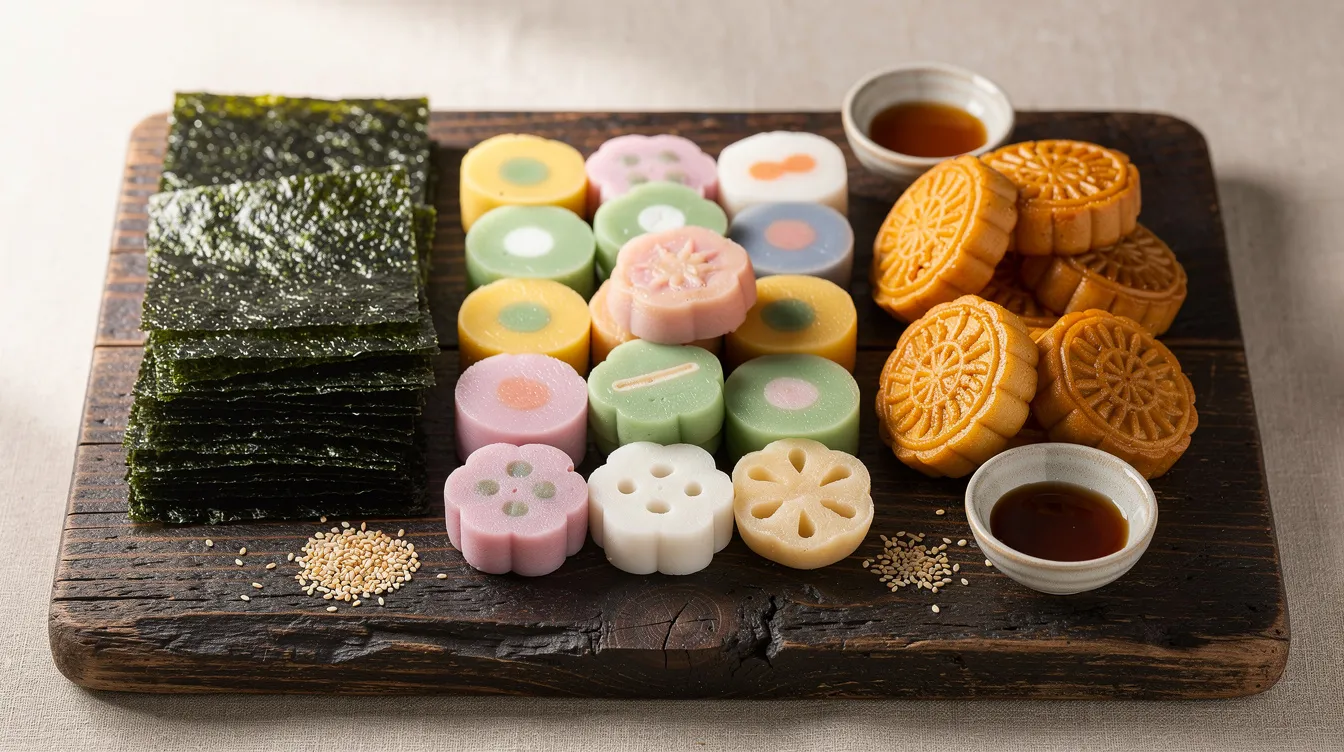
Dasik are small pressed cookies made from finely ground black sesame, chestnut, or soybean mixed with honey. They're shaped using specialized wooden molds carved with flower, crane, or geometric patterns.
The result is beautifully muted tones, black, cream, pale green, arranged on special tea trays. The flavor is delicate, slightly powdery, and lightly sweet. At the farmhouse, dasik appeared when an elderly neighbor visited. A sign of respect.
These can be harder to find in the US. Check Korean bakery counters or seasonal lunar new year gift sets.
Hwajeon: Flower Pancakes For Spring Picnics
Hwajeon, or flower cake, is made with glutinous rice flour and prepared with edible flower petals. Many traditional Korean snacks reflect seasonal eating, with specific snacks tied to each season. Azaleas and cherry blossoms in spring, chrysanthemums in autumn.
At the farmhouse during spring, the granddaughter picked petals from the yard while the grandmother dotted them onto sticky white disks sizzling in a honey-glazed pan. The taste is slightly crisp at the edges, chewy in the center, with faint floral notes.
US readers can make hwajeon at home using rice flour and safe edible flowers. Much smaller and chewier than Western brunch pancakes.
Street-Style Snacks With Deep Traditional Roots
Korean street food often blurs the line between "modern" and "traditional." Many hot snacks sold at carts in Myeongdong or Hongdae have roots that grandparents recognize. For a broader look at must-try Korean street food dishes, including modern twists like corn dogs and tornado potatoes, there's a whole world beyond the classics.
Hotteok: Molten Sugar Pancakes For Cold Days
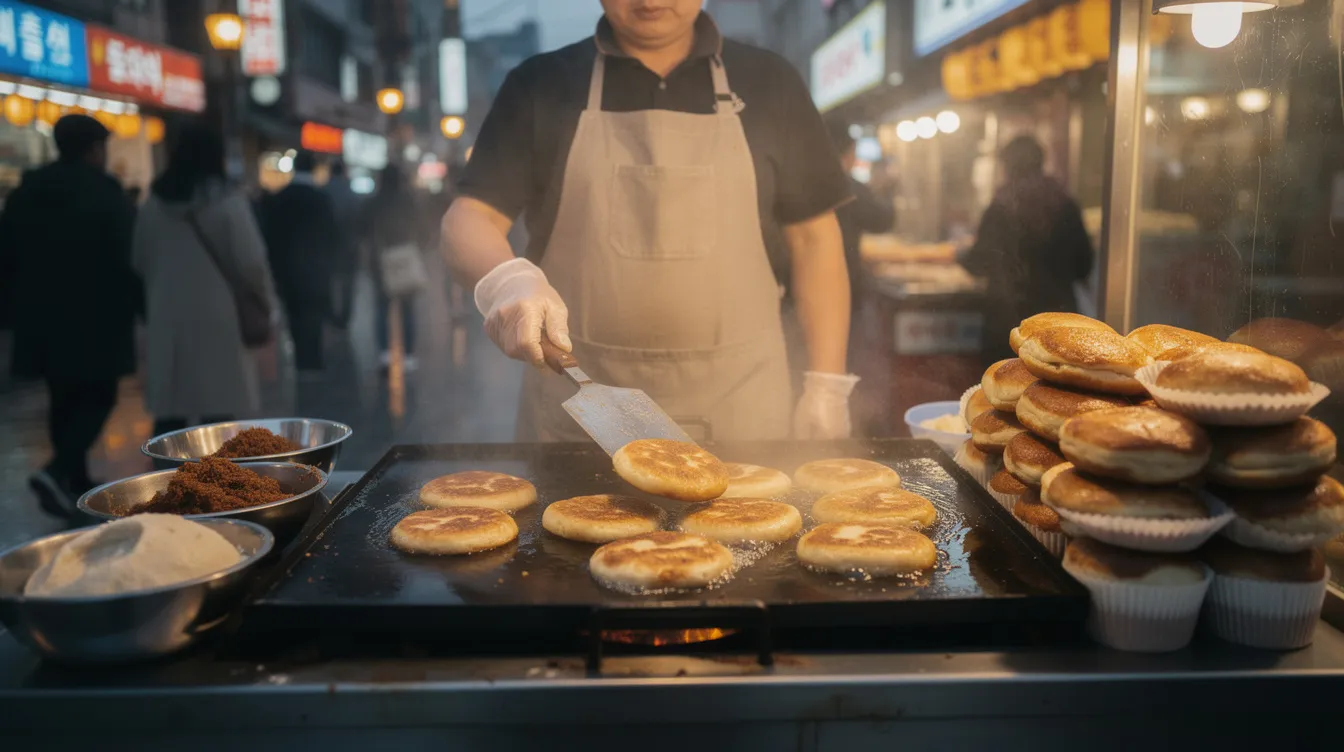
Hotteok is a popular Korean street food that consists of sweet pancakes filled with a mixture of brown sugar, nuts, seeds, and cinnamon, which becomes molten and sticky when cooked. Often described as a cross between a doughnut and a pancake, it's a winter staple.
The brown sugar filling liquefies on the griddle, creating a gooey center with crispy edges. Busan's famous version at BIFF Square adds extra crunch with sunflower seeds and nuts. US readers can find hotteok box mixes at Korean supermarkets and on Amazon.
Tteokbokki: Spicy Chewy Rice Cakes You See Everywhere
Tteokbokki is made from chewy rice cakes cooked in a spicy and sweet sauce, often including fish cakes and vegetables. If you're curious why many Koreans consider tteokbokki the true king of street food, its mix of nostalgia, comfort, and bold flavor tells the whole story.
The flavor profile hits like bouncy pasta in a sweet barbecue-spiced sauce. At the farmhouse, kids begged for the town's tteokbokki stand, though the grandmother made a milder version at home.
If you're more of an instant-food person, a guide to the best instant tteokbokki brands can help you pick your first box. There's even a step-by-step vegan tteokbokki recipe that keeps all the chew and spice without the fish cakes.
Gimbap: The Original Korean Snack Roll
Gimbap is a savory snack made from cooked short grain rice wrapped in seaweed, typically filled with vegetables and sometimes meat or seafood. Unlike sushi, gimbap uses sesame oil and salt rather than vinegar, with bolder cooked fillings like kimchi, bulgogi, or tuna-mayo.
It also happens to be one of the most classic side dishes to eat with tteokbokki.
For temple day trips, the farmhouse family woke early to roll gimbap, and a box of warm, fresh slices became the ultimate road-trip snack. Seek out corner gimbap shops in Korean neighborhoods or grab pre-packed trays in H Mart's refrigerated section.
Bungeoppang & Gukhwappang: Cute Filled Breads
Bungeoppang are fish-shaped cakes traditionally filled with sweetened red bean paste. Chrysanthemum bread offers a flower-shaped cousin. Both resemble Japanese taiyaki but have held their own cultural place in Korea since the 1930s.
Crisp bread outside, soft and warm inside, with fillings ranging from red bean to custard, sweet cream cheese, or peanut paste. Find them near subway stations and school gates. At the farmhouse, these were "town treats," rewards for kids after market days.
Bungeoppang presses are sold online for US home bakers who want to make that cute shape at home.
Eomuk: Fishcakes On A Stick In Steaming Broth
Eomuk skewers ground fish paste simmered in hot broth seasoned with radish, kelp, and pepper. The street stall experience means grabbing a skewer, sipping free soup from paper cups, and standing huddled with strangers on a cold evening.
Busan is Korea's answer to fishcake heaven. Eomuk works as a snack alone or mixed into tteokbokki and stir-fries. US readers can find refrigerated fish cake packs at Korean grocery stores. Eomuk soup makes a cozy home snack on cold nights.
Salty, Chewy Bar Snacks: Dried Squid, Gim, And More
Not all traditional snacks are sweet. Some are salty, umami-rich, and perfect paired with beer or makgeolli. These snacks have become increasingly popular among health-conscious younger people for their protein and minerals.
Dried Squid: Korea's Answer To Beef Jerky
Dried squid is shredded, seasoned squid dried until chewy, sometimes lightly grilled before eating. The typical serving involves tearing strips and dipping in mayonnaise mixed with gochujang.
The flavor is salty, smoky, with pronounced seafood aroma. Intense for newcomers, but highly addictive. At the farmhouse, the grandfather slowly chewed dried squid while watching evening news.
Try smaller packs from H Mart labeled "seasoned dried squid." Toast briefly in a dry pan to soften and enhance the savory flavor.
Gim: Crispy Roasted Seaweed Sheets
Gim is thin seaweed brushed with oil and salt, roasted until crispy. It works as a snack straight from the pack and as a component of other foods: wrapping rice, making gimbap, topping ramyun.
At the farmhouse, kids grabbed hot rice, formed little balls, and wrapped them in gim as a quick salty bite before dinner. Low-calorie, high in minerals and iodine. Flavored varieties include olive oil, sesame, and wasabi. Seal packs carefully because humidity kills the crunch fast.
Where To Find Traditional Korean Snacks In Korea And The US
Not everyone can fly to Seoul tomorrow, but many traditional snacks are now surprisingly accessible. In Korea, traditional markets overflow with demos and fresh snacks. Try Gwangjang Market, Namdaemun in Seoul, or Nambu Market in Jeonju.
For US readers:
H Mart stocks ppeongtwigi, yakgwa, gangjeong, and tteokbokki kits in traditional aisles
Amazon carries viral packs and specialty items searchable by name
Korean bakeries offer fresh dasik and seasonal treats
K-pop concerts, KCON, and university Korean student events often feature traditional snack vendors
Start small. Maybe yakgwa and gim this week, then graduate to dried squid, honey butter chips (yes, those famously addictive Korean honey butter chips), and DIY hotteok. Each bite is an easy, delicious way to explore Korean culture beyond K-dramas.
FAQs About Traditional Korean Snacks
What are traditional Korean snacks made of?
Traditional Korean snacks often use natural ingredients like glutinous rice flour, honey, sesame oil, chestnuts, and ginger. These ingredients create chewy, nutty, and subtly sweet flavors that distinguish them from Western snacks.
Are traditional Korean snacks healthy?
Many traditional Korean snacks use natural sweeteners like honey and wholesome ingredients, making them generally healthier than processed snacks. Some, like yakgwa, have historical associations with health benefits.
Where can I buy traditional Korean snacks in the US?
You can find them at Korean supermarkets like H Mart, online retailers such as Amazon, and specialty Korean bakeries. Some snacks also appear at Korean cultural events and K-pop concerts.
How are traditional Korean snacks typically enjoyed?
These snacks are often paired with tea during family gatherings, holidays, and ancestral rites. They're also popular as street food or casual bites, enjoyed across generations from grandparents to young people.
Can I make traditional Korean snacks at home?
Yes. Many traditional snacks like hotteok, songpyeon, and yakgwa have recipes available online. Some Korean supermarkets sell ready-made mixes to help beginners recreate these treats at home.

