


Quick Summary
Korean snacks offer something most packaged snacks don't: bold flavor from real food ingredients. Roasted seaweed, dried persimmon, sweet potato chips. These come from a culinary tradition built around rice, seaweed, legumes, and root vegetables. Traditional preparation methods like fermentation, dry-roasting, and sun-drying concentrate flavor while preserving nutrients.
Korean snack culture also draws on ingredients like gochugaru, sesame seeds, and perilla oil that create depth without the processed shortcuts common in Western packaged snacks. Browse more at Korean food, ramyun & snacks. For context on why this matters: South Korea has a 13.7% obesity rate compared to 42% in the United States.
Every snack on this list has meaningful protein or fiber content, stays under 150 calories per serving, contains minimal added sugar, and is available through Amazon with Prime shipping.
If you just want to indulge without caring about nutrition, check out the full Korean snack review.
How We Chose the Best Healthy Korean Snacks
Every snack on this list meets practical standards. Nutritional value came first. Snacks needed to offer genuine health benefits through fiber, protein, or micronutrients rather than empty calories. Authentic Korean flavors mattered equally, meaning traditional seasonings like doenjang, gochujang, or sesame rather than generic imitation profiles.
Ingredient quality required non-GMO certifications where available and minimal processing. Dry-roasting and baking took priority over frying. Amazon availability with consistent stock and high ratings (4.5+ stars) ensured practical purchasing. Price stayed reasonable at $1-3 per ounce.
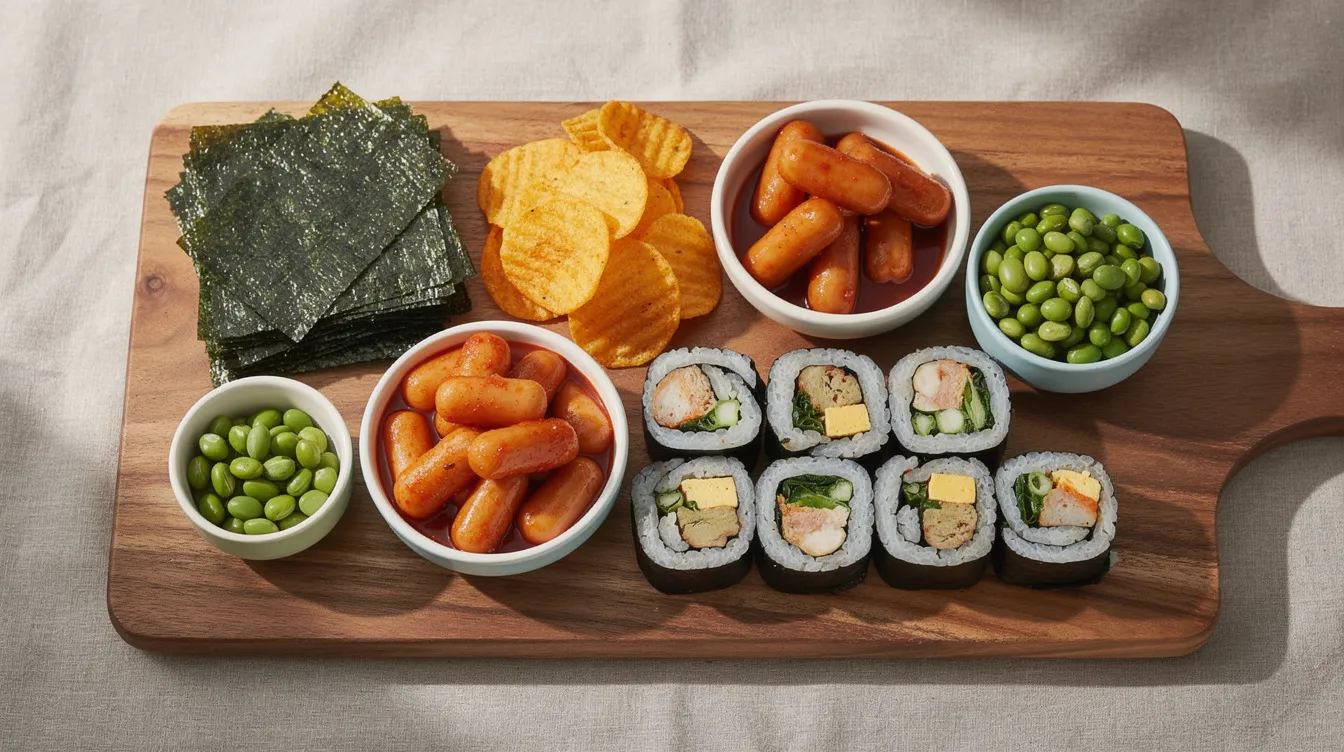
Top 7 Healthy Korean Snack Foods to Buy
1. Roasted Seaweed Snacks (Kim)
Roasted seaweed snacks, called kim or gim in Korean, are ultra-thin sheets of Porphyra seaweed seasoned with sesame oil and sea salt. This classic snack has been a Korean staple since the Goryeo Dynasty, when seaweed farming first developed along coastal regions.
Why It Stands Out: At just 5-10 calories per sheet, roasted seaweed delivers a satisfying crunch with virtually no calorie impact. Each serving provides 20-50% of daily iodine needs for thyroid health, along with 1-2g of plant-based protein and trace omega-3s.
Best For: Anyone seeking a low-calorie savory option to curb hunger between meals. Good for weight loss goals or simply reducing overall snacking calories.
Key Strengths:
- High mineral content including iodine, iron, and calcium
- Minimal processing with just the right amount of oil
- Natural umami from glutamates, no artificial flavor enhancers needed
Possible Limitations: Sodium content runs 100-200mg per pack (around 10% daily value). Not everyone takes immediately to the oceanic taste, though milder varieties like Annie Chun's Organic Seaweed ease the transition.
2. Brown Rice Cakes (Nurungji Snacks)
Nurungji originated as the crunchy rice crust scraped from cooking pots in Korean households, a practical way to avoid wasting food that became beloved for its toasted flavor. Modern nurungji snacks transform this tradition into puffed brown rice cakes with Korean seasonings.
Why It Stands Out: The whole grain base provides 3-4g fiber per 30g serving with a low glycemic index under 55. Korean seasoning profiles like gochujang or perilla distinguish these from generic rice cakes.
Best For: Those wanting a filling snack that satisfies without gluten concerns. The substantial crunch works well as a base for toppings or eaten plain.
Key Strengths:
- Sustained energy without blood sugar spikes
- B-vitamins from unhulled rice
- Pairs well with nut butter or cottage cheese for extra protein
Possible Limitations: Calorie density adds up quickly at 250 calories per handful if portion control slips. The dense texture doesn't suit everyone.
3. Korean Roasted Chickpeas (Kong-namul Twigim Style)
Korean-style roasted chickpeas take inspiration from kongnamul twigim (fried soybean sprouts) but use dry-roasted garbanzo beans coated in gochugaru, garlic, and sesame. The result delivers high protein with authentic Korean spice complexity.
Why It Stands Out: Each 28g serving provides 6-8g protein and 5g fiber, making this one of the most substantial healthy packaged snacks available. Research in the Journal of Nutrition shows legume-based snacks reduce hunger by 31% compared to processed alternatives.
Best For: Protein seekers and anyone wanting a snack that genuinely fills the gap until the next meal. Athletes and those focused on muscle maintenance benefit most.
Key Strengths:
- Plant-based protein that rivals beef sticks
- Anti-inflammatory properties from Korean spice blends
- Satisfying crunch without deep-frying
Possible Limitations: Calorie density at 150 cal/oz requires mindful portioning. Some experience digestive discomfort from oligosaccharides. Starting with small amounts helps.
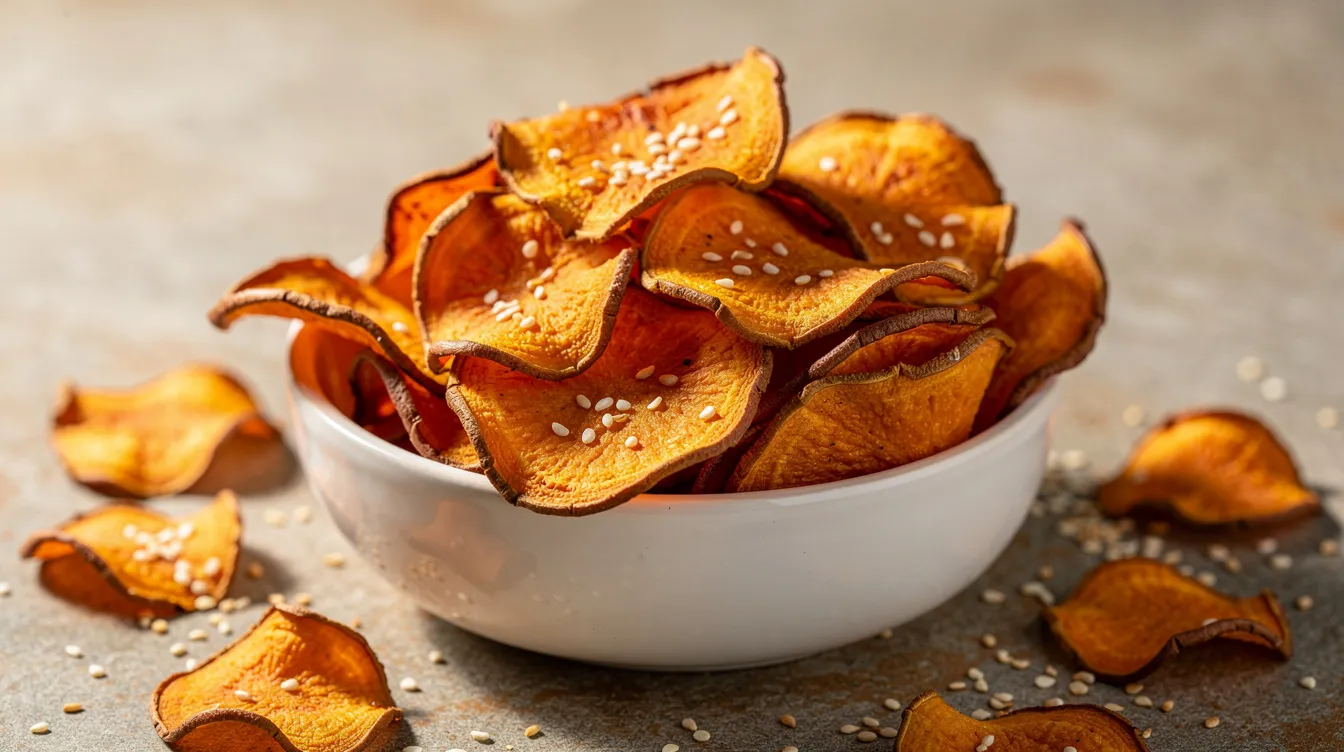
4. Baked Sweet Potato Chips (Goguma Chips)
Korean sweet potatoes have appeared in Korean cooking since the Three Kingdoms era, prized for their natural sweetness. Modern Korean snack culture also leans into sweet-savory flavors with icons like honey butter chips from Korea. Goguma chips slice these thin and bake them without added sugar, creating crispy disks that satisfy a sweet craving without processed sweeteners.
Why It Stands Out: Natural beta-carotene reaches 15,000 IU per serving (300% daily vitamin A needs), supporting immunity while delivering 4g fiber. The sweetness comes entirely from the potato itself.
Best For: Those craving sweet snacks without artificial additives or sugar crashes. A great option for school lunches or afternoon energy dips.
Key Strengths:
- Antioxidants including anthocyanins
- Genuine satisfying crunch at 120 calories per ounce
- No added sugars needed to feel indulgent
Possible Limitations: Natural sugars (10g/serving) can encourage overeating. Seasonal availability varies depending on harvest timing.
5. Mixed Nuts with Korean Seasoning (Ttangkong Mix)
Traditional Korean nut markets like Seoul's Gwangjang have sold seasoned nut mixtures for generations. Modern ttangkong mixes combine roasted peanuts, almonds, and walnuts with flavors like wasabi, honey-butter, or gochujang for distinctive Korean character.
Why It Stands Out: Healthy fats dominate at 15g monounsaturated per ounce, supporting heart health. The complex Korean seasoning sets these apart from generic trail mix.
Best For: Those prioritizing healthy fats. Ideal for keto approaches or anyone needing sustained energy. Works as a portable protein bar alternative.
Key Strengths:
- Vitamin E and sustained energy release
- 5-7g protein per serving
- Authentic Korean flavor complexity unavailable in most store-bought snacks
Possible Limitations: At 170 calories per ounce, portion awareness matters. Allergen concerns apply for those avoiding tree nuts or peanuts.
6. Dried Persimmon (Gotgam)
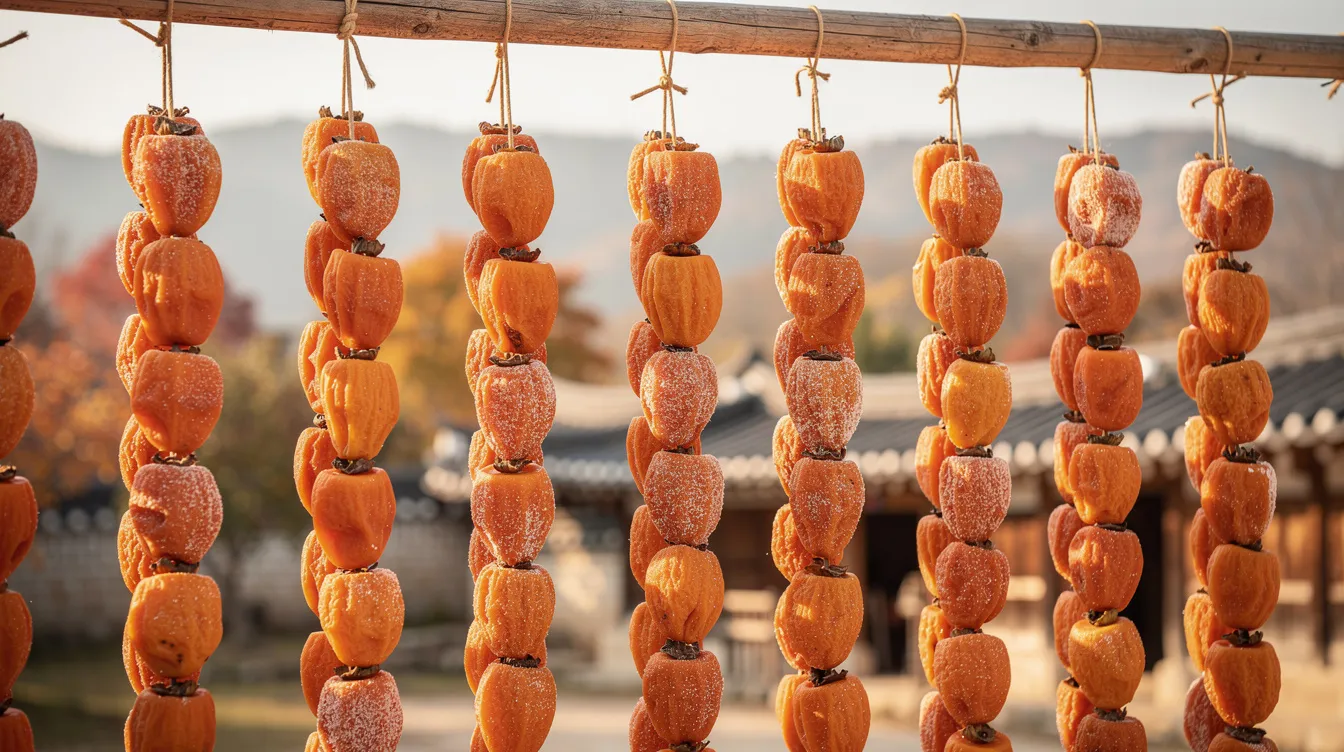
Gotgam requires astringent Korean persimmons hung to air-dry for 2-3 months. The process concentrates natural sugars while developing a chewy, almost caramel-like texture that's fundamentally different from freeze-dried fruit.
Why It Stands Out: This delivers 6g fiber and polyphenol antioxidants that rival blueberries. Traditional preparation for the winter solstice (dongji) makes gotgam culturally significant beyond nutrition.
Best For: Those seeking traditional Korean sweets with real health benefits. A good replacement for granola bars or other sweetened packaged snacks.
Key Strengths:
- Natural sweetness without processing
- Antioxidant levels comparable to berries
- Chewy texture offers variety from crunchy snacks
Possible Limitations: Natural sugar concentration means moderation matters. Seasonal scarcity can affect availability and pricing.
7. Multigrain Rice Crackers (Japgokbap Crackers)
Japgokbap philosophy, eating nine grains together for complete nutrition, extends to these crackers combining rice, barley, beans, and other traditional Korean grains. Baking creates light, crispy results with sustained energy release.
Why It Stands Out: Multiple whole grain sources provide 4g fiber with a good balance of complex carbohydrates. The low glycemic index (50-60) prevents the energy spikes and crashes common with white rice alternatives.
Best For: Anyone wanting carbohydrate complexity that reflects authentic Korean eating philosophy. A personal favorite for adding crunch to plain yogurt.
Key Strengths:
- Grain diversity supports microbiome health
- Sustained energy without insulin spikes
- Traditional Korean grain combinations
Possible Limitations: Higher price point around $2/oz reflects ingredient quality. Complex texture may challenge those preferring simpler crackers.
Quick Comparison of the Best Healthy Korean Snacks
|
Snack |
Best For |
Calories |
Standout Benefit |
|---|---|---|---|
|
Roasted Seaweed |
Low-calorie savory cravings |
5-10/sheet |
Iodine + minerals |
|
Brown Rice Cakes |
Gluten-free filling crunch |
100-120/oz |
Whole grain fiber |
|
Roasted Chickpeas |
High protein needs |
150/oz |
6-8g protein |
|
Sweet Potato Chips |
Natural sweet crunch |
120/oz |
Beta-carotene |
|
Mixed Nuts |
Healthy fats focus |
170/oz |
Sustained energy |
|
Dried Persimmon |
Traditional antioxidants |
100/piece |
Polyphenols |
|
Multigrain Crackers |
Complex carbs |
110/oz |
Multi-grain sustain |
How to Choose the Right Korean Healthy Snack
Choose Based on Flavor Preference
Savory umami lovers gravitate toward roasted seaweed and gochugaru-seasoned chickpeas. Sweet preferences align with goguma chips and gotgam. Nutty complexity suits ttangkong mixes.
Think about what you're trying to replace. Chips? Seaweed. Cookies? Sweet potato or persimmon. Energy bars? Chickpeas or nuts. The flavor profile determines whether a snack actually satisfies.
Choose Based on Nutritional Goals
Match snacks to what you're actually trying to achieve. Protein seekers benefit most from roasted chickpeas (6-8g) or mixed nuts (5-7g), comparable to hard-boiled eggs or chicken breast portions. For extra substance, the instant tteokbokki options are worth bookmarking for when you want something more filling. Fiber goals align with rice cakes, persimmon, or multigrain crackers (4-6g each).
For weight loss, seaweed offers maximum satisfaction per calorie. Heart health aligns with olive oil-roasted nuts. When spicy cravings hit, knowing which tteokbokki noodle brand delivers helps you plan more intentional indulgences.
Choose Based on Cultural Experience Level
Korean food newcomers start best with seaweed (familiar crunch) or sweet potato chips (universal appeal). Both introduce Korean preparation methods you'll also encounter in classic Korean street food dishes.
More adventurous eaters can explore gotgam's unique texture or gochugaru-spiced chickpeas. Japgokbap crackers suit those already comfortable with Korean grain philosophy.
Which Korean Healthy Snack Is Best for You?
Choose roasted seaweed if: You need something under 50 calories that satisfies savory cravings. It replaces air-popped popcorn for Korean flavor.
Choose brown rice cakes if: Gluten concerns matter and you want substantial whole grain crackers with staying power.
Choose roasted chickpeas if: Protein goals exceed 5g per snack and you enjoy bold spice. This beats most store-bought protein bar options.
Choose sweet potato chips if: You crave sweetness but avoid added sugar. Natural beta-carotene adds health benefits most snacks don't have.
Choose mixed nuts if: Healthy fats drive your snacking decisions or you follow keto-aligned eating.
Choose dried persimmon if: Traditional preparation and antioxidant content matter more than convenience. Rivals dried cranberries for natural sweetness.
Choose multigrain crackers if: Complex carbohydrates and Korean grain philosophy appeal to you.
Final Thoughts
Korean healthy snacks deliver what most packaged snacks promise but rarely achieve: genuine flavor from real food ingredients with meaningful nutritional value. The hanjeongsik tradition in Korean food is all about eating a variety of foods in balance. That extends into snacking culture, creating options that support healthy habits rather than working against them.
Availability has expanded significantly. Amazon carries authentic Korean brands accessible worldwide. Start with one that matches your immediate cravings, then expand from there.

