


If you love tteokbokki but always feel like something's missing when you eat it solo, you're not alone. In Korea, those chewy rice cakes swimming in spicy sauce are almost never eaten by themselves. After nearly a decade living in Seoul, I can tell you that the magic happens when you build a spread around that bubbling pan of korean street food.
Quick Answer: The Best Things To Eat With Tteokbokki
The best things to eat with tteokbokki are fish cakes in broth (eomuk-guk), mixed twigim (korean tempura), kimbap, boiled eggs, mandu, ramyun noodles, kimchi, and fried chicken. These pairings balance the chewy, spicy korean rice cake with crunch, protein, and something soothing to sip.
- Eomuk-guk (fish cake soup) – Clear anchovy broth with skewered korean fish cake provides a savory, warm relief from the spiciness of tteokbokki.
- Mixed twigim – Assorted fried snacks like sweet potato, gim-mari (seaweed-wrapped glass noodles), squid rings, and vegetable pieces. These crispy fried foods soak up the tteokbokki sauce and add a delightful crunch.
- Kimbap – Seaweed rice rolls that act as a neutral palate cleanser and are perfect for dipping directly into tteokbokki sauce.
- Boiled eggs – Simple protein that absorbs the tteokbokki sauce without overpowering the flavors.
- Mandu – Steamed or pan-fried dumplings for a juicy bite.
- Ramyun – Instant noodles cooked directly in the sauce (rabokki) for a heartier meal.
- Kimchi – Fermented cabbage that complements tteokbokki, as the starch from the rice cakes offsets the sourness of the fermented cabbage.
- Korean fried chicken – Sticky yangnyeom chicken for a full meal.
- Soondae – Korean blood sausage traditionally dipped in tteokbokki sauce, adding a rich, savory element.
- Tofu – Often fried or mixed in with the rice cakes and sauce, tofu is a popular protein-rich side dish.
- Danmuji – The most common pickle served with tteokbokki, offering a sweet, tangy, and crunchy contrast.
- Mozzarella or cheddar cheese – Adding a slice or shreds helps reduce the spiciness and adds a creamy texture.
- Sweet drinks – Carbonated peach drinks or banana/melon milk are popular choices to ease the spiciness of tteokbokki.
These aren't random suggestions. They're what I consistently saw at pojangmacha (street tents) and tteokbokki shops across Seoul from 2012 to 2018. The rest of this article breaks these into categories: crunchy sides, soups, fresh banchan, carbs, proteins, and drinks.
Read the complete Korean tteokbokki guide here if you're interested in trying today!
How Tteokbokki Is Usually Eaten in Korea
In Korea, tteokbokki functions as a shared snack or quick meal rather than a solo dish. You'll typically find two or three people gathered around a single bubbling pan, picking at the chewy rice cakes while other Korean dishes rotate around the table.
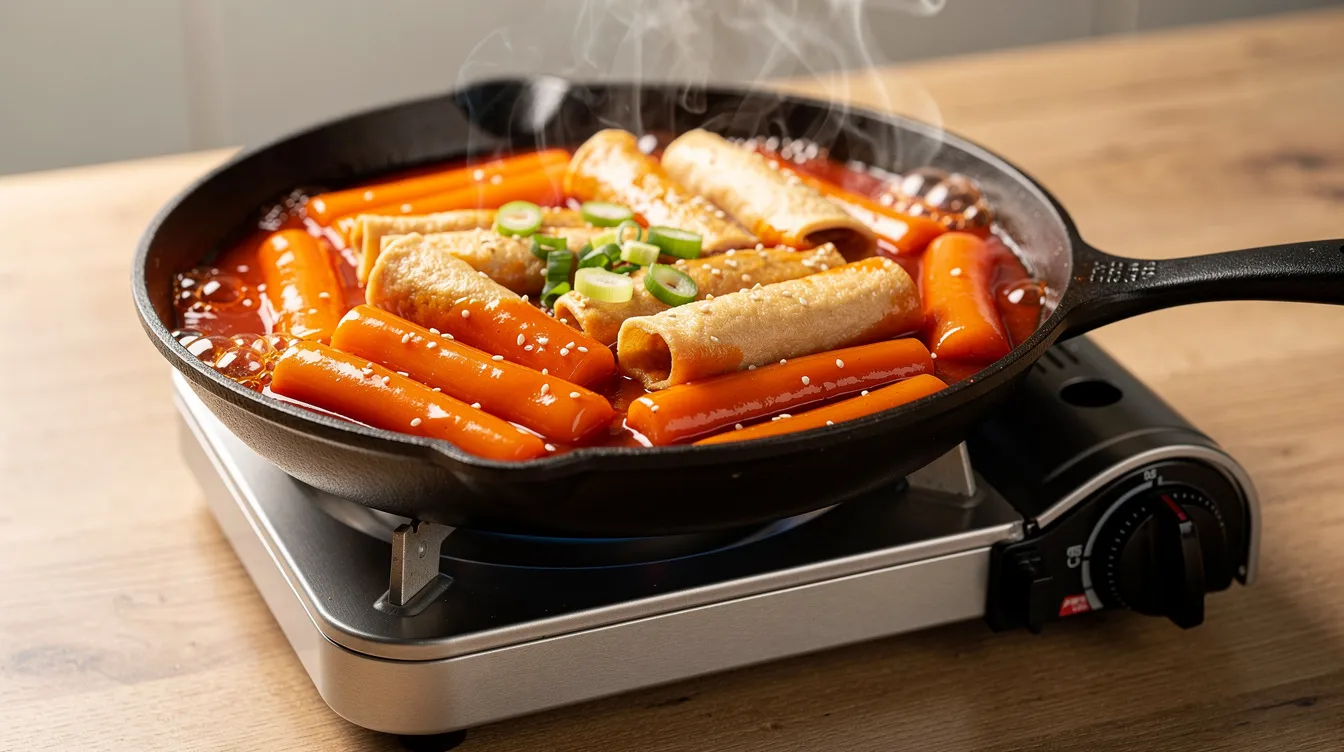
The typical Seoul street stall scene involves a large cast-iron pan of tteokbokki simmering over a portable burner, skewered fish cakes dangling in a separate pot of anchovy broth, trays of golden twigim fresh from the fryer, small dishes of radish and kimchi scattered across the counter, and steam everywhere, especially on cold nights.
Koreans almost never order just tteokbokki. A 2023 survey by the Korea Agro-Fisheries & Food Trade Corporation found that 78% of tteokbokki consumers in Seoul pair it with at least two sides. The dish's texture, sticky, chewy, and carb-heavy, naturally calls for contrast: something crunchy, something soupy, something fresh.
Crunchy Sides: Twigim and Fried Favorites
Twigim is probably the number one thing Koreans eat with tteokbokki. These korean tempura pieces get dipped directly into the spicy sauce, soaking up the gochujang flavor while adding crunch to every bite.
The texture contrast is everything. Twigim's crispy exterior meets the soft, chewy spicy rice cake, and when you drag it through that thick sauce, the coating absorbs just enough without turning soggy. Sesame seeds are often sprinkled on top of tteokbokki or twigim to enhance flavor, texture, and visual appeal.
Common twigim options include sweet potato slices (goguma twigim), gim-mari (seaweed-wrapped glass noodles), squid rings, stuffed peppers with meat or dangmyeon noodles, and vegetable pieces like mushrooms or broccoli.
For U.S. home cooks: Frozen tempura shrimp, store-bought vegetable tempura, or air-fried dumplings work well if authentic twigim isn't accessible. Even panko-coated zucchini serves the same purpose.
Mixed Twigim (Korean Tempura Assortment)
A proper twigim plate features variety, four or five types arranged beside your pan of tteokbokki.
- Sweet potato twigim – Gets soft and sweet when sauce-dipped
- Gim-mari – The glass noodle filling turns saucy and chewy
- Squid twigim – Stays bouncy even after soaking
- Mandu twigim – Fried dumplings with a juicy burst inside
- Vegetable twigim – Mushrooms and green peppers add earthy crunch
At home, any frozen tempura mix from an Asian market replicates this experience at about 80% authenticity. Let people dip into the sauce themselves. Half the fun is watching the golden batter turn red.
Yangnyeom Chicken (Korean Fried Chicken)
A basket of sticky, sweet-spicy fried chicken plus a pan of tteokbokki is a classic late-night Korean soul food combo. The chicken adds serious protein and turns what might be a snack into a full meal.
Boneless bites or wings work best, coated in a gochujang, garlic, soy sauce, and honey reduction. The flavor profile echoes the tteokbokki sauce, creating harmony rather than competition.
For home, pair Korean fried chicken takeout or good-quality frozen korean-style wings with your tteokbokki. Because both dishes are rich, balance them with lighter sides like radish salad or fresh vegetables.
Soups and Broths: What to Sip With Tteokbokki
Koreans often chase spicy food with a hot sip of clear broth, especially in colder months. The warm liquid cuts through the thick sauce and keeps the meal from feeling too heavy.
The two most common options are eomuk-guk (fish cake soup) and simple anchovy broth made with dried kelp, both staples among popular Korean street foods. Both are often served from the same pot where the skewered fish cakes sit.
For readers who don't eat fish, a light vegetable broth or miso-style soup works as a gentler pairing while serving the same palate-cleansing function.
Eomuk-guk / Odeng-guk (Fish Cake Soup)
Eomuk-guk consists of skewered fish cakes simmered in a clear anchovy broth, lightly seasoned with soy sauce and green onion. The taste is mild, savory, and slightly sweet.
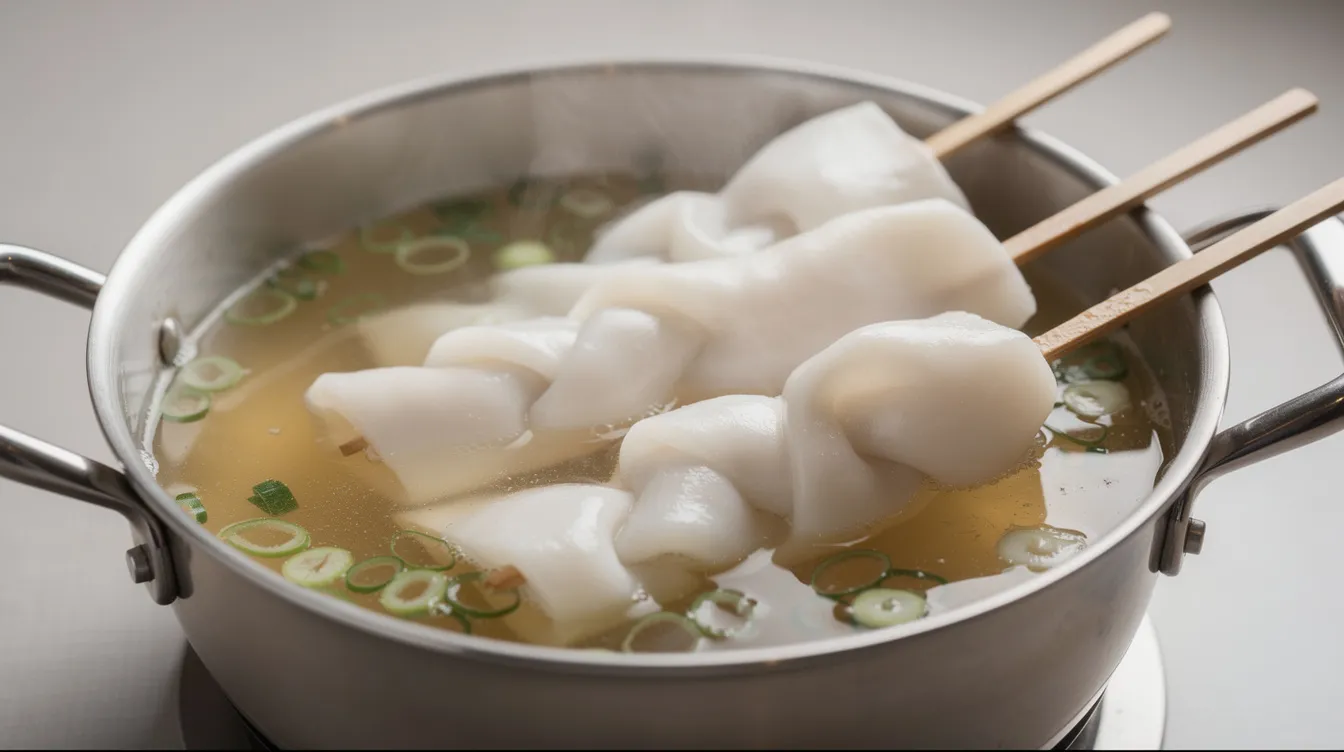
In Seoul street tents, the rhythm goes: eat a piece of eomuk, drink a shot of hot broth, return to the tteokbokki. The gentle flavor resets your palate between bites of intense gochujang-coated rice cakes.
At home, simmer store-bought korean fish cake in broth, or use instant fish cake soup packets from Korean groceries. Cook time is typically 10-15 minutes for the flavors to develop.
Simple Anchovy or Vegetable Broth
Many home cooks make a quick anchovy broth with dried kelp and ladle it into small bowls to sip alongside tteokbokki. This is often the same base stock used to cook the dish, so the flavors naturally match.
For vegetarians, a light broth with radish, onion, and kelp seasoned with soy sauce and salt works beautifully. Serve in small mugs so guests can sip between bites without committing to a full bowl, the same way you might enjoy budae jjigae (Korean army stew) broth alongside richer dishes.
Fresh and Fermented Sides: Balancing the Spice
Tteokbokki is spicy, salty, and sweet, so you need something bright, sour, or crisp to reset your palate. These banchan pairings are also great for people who want lighter, vegetable-forward options rather than more fried food, especially if you're usually drawn to viral Korean snack-style sides and other K-food gone viral.
- Kimchi – Fermented napa cabbage with korean chili paste, garlic, and jeotgal provides sharp acidity and funk that cuts through tteokbokki's sweetness.
- Musaengchae – Spicy-sour radish salad with korean chili flakes.
- Oi-muchim – Spicy cucumber salad.
- Danmuji – Sweet, tangy, and crunchy pickled radish, the most common pickle served with tteokbokki.
- Lettuce or perilla leaves – For wrapping bites.
From personal habit in Korea: I always grabbed a small saucer of radish or kimchi when ordering tteokbokki, even at the most casual shop.
Carbs on Carbs: Turning Tteokbokki Into a Full Meal
Koreans embrace carb-on-carb happiness without hesitation. When I lived in Korea, the most common full meal was tteokbokki plus kimbap, sometimes with ramen noodles cooked directly in the pan.
Key carb companions include (and you'll see these all over any Korean ramyun and snacks spread or classic rabokki (tteokbokki with ramyun) combo):
- Ramyun (rabokki) – Instant noodles in the sauce, whether it's classic Shin Ramyun or fun collabs like the K-pop Demon Hunter ramen.
- Kimbap – Korean seaweed rice rolls, a nutritious side that pairs well with tteokbokki and is perfect for dipping into the sauce.
- Plain korean rice – For scooping extra sauce.
These transform a snack-sized portion of frozen rice cakes into something that keeps you full through lunch or dinner, especially when you lean into viral mayak ramyun trends for extra flavor and fun.
Protein Boosters: What to Add for a More Filling Plate
Classic street-style tteokbokki is heavy on carbs but light on protein. Adding a protein side balances the meal and addresses food cravings for something more substantial.
Common Korean choices include hard boiled eggs, fish cakes, sausages, spam, mandu, and for rosé tteokbokki variations, cheese and bacon. These can cook with the tteokbokki or serve alongside.
Vegetarians and vegans can swap in pan-fried tofu, tempeh, or edamame while keeping flavors authentic with sesame oil and gochujang-based seasoning.
Boiled Eggs
Boiled eggs are the simplest protein upgrade. In Korea, they're commonly simmered directly in the tteokbokki sauce until the whites absorb that spicy, sweet flavor.
The yolk, when cracked open in the bubbling pan, creates a rich pocket that blends with the sauce. Medium or hard-boiled eggs hold their shape best. Plan for one egg per person when turning tteokbokki into a meal. This works with both classic red and creamier rosé tteokbokki.
Mandu (Korean Dumplings)
Mandu can be steamed, pan-fried, or deep-fried, served on the side or tossed directly into the pan. The juicy filling, pork, kimchi, or vegetables, pairs beautifully with the bold sauce.
Use frozen mandu from Korean groceries for a realistic weeknight option. Both meat and vegetable varieties work well, making this adaptable to different diets. Serve 3-4 mandu per person for a tteokbokki-centered meal.
Tofu and Other Meatless Protein Options
For vegan readers or those cutting back on meat, firm tofu pan-fried until golden and briefly simmered in tteokbokki sauce works wonderfully. Alternatively, serve it on the side with sesame oil and soy sauce for dipping.
Edamame tossed with sea salt and a bit of korean chili flakes makes an easy, protein-rich snack alongside your main dish. You can also top less spicy versions with vegan cheese shreds for a melty, comfort-food twist.
Modern Variations of Tteokbokki
While traditional tteokbokki is beloved, modern twists have emerged to suit different tastes.
- Rosé Tteokbokki is a creamy, spicy, sweet, and umami-rich variation that uses a blend of gochujang, tomato sauce, and heavy cream. This milder version is perfect for those who find the traditional spicy sauce too intense.
- Mala Tteokbokki combines Korean tteokbokki ingredients with Chinese malatang spices, adding a numbing and spicy flavor profile.
- Curry Tteokbokki replaces the typical spicy sauce with a Korean-style curry base, offering a comforting alternative.
Adding mozzarella or cheddar cheese slices to any tteokbokki variation can help tone down the heat and add a luscious texture.
What to Drink With Tteokbokki (And a Little Dessert)
Tteokbokki nights in Korea often include something cold and sweet or lightly alcoholic to cool down the heat. The contrast between hot sauce and cold drink is part of the experience.
Non-alcoholic options: iced barley tea, whole milk or banana milk, sparkling water, and Korean fruit sodas, including popular carbonated peach drinks.
For adults: chilled soju, makgeolli (fizzy rice wine), or strawberry soju cocktails.
Small sweet finishes: bungeoppang (fish-shaped pastries with red bean or custard) or hotteok (brown sugar-filled pancakes).
Putting It All Together: Sample Tteokbokki Meal Ideas
Here are complete menu examples so you can copy a full spread without overthinking:
- Street Stall Style: Tteokbokki + mixed twigim + eomuk-guk. Perfect for casual friends' night.
- Weeknight Comfort: Rabokki (tteokbokki with ramyun) + hard boiled eggs + kimchi. Quick and filling after work.
- Lighter, Veggie-Forward: Tteokbokki + musaengchae + pan-fried tofu + iced barley tea. Great for those watching portions.
- Party Platter: Big pan of tteokbokki + kimbap platter + Korean fried chicken + strawberry soju cocktails (adults) + bungeoppang for dessert. Ideal for hosting.
Mix and match based on what's available in your local stores and your spice tolerance. You can also combine gochujang with tomato sauce and heavy cream for rosé tteokbokki if you prefer a milder, creamier taste. Some people even add oyster sauce or hot sauce to adjust the flavor profile.
Storing and Reheating Tteokbokki
Tteokbokki reheats really well if you handle it right. Transfer leftovers to an airtight container and refrigerate for up to three days. When reheating, add a splash of water or broth first. The sauce thickens a lot in the fridge and will scorch if you heat it dry.
Reheat over medium heat, stirring gently until the rice cakes get their chew back and the sauce starts bubbling again. For rosé tteokbokki, stir in a little milk or cream to bring back the creamy texture. The microwave works in a pinch, but stir it halfway through and watch the time. Overheated sauce goes gummy fast.
You can freeze tteokbokki for up to two months. Separate the rice cakes from the sauce before freezing since the sauce tends to separate when thawed. Defrost overnight in the fridge, then reheat with a bit of extra broth until it comes back to life.
Health Benefits of Tteokbokki: Is It Good For You?
Tteokbokki isn't exactly a health food, but it's not as bad as you might think. The rice cakes give you steady carb energy. The gochujang base contains capsaicin, which has antioxidant properties. Traditional versions often include vegetables like cabbage, carrots, and green onions, which add fiber and vitamins to what is otherwise a pretty carb-heavy dish.
Adding protein, eggs, tofu, or lean chicken, helps with satiety. The main things to watch are the sodium and sugar content in the sauce. If you're making it at home, you can pull back on the added sugar, use a lower-sodium soy sauce, or increase the vegetable ratio to make it a bit lighter without losing the flavor.
Portion size matters a lot here. Tteokbokki with fried sides and extra sauce is a heavy meal. Tteokbokki with boiled eggs, kimchi, and broth is a very different experience. Know which one you're having.
Tteokbokki in Korean Culture: More Than Just a Snack
Tteokbokki is one of those foods that carries real cultural weight in Korea. It's not just street food. It's the thing you eat after school with your friends, the dish you come back to when you're homesick, the smell that hits you when you walk past a pojangmacha on a cold night.
The dish has roots in gungjung tteokbokki, a soy-based version that was served in the royal court. The spicy gochujang version is much more recent, going mainstream as a street food in the mid-twentieth century. Today it shows up everywhere: street vendors, school cafeterias, convenience stores, fancy restaurants, and late-night TV food shows.
What makes it culturally sticky is the communal eating style. You share a pan. You dip from the same sauce. You take turns adding noodles or passing the twigim plate. It's designed to be eaten together, not solo. That's part of why eating tteokbokki by yourself, especially outside Korea, always feels like something is missing. You're supposed to be sharing it with someone.
Final Tips From Slurp First Crunch Later
There's no single right way to eat tteokbokki, but balance makes it feel like a full meal rather than just a snack. Think categories: something crunchy, something soupy, something fresh, something with protein.
My go-to combo in Sindang-dong around 2015 was always mixed twigim and eomuk-guk. A simple spread that felt like home even on the coldest nights. That anchovy broth and those golden-fried bites made every visit to Tteokbokki Town worth the trip.
Start with one simple side, maybe kimbap or boiled eggs, and experiment from there. You don't need everything on this list to have a delicious meal.
For more Korean street food guides and ramyun recommendations, keep exploring Slurp First Crunch Later. Your next cozy Korean snack night is just a recipe away.
Frequently Asked Questions (FAQs)
1. What are the best side dishes to eat with tteokbokki?
The best side dishes to eat with tteokbokki include fish cake soup (eomuk-guk), mixed twigim (Korean tempura), kimbap (seaweed rice rolls), boiled eggs, mandu (Korean dumplings), ramyun noodles, kimchi, and Korean fried chicken. These sides provide a balance of textures and flavors that complement the chewy, spicy rice cakes.
2. Can I make tteokbokki less spicy?
Yes! To make tteokbokki less spicy, reduce the amount of Korean chili paste (gochujang) or Korean chili flakes used in the sauce. You can also add a bit of sugar, cheese, or milk/cream to mellow the heat. Rosé tteokbokki, which uses a creamy sauce, is a popular milder alternative.
3. What is twigim, and why is it eaten with tteokbokki?
Twigim is Korean-style tempura, consisting of assorted deep-fried snacks like sweet potato, squid rings, and vegetables. It is eaten with tteokbokki because the crispy texture contrasts the chewy rice cakes perfectly. Dipping twigim into the spicy sauce enhances the flavor and adds a delightful crunch.
4. How do I turn tteokbokki into a full meal?
To turn tteokbokki into a full meal, add protein-rich sides like boiled eggs, mandu (dumplings), or Korean fried chicken. You can also mix in ramen noodles (called rabokki) to add more substance. Serving it with fresh or fermented sides like kimchi and radish salad balances the richness and spice for a satisfying meal.

