


Quick Summary
South Korean street food is a huge part of everyday life there. Affordable, quick, and genuinely delicious. From spicy tteokbokki and savory fish cakes to sweet hotteok and Korean corn dogs, these foods carry both tradition and a lot of creative reinvention.
Popular markets like Myeongdong and Gwangjang are the best places to experience it. This guide covers what to try, what to expect, and how to navigate it if you've never been.
Everything You Need to Know About Korean Street Food
Korean street food covers everything from fiery rice cakes in sweet-spicy sauce to crispy fish-shaped pastries filled with red bean paste. These dishes shaped how Koreans eat on the go, socialize, and find comfort for over seven decades.
This guide covers traditional and modern Korean street foods, their flavor profiles, and where to find them, whether you're planning a trip to Korea or just curious about what you'll encounter. It pairs well with broader guides to Korean soul food, ramen, and home recipes.
Understanding Korean Street Food Culture
Origins and History
Korean street food culture is built around affordable, portable, and social eating. Quick meals for busy workers, after-school snacks for students, late-night comfort food for friends gathered under tent stalls with bottles of soju.
The street food scene grew out of necessity in the 1950s after the Korean War. Poverty and displacement pushed vendors to sell simple, cheap food from mobile carts. Fish cakes, rice cakes, and sweet treats started as survival food and became beloved cultural staples.
By the 1970s and 1980s, rapid urbanization and Korea's fast-paced city life made street eating a defining feature of Seoul nightlife.
Pojangmacha Tradition
The pojangmacha, small tented stalls that operate mainly at night, became iconic gathering spots where strangers and friends shared plates of anju (drinking snacks), sipped soju, and found warmth on cold nights. These covered stalls carry a lot of nostalgia for Koreans. Their numbers have dropped due to urban redevelopment and stricter licensing, but they haven't disappeared.
Traditional Street Food Heritage
Tteokbokki's modern spicy form traces back to 1953 when vendor Ma Bok-rim reportedly tossed chewy rice cakes into gochujang-based hot sauce. Before that, a non-spicy palace version existed. The fiery street version quickly became the standard.
Hotteok, a filled pancake with yeasted dough and a sweet brown sugar, honey, and nut filling, is a winter staple. Crispy outside, molten inside. Introduced through Chinese merchant influence in the 19th century and still everywhere when temperatures drop.
Bungeoppang features crispy waffle-like batter filled with sweet red beans, shaped like a fish. Sold during winter months, these affordable treats create lines at street corners and connect generations through shared taste memories.
Other classics: mandu (Korean dumplings, steamed, boiled, or fried), bindaetteok (savory ground mung bean pancake), eomuk/odeng (fish cakes skewered in broth), gyeranppang (egg bread), and dalgona (brittle honeycomb candy).
Modern Innovations
Contemporary Korean street food has expanded well beyond tradition. Korean corn dogs are the clearest example: batter-dipped sausages coated in potato bits, sugar crystals, or glass noodles, then deep fried. Photogenic, viral, and genuinely satisfying.
The tornado potato takes a whole potato, spiral-cuts it, stretches it on a stick, deep-fries it, and seasons it with cheese powder or herbs. Simple concept, solid execution.
Vendors have also gotten creative with classics: hotteok with green tea or cheese fillings, bungeoppang stuffed with custard or savory kimchi. Food truck legalization around 2014 brought a new wave of mobile vendors, and some entrepreneurs have created indoor pojangmacha concepts that keep the atmosphere of the traditional tent stalls alive.
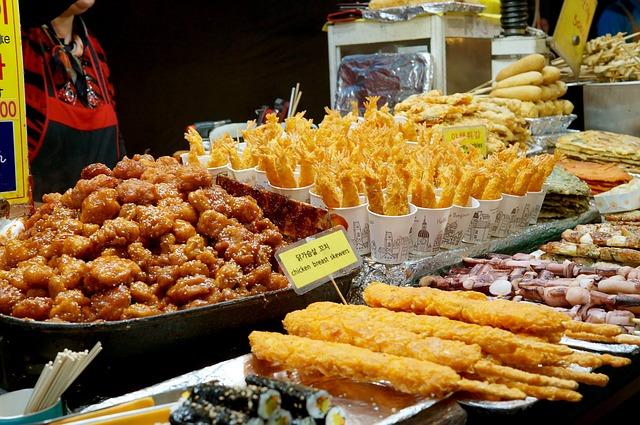
Essential Korean Street Food Categories
Korean street food breaks down clearly by flavor profile. Gimbap is a popular option made with rice and various fillings wrapped in seaweed.
Spicy and Savory Street Foods
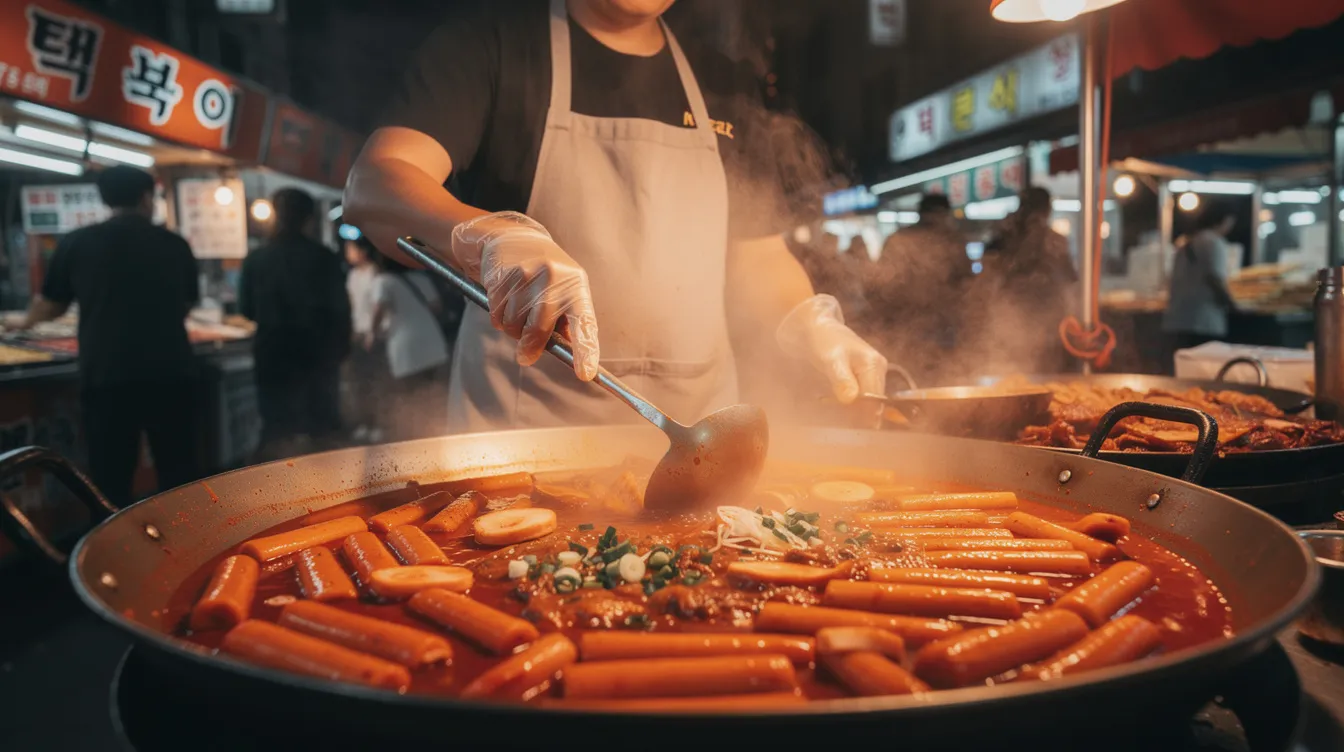
Tteokbokki leads this category. Chewy Korean rice cakes simmered in thick, sweet and spicy gochujang sauce. Fish cakes and boiled eggs round out most vendor preparations. Rabokki variations add ramyeon noodles for extra texture, and you can recreate this at home with a rabokki recipe that blends tteokbokki and ramen.
Eomuk (also called odeng) is the milder savory option: fish cakes skewered and served in warming broth. Subtle fish flavor, slightly springy texture. During cold weather, many vendors offer free broth to sip alongside the skewers.
Twigim covers all the deep-fried items: vegetables, seafood, dumplings. Crispy outside, varied inside. These fried snacks often accompany tteokbokki and share the same spicy dipping sauce.
Sundae (Korean blood sausage) is made from pig intestines stuffed with pork blood, glass noodles, and sometimes sticky rice. Served with salt or spicy powder. The soft, savory interior challenges newcomers but rewards the curious.
Korean chicken skewers (dak-kkochi) deliver smoky charred edges brushed with sweet or spicy glazes. So-tteok-so-tteok alternates rice cake pieces and sausage on the same skewer. Both are portable and easy to eat walking through a market.
Sweet Street Treats
Hotteok remains the quintessential sweet treat. Brown sugar filling melts into syrup inside yeast-based dough, crispy on the outside and molten in the center. Winter vendors draw consistent crowds for these.
Bungeoppang: crispy waffle shell, traditional sweet red bean filling, fish-shaped mold. Modern variations offer custard cream, chocolate, or savory versions.
Gyeranppang (Korean egg bread) has a whole egg baked atop or within fluffy bread. Semi-sweet, semi-savory. Soft bread, slightly firm egg. Some vendors add cheese or ham for extra richness.
Kkwabaegi (twisted donuts) and sugar-coated fried dough round out the sweet side for anyone wanting something familiar.
Fusion and Innovation Foods
Korean corn dogs have gone international through their combinations of cheese-filled sausages, potato-crusted batters, and sugar dustings. The savory-crunchy-sweet combination is exactly why they drive so much social media attention.
Dakgangjeong (Sweet and Spicy Chicken): deep-fried boneless chicken nuggets coated in a sticky, sweet, and spicy sauce made of garlic, soy sauce, and gochujang. Double-fried for extra crispiness. One of those dishes that's hard to stop eating.
Tornado potatoes showcase simple ingredients elevated through technique. Spiral-cut potatoes become impossibly thin, ultra-crispy chips. Seasoning powders and dipping sauces add customization.
Japchae dogs wrap glass noodles around sausages before frying. The sweet soy sauce-seasoned noodles bring real Korean flavor into a handheld format.
Korean Egg Bread and Other Baked Goods
Gyeranppang is one of those foods that both locals and visitors love. Soft, cake-like bread with a whole egg inside, often topped with cheese, ham, or herbs. Warm, portable, and very satisfying on a cold morning or late at night.
Some vendors add gooey cheese or spicy toppings for their own version. There's a lot of variation across stalls, which is part of the fun.
Beyond egg bread, hotteok and bungeoppang cover the main baked street food categories. Both are easy to eat while walking, both are cheap, and both taste better than they have any right to given how simple the ingredients are.
Cold Treats and Beverages
Summer in Korea gets hot. Street vendors have answers for that too.
Patbingsu
Shaved ice topped with sweet red bean, chewy mochi, fresh fruit, and condensed milk. Colorful, textural, and very refreshing. One of the most popular summer street foods by a wide margin.
Bingsu
Korean-style snow cone with finely shaved ice in flavors ranging from classic red bean to green tea and mango. The ice melts quickly so eat fast.
Sikhye
A traditional sweet rice beverage served ice cold. Creamy and subtly sweet. A staple at street stalls during festivals and holidays.
Korean-style Ice Cream
Vendors serve cones and cups in flavors like green tea, sesame, and sweet potato. Different from what you're used to and worth trying at least once.
Naengmyeon
Cold noodles served with a spicy sauce. Savory, refreshing, and a proper meal rather than a snack. Great on a hot day when you want something filling but not heavy.
Popular Korean Street Food Dishes You Must Try
These are the essential starting points. Accessible, culturally significant, and representative of what Korean street food actually tastes like.
These are also the kinds of dishes that inspire dedicated guides to Korean ramyun, snacks, and home-style recipes.
The "Big Three" Street Food Staples
Tteokbokki is the definitive Korean street food experience. Chewy rice cakes in gochujang-based sweet-spicy sauce. The addictive combination has fueled Korean students and workers for decades. Expect to pay roughly 2,500 to 4,000 won per portion from street vendors. Sindang-dong in Seoul holds particular historical significance for this dish.
Kimbap is cooked white rice rolled with vegetables, pickled radish, and sometimes meat, all wrapped in seaweed. Sesame oil fragrance, firm-then-yielding texture, perfect for eating on the move. Pre-made versions from convenience stores run about 1,500 to 3,000 won.
Hotteok completes the trio. Brown sugar filling caramelizes against the pan-fried dough. Crispy outside, molten inside. At 1,000 to 2,000 won per piece, among the most affordable things you can buy from a street vendor.
Regional Specialties and Market Favorites
Gwangjang Market in Seoul is the place for bindaetteok (mung bean pancakes pressed and pan-fried until crispy) and mayak kimbap, tiny addictive rolls that earned the "mayak" (addictive) nickname for good reason. The density of vendors here creates a genuinely overwhelming sensory experience.
Myeongdong, Namdaemun Market, and Dongdaemun cater more to tourists, with fusion innovations and traditional options side by side. Korean corn dogs, tornado potatoes, and elaborate sweet treats dominate these areas in the evenings.
Seasonal specialties shift the whole scene throughout the year. Roasted sweet potatoes and chestnuts appear in cold weather. Ice cream and shaved ice dominate summer.
Comparison of Popular Street Food Styles
Dish Type |
Flavor Profile |
Price Range |
Best Season |
|---|---|---|---|
Tteokbokki |
Spicy-sweet, chewy, umami-rich |
2,500-4,000 Won |
Year-round, popular in cold weather |
Hotteok |
Sweet, crispy outside, molten interior |
1,000-2,000 Won |
Winter |
Bungeoppang |
Crispy shell, sweet red bean or custard |
1,000-2,000 Won |
Winter |
Korean Corn Dog |
Savory, crunchy, sometimes sweet-coated |
3,000-5,000 Won |
Year-round |
Eomuk |
Mild fish, savory broth, springy texture |
1,000-2,000 Won |
Cold weather |
Kimbap |
Savory, sesame oil-flavored rice with assorted fillings |
2,000-4,000 Won |
Year-round |
For first-time visitors, start with tteokbokki. It gives you the clearest picture of Korean flavor expectations. If spice is a concern, start with hotteok or bungeoppang first and work up from there. Korean corn dogs are a great bridge for anyone easing into it.
Street Food Tours and Experiences
If you want to go deeper, a guided street food tour is a solid way to do it. These take you through bustling markets and neighborhoods with a guide who knows which vendors are worth stopping at and why.
Typical stops include Myeongdong, Hongdae, and Gwangjang Market. You get to sample a wide range of dishes and hear the history behind what you're eating, which makes the food more interesting rather than just more filling.
For any food lover visiting Korea, it's one of the better ways to spend a few hours.
Common Challenges and Solutions When Trying Korean Street Food
Language Barriers and Ordering
Most street vendors speak limited English, but pointing at displayed items works universally. Vendors expect this from tourists. A few useful phrases if you want to try:
- "Tteokbokki juseyo" means "Tteokbokki, please"
- "Maewoyo?" asks "Is it spicy?"
- "Jo-geum-man" requests "just a little" (useful for sauce amounts)
Cash is still king with many street vendors, especially in traditional markets. Bring small bills. Vendors in heavily touristed areas like Myeongdong increasingly take cards, but don't count on it everywhere.
Spice Level Concerns
Korean spice levels can hit harder than expected. For beginners, start with naturally mild options like eomuk (fish cakes in broth), hotteok, bungeoppang, or gyeranppang. No significant spice in any of these.
When ordering spicy dishes, you can ask for reduced sauce, though not all vendors will accommodate. Pairing spicy items with sweet ones helps: alternating bites of tteokbokki and hotteok, for example. A sweet drink nearby helps too if the heat catches up with you.
Finding Authentic Street Food Outside Korea
Korean grocery stores often have prepared food sections or adjacent restaurants serving authentic versions of popular items. They're also a great place to source ingredients for dishes like Korean Budae Jjigae (army stew).
Korean night markets and food festivals happen seasonally in many major cities. Worth looking up if you want a concentrated experience.
Frozen and packaged versions of popular Korean street food, including tteokbokki kits, bungeoppang batter mix, and Korean corn dog preparations, are available online. Not the same as fresh vendor versions, but a legitimate entry point for exploring Korean flavors at home. You'll also find limited-edition collabs like K-pop ramen releases in some stores too.
Wrapping Up
Korean street food is one of the best ways to get a feel for Korean culture. From the spicy-sweet depth of tteokbokki to the winter warmth of hotteok, each dish has real history alongside its flavor.
Start with the "Big Three" staples: tteokbokki, kimbap, and hotteok. Visit a local Korean market or restaurant before attempting home cooking. If you're spice-sensitive, start with milder options and work toward the spicier territory from there. Frozen tteokbokki kits and bungeoppang batter are good for home experimentation too.
Korean convenience store snacks offer another window into packaged Korean flavors. Traditional Korean desserts reveal the sweeter side of the cuisine beyond street food.
Additional Resources
Essential Korean Food Terms for Ordering
- Tteokbokki - spicy stir fried rice cakes
- Hotteok - sweet filled pancake
- Bungeoppang - fish-shaped pastry with sweet red bean paste
- Eomuk/Odeng - fish cakes
- Sundae - Korean blood sausage
- Kimbap - cooked white rice rolled with fillings in seaweed
- Twigim - deep fried battered items
- Mandu - Korean dumplings
- Juseyo - "please give me"
Recommended Seoul Markets for Street Food
- Gwangjang Market - traditional atmosphere, bindaetteok, mayak kimbap
- Namdaemun Market - historic market with variety of vendors
- Myeongdong - tourist-friendly with lots of fusion innovations
- Dongdaemun Night Market - evening street food concentration
Home Cooking Ingredient Sources
Korean grocery stores stock essential ingredients including gochujang (red chili paste), garae-tteok (cylindrical rice cakes), glutinous rice flour, sweet red bean paste, and sesame seeds. Online retailers offer frozen rice cakes, pre-made sauce packets, and complete tteokbokki kits for those without local Korean grocery access.

