


Are you a Korean food enthusiast, a home cook, or just someone with a curious palate ready to dive into the delicious world of Korean cuisine? Well, buckle up! This article is your VIP pass to unraveling the tasty tussle between Yopokki and traditional tteokbokki—two scrumptious contenders in the ring of Korea’s beloved spicy rice cake showdown.
Quick Summary:
This article explores the key differences between Yopokki, a popular instant tteokbokki brand, and traditional tteokbokki, a beloved Korean street food. It covers aspects such as:
- Yopokki offers convenience and a variety of innovative flavors ready in minutes.
- Traditional tteokbokki provides a richer, more authentic taste experience through longer preparation and fresh ingredients.
- Understanding these differences helps food lovers choose the option that best fits their lifestyle and culinary preferences.
We’ll explore what sets instant Yopokki apart from homemade or street-style tteokbokki, covering preparation methods, ingredients, flavor profiles, cost, nutrition, and cultural significance. By the end, you’ll know which option best suits your taste, lifestyle, and culinary curiosity, and why appreciating these differences deepens your enjoyment of Korean food.
Yopokki vs Traditional Tteokbokki: Overview
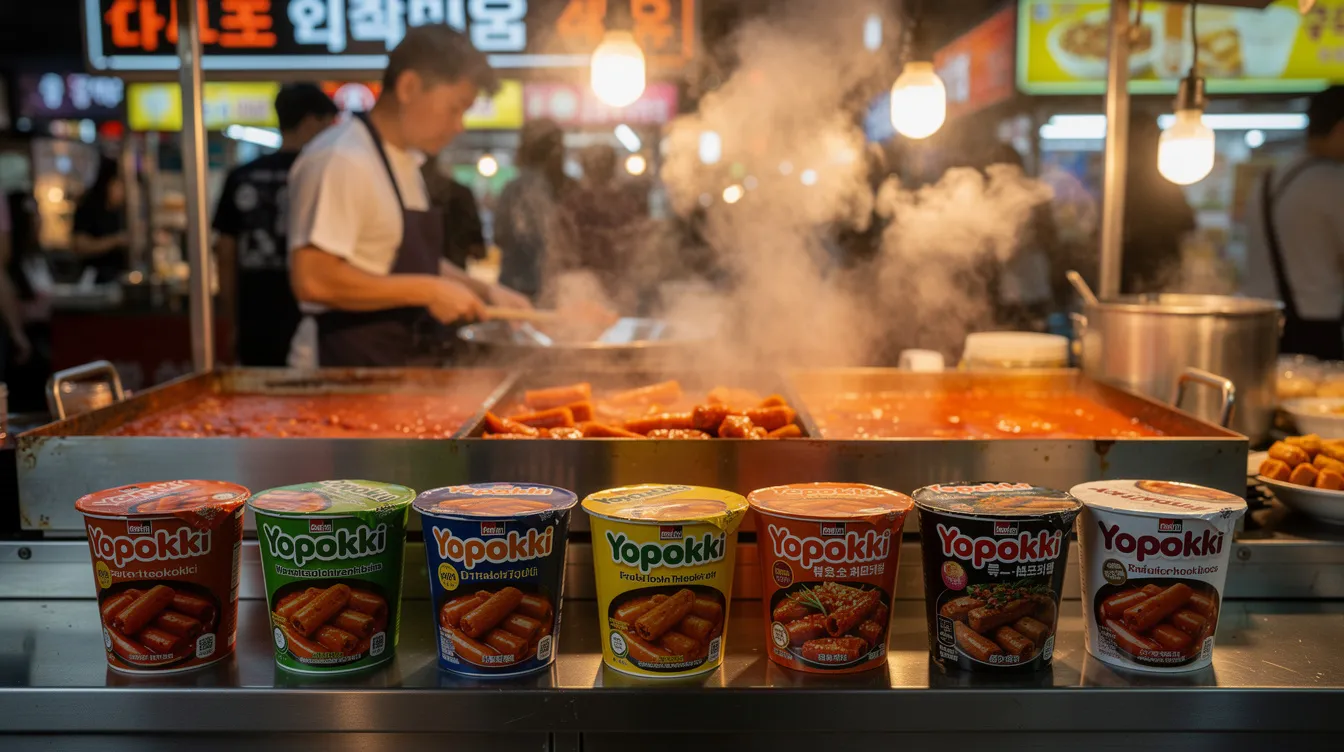
Yopokki represents instant convenience—a branded product that delivers chewy rice cakes in spicy sauce within three minutes of microwave heating. Yopokki is a popular brand known for its instant tteokbokki, a quick and easy-to-make Korean rice cake dish that comes in microwaveable cups and packets, making it a convenient snack for those craving Korean flavors. This convenience makes Yopokki especially appealing to busy workers who need a quick meal or snack solution.
Instant tteokbokki has become a global favorite for its variety of flavors and cultural significance as a Korean comfort food. To keep the product exciting for consumers, Yopokki regularly introduces new flavors. Popular Yopokki tteokbokki flavors include spicy, chewy cheese, curry, kimchi, onion butter, and jjajang.
Traditional tteokbokki demands twenty to thirty minutes of active preparation, building layers of flavor through anchovy-kelp broth and carefully balanced seasonings. Traditional tteokbokki is often served at street food stalls and is known for its unrivaled quality and fresh texture. Your choice hinges on what matters more in the moment: the immediacy of satisfaction or the depth that comes from proper technique.
Both deliver that distinctive chew and heat Korean food enthusiasts crave, yet the experience diverges meaningfully from the first bite. Traditional tteokbokki is known for its chewy and bouncy texture, while Yopokki is generally sweeter and milder. The texture of traditional tteokbokki is dense, chewy, and bouncy when prepared fresh.
Tteokbokki is a popular Korean street food made from chewy rice cakes stir-fried in a sweet and spicy gochujang sauce. Tteok bokki is one of the most popular Korean dishes, with a history dating back to the 19th century, and is recognized as a staple Korean street food enjoyed for its sweet and spicy gochujang sauce and chewy rice cakes. Tteokbokki is made from chewy rice cakes called garae-tteok, which are typically stir-fried in a sweet and spicy gochujang sauce. Tteokbokki is typically served with common ingredients such as fish cakes, boiled eggs, and scallions. Common additions to tteokbokki include fish cakes, spring onions, and boiled eggs, which enhance the dish's flavor and texture. Variations of tteokbokki include curry-tteokbokki, cream sauce-tteokbokki, and jajang-tteokbokki.
Understanding these differences helps determine which approach serves your specific situation and taste expectations, and also deepens appreciation for the diversity of Korean dishes.
Yopokki vs Traditional Tteokbokki: Key Differences
The fundamental distinction lies in format and philosophy. Yopokki exists as Young Poong Co., Ltd.’s engineered solution for global tteokbokki access, while traditional tteokbokki represents centuries of Korean street food evolution, refined through countless hands and regional preferences. The main ingredients in both dishes are key: tteokbokki uses rice cakes made from rice flour, which gives them a distinct chewy texture, while variations like rabokki add ramen noodles for a different experience.
Flavor Architecture
Traditional preparation builds complexity through anchovy-kelp foundation and fermented gochujang depth. Yopokki delivers consistency through pre-formulated profiles designed for predictable satisfaction across diverse palates.
Time Investment
- Yopokki requires three minutes of waiting.
- Traditional cooking demands twenty to thirty minutes of engaged preparation, stirring, and adjustment.
Personal Control
- Scratch cooking allows real-time modification of heat intensity, sweetness balance, and sauce thickness.
- Instant formats lock you into predetermined flavor profiles.
Cooking Methods
- Traditional tteokbokki is usually boiled, which softens the rice cakes and melds the flavors.
- Some variations may use stir-frying to create a different texture and taste.
What makes tteokbokki is the process: soaking the rice cakes, making a spicy-sweet sauce, and cooking everything together until the rice cakes are tender and the sauce thickens.
Tteokbokki is typically eaten as a versatile street food snack in Korea, but it can also be served as a casual meal, often enjoyed with various toppings or ingredients.
Rabokki is a mix of ramen noodles and rice cakes, offering a combination of textures and a more complex, layered flavor profile.
Both satisfy that specific craving for Korean spicy rice cakes, yet anyone with developed tteokbokki experience will notice where shortcuts create meaningful gaps in taste complexity and textural satisfaction.
Preparation Method and Cooking Time
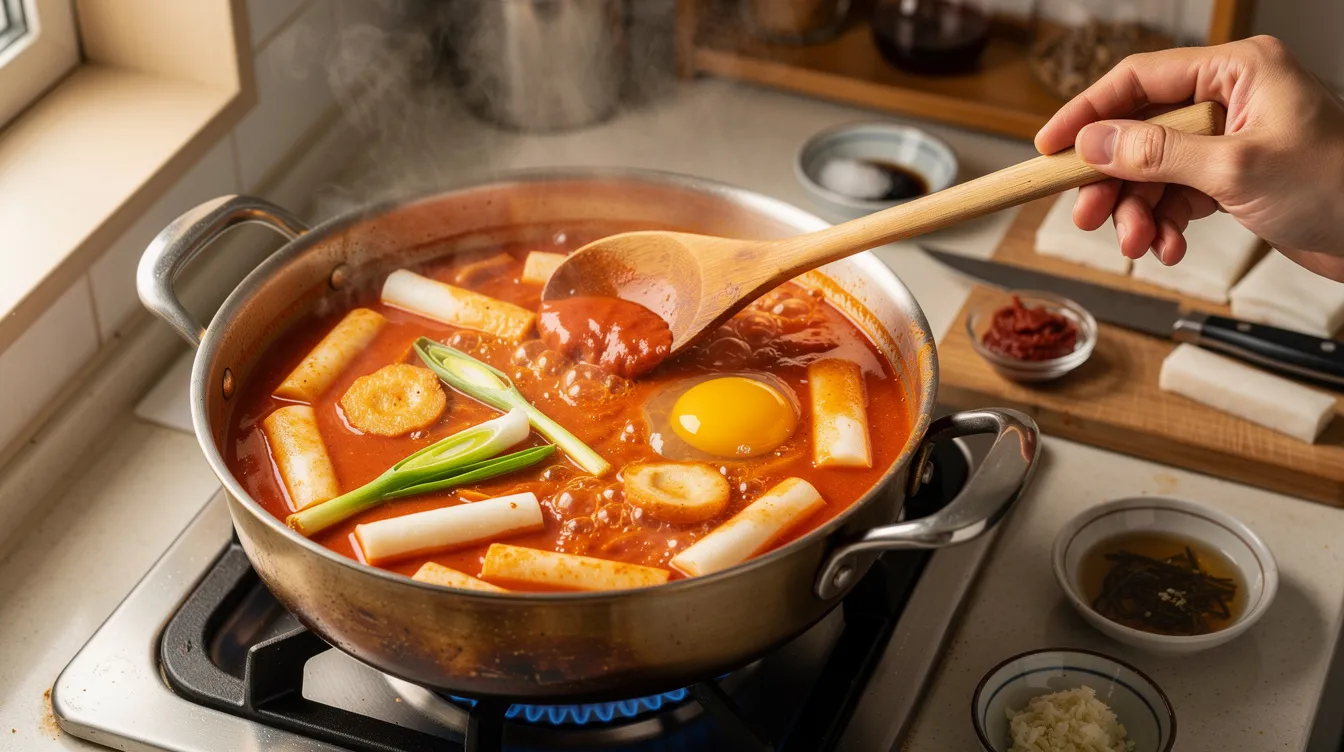
Alt text: Traditional tteokbokki simmering on a stovetop in a pot.
Time investment reveals the most practical difference between these approaches to Korean rice cake preparation. Different cooking methods, such as stir-frying and boiling, are used for dishes like tteokbokki, and these methods influence the flavor and texture of the rice cakes.
Yopokki Instant Preparation
Yopokki addresses the reality of busy schedules and limited kitchen access. The Yopokki brand has become synonymous with instant tteokbokki and rabokki from Korea, offering a quick, convenient, and popular way to enjoy this Korean comfort food. The process requires approximately three minutes of total attention:
- Open the cup containing pre-portioned rice cakes and sauce packet.
- Add water to the designated fill line.
- Microwave for two minutes at 1000W power (or extend to 2-3 minutes at 700W).
- Allow thirty seconds of resting time after stirring.
The rice cakes achieve their signature chewiness through this streamlined process. Results remain consistent across every package—a reliability that serves late-night cravings and quick office meal solutions effectively.
Stovetop preparation offers an alternative approach, combining pouches with water for approximately five minutes of simmering. This method still requires significantly less technique and time investment than traditional preparation methods.
Traditional Tteokbokki Preparation Steps
Traditional tteokbokki is made on the stove and usually takes 20–30 minutes to prepare. It is typically stir-fried in a spicy sauce, which helps the rice cakes absorb flavor and develop a chewy texture.
Before cooking, it’s important to soak chilled or dried rice cakes in warm water to soften them. Cooking tteokbokki at home is easier than it looks:
- Soak the rice cakes.
- Prepare a sauce using gochujang, gochugaru, soy sauce, and stock.
- Stir-fry everything together until the rice cakes are tender.
Detailed Steps
- Begin with anchovy-kelp broth creation, establishing the umami foundation that distinguishes well-made tteokbokki from merely spicy rice cakes.
- Soak fresh or frozen rice cakes for ten to twenty minutes in warm water.
- Mix gochujang, red pepper powder, soy sauce, and sugar or rice syrup until the balance feels right.
- Prepare fish cakes, vegetables, and boiled eggs as supporting elements.
- Simmer rice cakes in seasoned broth for five to ten minutes until properly tender.
- Adjust spice intensity, sweetness level, and sauce consistency as desired.
This hands-on experience rewards those who approach Korean food preparation as craft rather than mere sustenance.
Ingredients and Authenticity
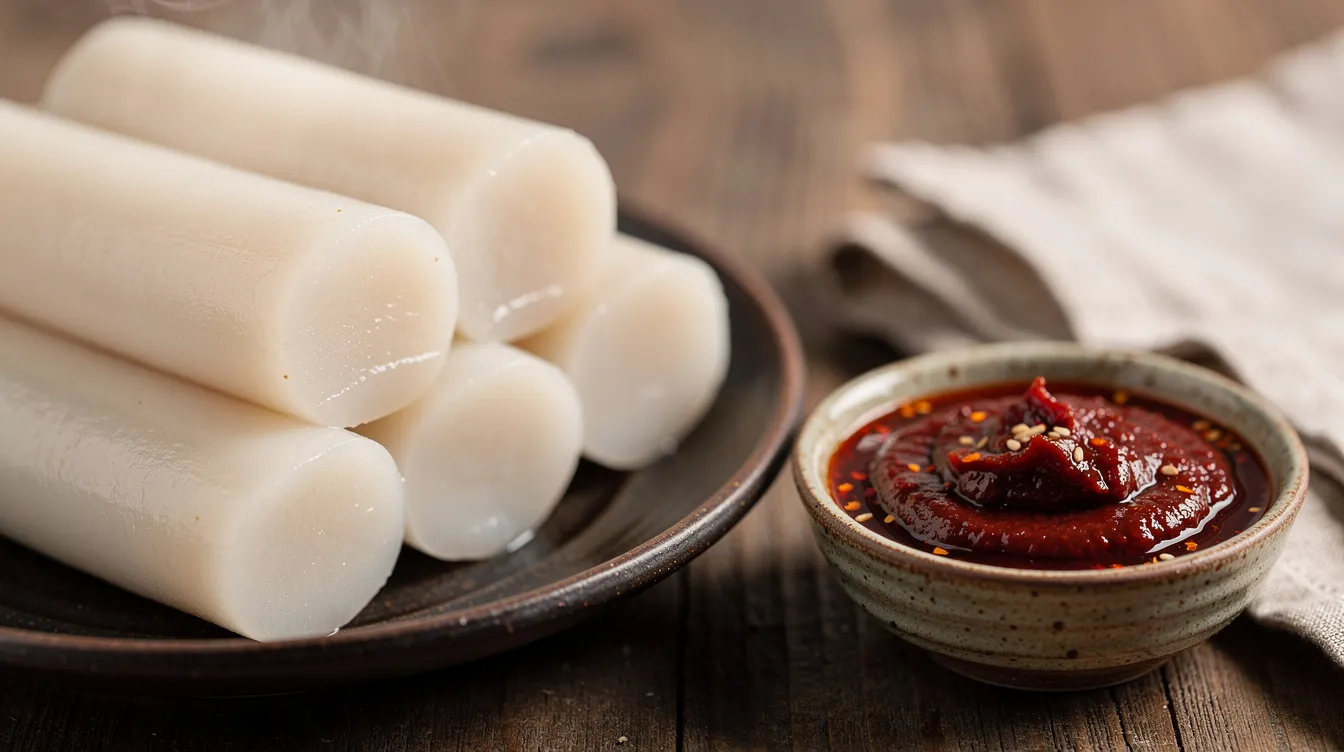
Alt text: Close-up of chewy garae-tteok rice cakes alongside spicy red gochujang sauce.
Ingredient quality directly influences both flavor development and nutritional value in Korean cooking. The main ingredients are the defining components of each dish: tteokbokki is primarily made with chewy rice cakes, while rabokki incorporates ramen noodles for a different texture and flavor profile.
Yopokki Ingredients
Yopokki rice cakes contain approximately ninety-nine percent rice with shelf-stability additives including refined salt, citric acid acidity regulation, and grain alcohol preservation. The brand maintains HACCP, ISO 22000, and Halal certifications for quality assurance.
Yopokki is known for its variety of innovative flavors, including spicy tteokbokki, curry, kimchi, chewy cheese, onion butter, and jjajang. Yopokki offers a wider range of flavors compared to other K-food exporters.
Typical Yopokki Sauce Packet Ingredients
- Tomato ketchup with high fructose corn syrup
- Sugar
- Red pepper paste (contains wheat flour and soy components)
- Apple puree
- Onion and garlic powders
- Monosodium glutamate
- Emulsifiers
- Color stabilizers
These ingredients optimize consistent flavor delivery and extended room-temperature storage, often approaching twelve months. The trade-off involves reduced ingredient freshness compared to immediate-use preparation methods.
Traditional Tteokbokki Ingredients
Tteokbokki is a healthy addition to your balanced diet if you can be mindful of your choice of toppings and how much food you consume.
Core Ingredients
- Fresh or recently produced rice cakes (garae-tteok)
- Quality fermented gochujang or homemade paste
- Fresh fish cakes (eomuk) with proper texture
- Vegetables: cabbage, onion, scallions
- Properly boiled eggs
- Sesame oil and sesame seeds for finishing touches
Authentic preparation utilizes fresh garae tteok—cylindrical rice cakes made from rice flour without extensive preservation systems. Anchovy-kelp broth provides natural umami complexity without artificial enhancement requirements.
Traditional cooking grants complete ingredient sourcing control. You select gochujang quality, fish cake freshness, and whether to incorporate seafood, meat, or seasonal vegetables. Preservation becomes unnecessary since ingredients receive immediate use.
Flavor Variety and Customization
Both formats provide flavor diversity through different mechanisms and levels of personal involvement. Tteokbokki is known for its sweet and spicy flavor profile, enhanced by the chewy texture of the rice cakes. The spice level of tteokbokki can vary widely depending on the amount of gochujang and gochugaru used, resulting in versions that range from mild and creamy to intensely spicy. The spicy flavor is a core component of tteokbokki's appeal, making it a bold and addictive dish popular in Korean street food and global markets.
When it comes to variations like rabokki, the mix of ramen noodles with rice cakes creates a more complex and layered culinary experience, offering diverse textures and flavors in one dish. Additionally, tteokbokki is naturally rich in energy-providing carbohydrates and fiber, which supports digestive health and adds to its nutritional value.
Yopokki Flavor Options
Yopokki offers engineered variety through pre-developed profiles including:
- Sweet and spicy representing classic gochujang character
- Spicy tteokbokki, one of the most popular Yopokki flavors, for those who enjoy bold heat
- Cheese versions for richness seekers
- Curry tteokbokki with aromatic spice complexity
- Kimchi incorporating fermented cabbage flavor
- Jjajang utilizing black bean sauce depth
- Onion butter for mild, savory appeal
- Intensified spicy versions for heat tolerance testing
Certain varieties carry Halal certification for broader accessibility. Every package of a specific flavor delivers identical taste whether purchased in Seoul, Los Angeles, or Melbourne. This consistency appeals to those seeking predictable flavor exploration without recipe experimentation requirements.
The limitation emerges once packaging opens—no adjustment possibilities for sweetness, heat level, or textural preferences exist.
Traditional Tteokbokki Customization
Traditional preparation provides unlimited modification potential. You control every flavor element:
- Heat intensity: Adjust gochujang and red pepper powder ratios according to tolerance and preference.
- Sweetness balance: Increase or decrease sugar content, or substitute rice syrup for different sweetness character.
- Broth richness: Strengthen or lighten anchovy-kelp foundation based on desired depth.
- Texture control: Cook longer for softer rice cakes, shorter for increased chewiness.
- Addition flexibility: Include ramen noodles for rabokki creation—a mix of ramen noodles and rice cakes that offers a combination of textures—cream sauce incorporation, cheese melting, or extra vegetable integration.
Regional variations demonstrate this flexibility extensively. Gungjung tteokbokki employs soy sauce instead of gochujang for non-spicy preparation. Street stalls across different Korean neighborhoods maintain signature recipes, while fusion dishes like rabokki that combine tteokbokki with ramen noodles have gained popularity through creative combination.
Family versions pass through generations with unique ingredient proportions and technique modifications. Modern fusion interpretations include cheese tteokbokki, cream sauce variations, and curry adaptations—all achievable through traditional cooking approaches with personal modification freedom.
Variations and Fusion
Tteokbokki's sustained presence in Korean food culture stems from a fundamental adaptability that speaks to both tradition and innovation. This rice cake dish has evolved through decades of street food culture, generating variations that maintain the essential chew factor and sauce dynamics while exploring different flavor territories.
Each adaptation represents a deliberate approach to balancing familiar textures with evolving taste preferences.
Curry Tteokbokki
Curry tteokbokki demonstrates how spice layering can create complexity without overwhelming the rice cake's inherent texture. The curry powder integration requires careful calibration—too much masks the gochujang's fermented depth, too little fails to justify the variation.
When properly executed, this version achieves a heat progression that builds from the initial Korean spice foundation through aromatic curry notes. The accompanying fish cakes and eggs provide textural contrast while absorbing the layered sauce profile, creating a dish that satisfies both familiar expectations and curiosity for fusion elements.
Cream Sauce Tteokbokki
Cream sauce tteokbokki addresses a specific gap in Korean street food accessibility. By replacing gochujang with a soy-garlic-cream base, this variation maintains the essential sauce-to-rice-cake ratio while eliminating heat barriers for sensitive palates.
The cream's fat content creates proper sauce adhesion, while sesame oil and seeds add the nutty undertones that Korean diners expect. This approach demonstrates how traditional flavor principles can adapt to broader dietary preferences without losing cultural authenticity.
Onion Butter Tteokbokki
Onion butter tteokbokki explores the sweetness spectrum within Korean savory cooking. The caramelized onion component introduces natural sugars that complement rather than compete with the base sauce structure.
Butter integration requires timing precision—added too early, it breaks under heat; too late, it fails to emulsify properly. The kimchi garnish serves a functional purpose beyond flavor, providing acidity that cuts through the enriched sauce while maintaining the fermented element crucial to Korean food culture.
Rabokki
Rabokki represents strategic texture manipulation within established flavor frameworks. The ramen noodle addition creates dual chew experiences—the firm resistance of rice cakes against the softer bite of wheat noodles.
This combination emerged from practical considerations in street food preparation, where combining popular elements maximizes customer satisfaction while streamlining ingredient management. The result appeals particularly to younger demographics seeking substantial portions with familiar comfort elements.
Gungjung Tteokbokki
Gungjung tteokbokki maintains historical relevance through intentional restraint. This palace-style preparation emphasizes the rice cake's natural sweetness through soy sauce enhancement rather than heat masking.
The ingredient selection—vegetables and occasional beef—reflects traditional Korean cooking principles where each component contributes distinct texture and flavor without overwhelming the primary ingredient. This version serves as a cultural bridge, connecting contemporary tteokbokki culture with its more refined historical roots.
The stir-frying technique allows proper sauce penetration into the rice cakes and vegetables, developing the characteristic soy-based flavor foundation. Without red pepper elements, the dish becomes accessible to children and spice-sensitive individuals.
It functions well as both late-night food and comfort snacking, positioning itself alongside other tteokbokki variants like curry and cheese versions in the broader Korean food landscape.
Gungjung tteokbokki demonstrates Korean cuisine's range through its non-spicy approach to a typically fiery dish. The soy sauce foundation and chewy rice cake texture create a balanced eating experience that works for both Korean food newcomers and those familiar with the cuisine.
For comprehensive tteokbokki exploration, this court-style preparation offers essential contrast to spice-forward versions, proving rice cake dishes can satisfy without heat dependency.
Cost and Accessibility
Pricing and availability considerations affect which option suits your circumstances and frequency of consumption.
Yopokki Cost and Availability
Yopokki instant cups typically cost two to three USD per serving in American markets. Bulk packaging reduces per-unit expenses modestly.
The brand exports to over eighty countries, appearing in many locations where viral Korean snacks and instant noodle trends find shelf space, including:
- Asian specialty supermarkets
- Major online retail platforms
- Selected mainstream grocery locations
Shelf stability eliminates refrigeration requirements, enabling pantry storage for extended periods. Shipping costs add expense for online orders, particularly with heavier multi-pack purchases.
Traditional Tteokbokki Cost
Homemade preparation requires separate ingredient purchasing:
- Rice cakes in fresh or frozen form
- Quality gochujang paste
- Fresh fish cakes with proper texture
- Dried anchovies and kelp for broth
- Fresh vegetables and eggs
- Various seasoning components
Initial ingredient investment runs higher, though cost per serving decreases with larger batch preparation. Fresh ingredients carry spoilage risk if consumption doesn't match purchase timing.
Restaurant or street stall portions in Korea range from 3,000 to 5,000 KRW (approximately two to four USD), comparable to Yopokki pricing without home preparation requirements. Outside Korea, sourcing quality ingredients at reasonable prices presents increased challenges.
Nutritional Value and Health Considerations
Nutritional profiles diverge based on ingredient processing methods and preparation control levels.
Yopokki Nutrition
Yopokki's Sweet and Spicy variety contains approximately:
- 330 calories per serving
- 76 grams of carbohydrates
- 6 grams of added sugars
- 270 milligrams of sodium
Processed sauces include flavor enhancers and color additives for consistency maintenance.
Traditional Tteokbokki Nutrition
Traditional tteokbokki nutrition varies significantly based on recipe decisions. Home preparation allows:
- Sodium reduction through decreased gochujang or soy sauce usage
- Sugar content control with minimal sweetening approach
- Vegetable integration for increased fiber and nutrient density
- Portion size management without package constraints
- Complete elimination of artificial flavor enhancement systems
Both formats remain carbohydrate-dense due to rice cake foundation. Traditional versions potentially offer superior nutrition when prepared mindfully, yet can also achieve high sodium and sugar levels depending on recipe choices.
Portion control operates differently: instant cups provide fixed serving sizes, while homemade batches may encourage larger consumption, especially during shared meal situations.
Cultural Experience and Social Aspects
Beyond flavor delivery, these options provide different connections to Korean food culture and social dining traditions.
Tteokbokki is one of the most popular Korean dishes, widely recognized as a staple street food and a symbol of Korean cuisine. Traditional tteokbokki exists deeply within Korean street food heritage alongside other iconic Korean street food dishes.
It occupies central space at snack bars, street stalls, and pojangmacha tent restaurants. Students gather after school hours to share communal pans. The complete sensory experience—bubbling sauce sounds, chili aroma intensity, distinctive chew satisfaction—explains why tteokbokki ranks among Korea’s most beloved dishes.
Neighborhoods like Seoul’s Sindang-dong have served tteokbokki since the 1950s. The dish connects to personal memories, family recipe traditions, and regional identity markers. Tteokbokki's global popularity is on the rise, driven by brands like Yopokki that cater to international tastes.
Yopokki delivers flavor convenience without ritual participation. Design focuses on solo consumption—quick desk meals, late-night craving satisfaction, accessible Korea taste when traditional ingredients remain unavailable.
The brand contributes to global K-food awareness and supports viral Korean food trends like tteokbokki and ramyun, yet cultural depth differs from street stall observation of your food’s preparation process.
For those outside Korea or without fresh Korean ingredient access, Yopokki provides meaningful entry into tteokbokki taste territory. For those seeking complete cultural engagement, traditional preparation and communal eating remain irreplaceable experiences, similar to other Korean soul food dishes that offer deep comfort.
Yopokki vs Traditional Tteokbokki: Which Should You Choose?
Choose Yopokki when:
- Time constraints limit you to under five minutes for meal preparation
- Fresh Korean ingredients remain inaccessible in your location
- You prefer consistent, predictable flavors without cooking involvement
- You're exploring Korean cuisine and want accessible snack introduction
Choose traditional tteokbokki when:
- You have thirty minutes available and enjoy active cooking engagement
- Authentic tteokbokki taste complexity and texture matter significantly
- You want complete control over spice intensity and ingredient selection
- You're preparing for groups and value social dining experiences
Both formats serve legitimate purposes within different circumstances. Yopokki satisfies cravings efficiently when situations demand convenience priority. Traditional tteokbokki delivers superior flavor depth, cultural connection, and craft satisfaction.
Experiencing both provides the most complete appreciation of why Korean rice cakes have captured global food enthusiast attention—whether served from bubbling street stall pans or convenient microwaved cups.

