


A proper ramen egg changes everything about a bowl of noodles. Ramen eggs are an essential topping that completes an authentic bowl of ramen, elevating both the flavor and presentation of the dish. That custardy, jammy yolk spills into the broth, the seasoned whites add depth, and suddenly your instant ramyun or homemade ramen feels like something from a shop in Tokyo or Seoul. This ramen eggs recipe delivers exactly that—soft boiled eggs with golden, jammy centers, marinated in a soy sauce and mirin mixture until they’re deeply flavored and lightly browned. No guesswork, no fussy techniques, just reliable results every time.
Key Takeaways
- Ramen eggs (ajitsuke tamago) are soft boiled eggs marinated in a soy-based mixture, cooked for about 6½ minutes for the classic jammy egg yolk texture.
- The base marinade uses equal parts soy sauce and mirin with water to dilute, allowing 8–24 hour marinating without over-salting.
- This recipe is written from Slurp First Crunch Later’s perspective—a Korean food blog that uses these eggs on both Japanese ramen and Korean ramyun like Shin Ramyun or Buldak.
- Storage lasts about 4–5 days refrigerated; you can tweak the marinade sweeter, more garlicky, or brighter with rice vinegar based on your taste.
- Works for ramen soup, rice bowls, avocado toast, and meal prep, making it versatile for global readers exploring Korean and Japanese food culture.
What Are Ramen Eggs (Ajitsuke Tamago)?
Ramen eggs, known in Japanese as ajitsuke tamago or the abbreviated ajitama, are soft boiled eggs with jammy yolks marinated in a soy-based mixture until the whites turn light brown and absorb savory, slightly sweet flavor.
The term breaks down simply: “ajitsuke” means flavored, “tamago” means egg. These seasoned eggs became staples in post-World War II Tokyo ramen shops, where they added umami depth and textural contrast to shoyu, miso, and tonkotsu broths without adding much cost.
Key characteristics:
- Solid egg white with a light brown exterior from the marinade
- Jammy, custardy yolk that’s thick but not runny or chalky
- Balanced salty-sweet flavor from soy sauce mirin marinade
- Perfect for slurping with ramen noodles
Korean cuisine has a parallel preparation called mayak gyeran (often called “drug eggs” because they’re addictive), which shares the soy-marinated profile but typically leans spicier or sweeter. Both traditions inform how these eggs show up in my kitchen at Slurp First Crunch Later—on everything from shoyu ramen to Shin Ramyun to rice bowls.
You’ll find these marinated soft boiled eggs on top of ramen bowls in Japanese restaurants, packed into bento boxes, and increasingly in Korean ramyun hacks across social media.
Why This Ramen Eggs Recipe Works (Slurp First Crunch Later Style)
This recipe is optimized for home cooks using common pantry ingredients, tested repeatedly with both Japanese ramen and Korean ramyun brands. The method prioritizes reliability over restaurant complexity.
What makes it work:
- Precise timing for large eggs: To cook soft boiled eggs for ramen, place eggs (about 57–60 g each) in already-boiling water and cook for 6–7 minutes. This timing is critical to ensure the egg whites are set while the yolk remains custard-like, producing consistent jammy yolks. The hot-start method outperforms cold-start boiling by ensuring uniform heat penetration.
- Balanced flavor architecture: The marinade delivers noticeable umami and light sweetness from mirin without overpowering saltiness, thanks to proper dilution with water.
- Flexible base recipe: The core version uses only soy sauce, mirin, and water. Optional add-ins like garlic, ginger, or rice vinegar let you customize without changing the fundamental technique.
- No fussy techniques: Stirring eggs gently in the first 1–2 minutes centers the yolks. An immediate ice bath stops carryover cooking. These small steps produce eggs that look and taste close to what you’d get in a good ramen shop.
The method works whether you’re topping homemade ramen or dropping an egg into a steaming bowl of Korean instant noodles.
Nutritional Information of Ramen Eggs
Ramen eggs are not only delicious but also pack a nutritional punch, making them a great addition to your meals beyond just flavor.
Each ramen egg contains approximately 90 calories, though this can vary slightly depending on the specific ingredients and marinade used. They are low in carbohydrates, which makes them suitable for low-carb and keto-friendly diets.
While ramen eggs are rich in cholesterol, with about 164 to 210 mg per egg, they also provide a good source of essential vitamins and minerals, including Vitamin A and Iron. In terms of fat profile, ramen eggs contain both healthy fats and saturated fat, so it's important to consider the saturated fat content if you are mindful of your fat intake. However, due to the soy sauce marinade, ramen eggs can be high in sodium, with some recipes containing up to 630 mg of sodium per egg. This is something to keep in mind if you are monitoring your sodium intake.
Overall, ramen eggs offer a balanced combination of protein, vitamins, and minerals, making them a nutritious and flavorful option to enhance your ramen bowl or other dishes.
Ingredients for Ramen Eggs
This recipe makes about 6 large eggs—scale up if you’re batch-cooking for weekly meal prep. All ingredients are accessible through standard grocery stores or online.
Eggs
- 6 large eggs (~57–60 g each, shell-on)
- Older eggs (7–10 days post-purchase) peel more easily due to pH changes in the membrane
- Room temperature eggs crack less, but cold eggs directly from the fridge work with gentle handling
Marinade Base
|
Ingredient |
Amount |
Purpose |
|---|---|---|
|
Soy sauce |
¼ cup |
Salty umami foundation |
|
Mirin |
¼ cup |
Sweetness and depth |
|
Water |
⅓–½ cup |
Dilutes marinade for longer soaking |
Use naturally brewed Japanese soy sauce or Korean soy sauce, just like you would when cooking top Korean street foods and home dishes. Low-sodium shoyu or tamari works for gluten-free needs, though flavor intensity differs slightly.
True mirin (hon-mirin) provides the best results—it’s a sweet rice wine with about 14% alcohol that mellows during cooking. Substitutes include 3 parts water to 1 part sugar plus a splash of rice vinegar.
Optional Flavor Boosters
- 1 clove garlic, crushed
- 2–3 slices fresh ginger
- Small piece of kombu (dried kelp)
- 1 teaspoon dark soy sauce for deeper color
- 1–2 teaspoons rice vinegar for brightness
- Pinch of sugar or honey for extra sweetness
- Red pepper flakes for subtle heat
For Boiling
- Salt (1 tablespoon per quart of water)
- Splash of vinegar (helps seal cracks)
Equipment
- Medium or large pot
- Slotted spoon or ladle
- Large bowl for ice water
- Measuring cups and spoons
- Airtight container or zip-top bag for marinating
How to Cook Perfect Jammy Eggs for Ramen
The cooking process determines whether you get perfect soft boiled eggs or disappointing hard boiled eggs. This section covers the hot-water method that produces reliable jammy texture.
Prep Your Eggs
If time allows, let cold eggs sit at room temperature for 15–20 minutes while your water heats. This reduces thermal shock and cuts cracking by roughly half compared to using cold eggs directly from the fridge.
Bring Water to a Boil
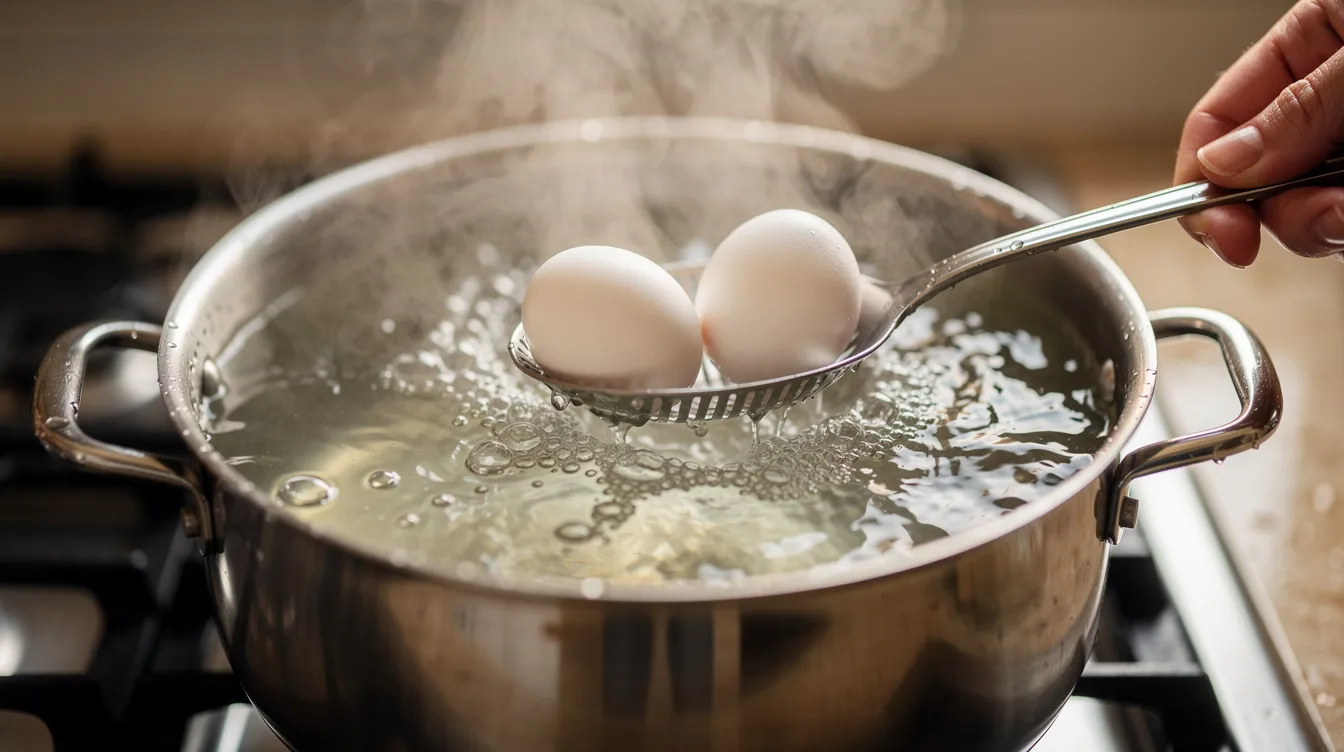
Fill a large pot with enough hot water to cover eggs by 1–2 inches. Bring water to a boil—a true rolling boil. Add a spoonful of salt and a splash of vinegar if desired (these help seal any cracks that form).
Lower Eggs Gently
Reduce heat to maintain a gentle boil. Using a slotted spoon or ladle, lower eggs gently into the water one at a time to avoid cracking the egg shell against the pot bottom. Start your timer immediately once all eggs are in.
Timing Guide for Large Eggs
|
Time |
Result |
|---|---|
|
6 minutes |
Slightly runny yolk, dramatic for slurping |
|
6½ minutes |
Classic jammy ramen egg (recommended) |
|
7 minutes |
Firmer but moist custardy center |
Gently stir eggs during the first 1–2 minutes to center the yolks. This rotates them via density gradients and prevents the yolk from settling to one side.
Ice Bath Immediately
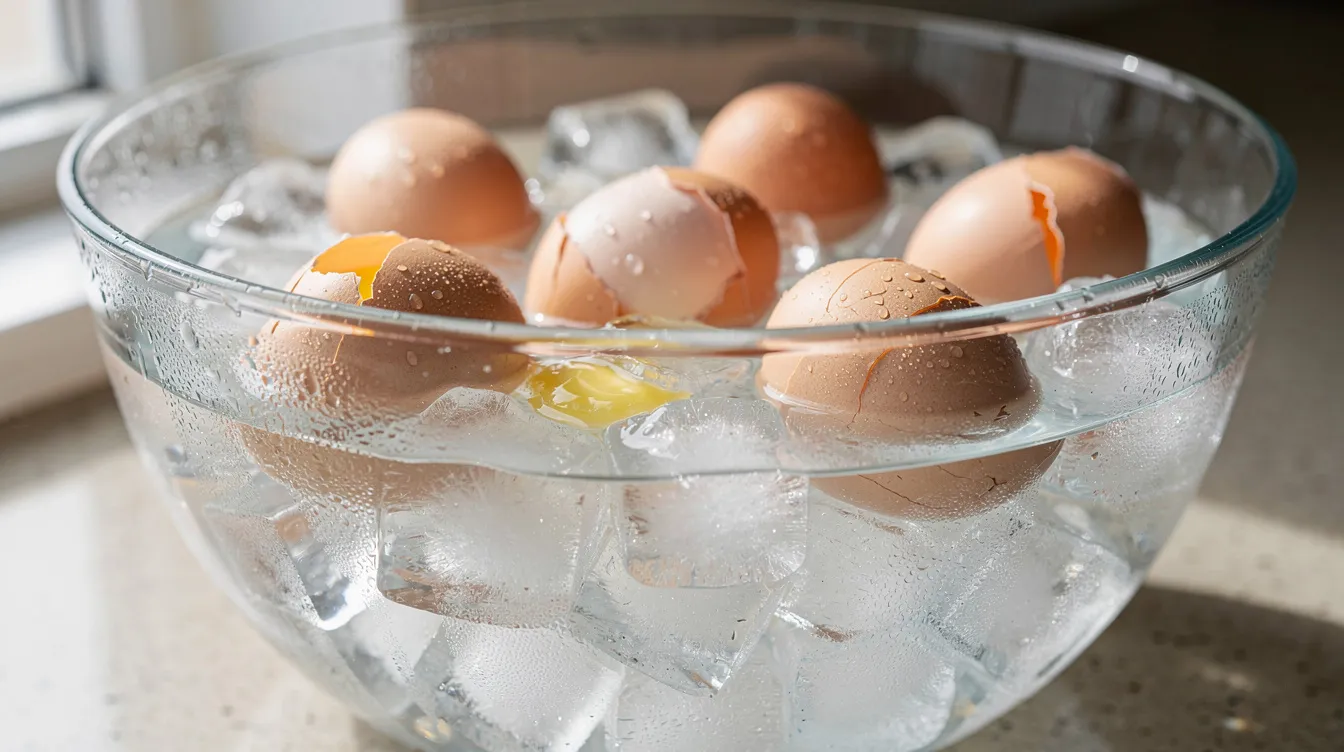
Prepare a large bowl of ice water before eggs finish cooking. The moment your timer goes off, transfer cooked eggs immediately to the ice bath using your slotted spoon.
This step is non-negotiable. Skipping the ice bath leads to carryover cooking, pushing yolks from jammy to chalky. The yolk continues cooking above 70°C, so rapid cooling is essential.
Cooling and Peeling
Keep eggs in ice water for at least 5–10 minutes until completely cool. This protects the yolk texture and loosens the membrane for easier peeling.
Peeling tips:
- Crack eggs gently all over by rolling under your palm
- Start peeling from the wide end where the air pocket sits
- Peel eggs under cool running water to separate the membrane
- Pat dry with paper towel before marinating
Older eggs peel more cleanly because their pH rises from about 7.6 to 9.0 over time, weakening the membrane-shell bond.
Making the Soy Mirin Marinade
The ramen egg marinade balances salty umami from soy sauce, sweetness from mirin, and dilution from water so eggs can soak 8–24 hours without becoming overly salty.
Base Ratio
- ¼ cup soy sauce
- ¼ cup mirin
- ⅓–½ cup water
This creates enough marinade for 6 eggs in a snug container.
No-Cook Method
For a plain marinade without aromatics, whisk all ingredients together in a measuring cup until combined. Pour over peeled eggs immediately.
Cooked/Aromatic Method
If using garlic, ginger, kombu, or spices, combine marinade ingredients in a small saucepan. Bring to a simmer for 2–3 minutes to extract aromatics and evaporate some alcohol from the mirin. Cool completely before adding eggs—warm marinade will continue cooking your perfectly cooked eggs.
Color Adjustment
For deeper brown color without extra saltiness, add 1 teaspoon of dark soy sauce. Dark soy has higher melanoidin content, which intensifies color without dramatically increasing sodium.
Quick Reference
|
Method |
When to Use |
|---|---|
|
No-cook |
Plain soy sauce eggs, quick prep |
|
Simmered |
Garlicky, ginger-infused, or spiced versions |
How to Marinate Your Ramen Eggs
Marinating is where the umami flavor and signature brown color develop. The whites absorb seasoning gradually while the yolk stays protected.
Container Choice
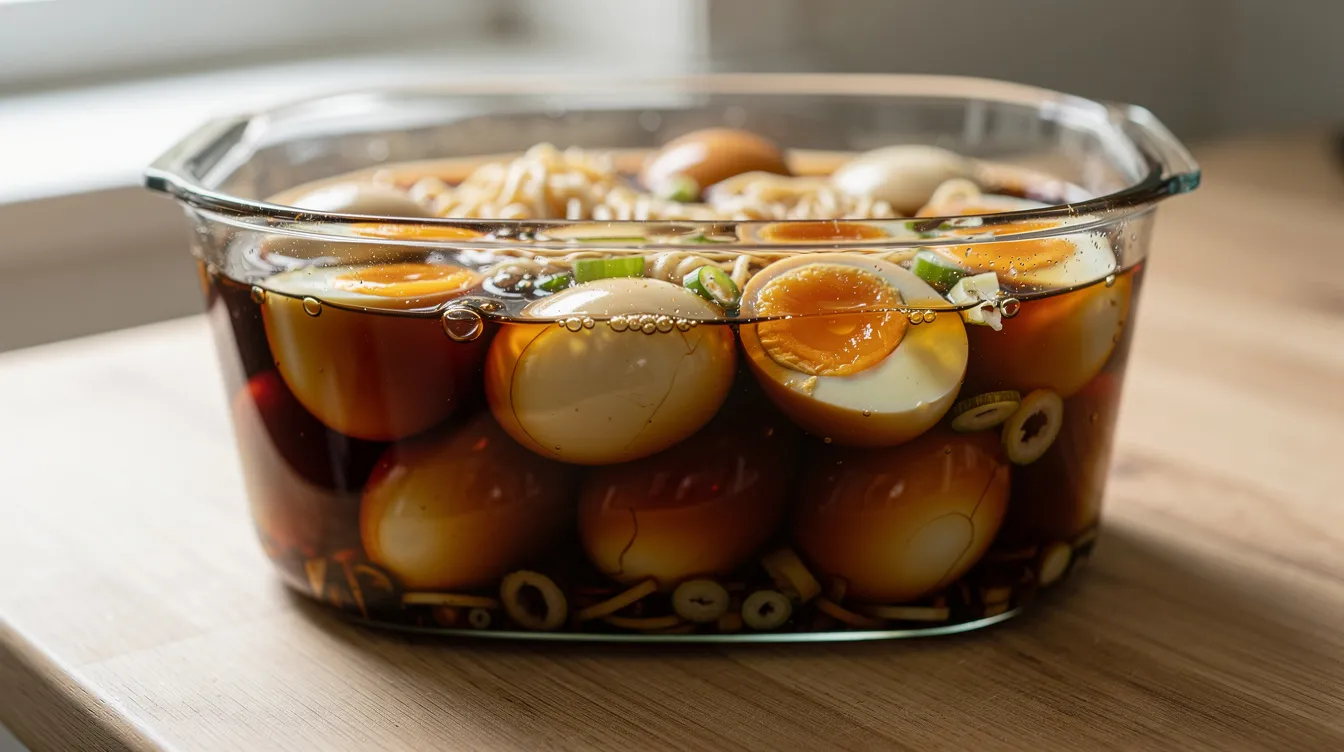
Use a narrow container or zip-top bag so eggs stay mostly submerged with minimal marinade. A bag works well—remove air, seal, and place in a bowl for stability. Eggs should nestle together with marinade surrounding them.
Submerging Eggs
Place peeled eggs in your chosen container. Pour cooled mirin mixture over them, ensuring eggs are fully submerged or nearly so.
Marinating Timeline
|
Duration |
Result |
|---|---|
|
2 hours |
Light flavor on whites |
|
8–12 hours |
Classic ramen-shop taste |
|
24 hours |
Deeper color, yolk starts absorbing seasoning |
The whites absorb roughly 5–10% of the sodium during standard marinating. After 12 hours, the rate slows significantly.
Even Coloring
If eggs aren’t fully submerged, gently roll or flip them every 4–6 hours for consistent coloring. Alternatively, place a folded paper towel on top to wick marinade over exposed surfaces.
Visual Cues for Doneness
Finished soy marinated eggs show a light to medium brown exterior. When cut in half, the white should be evenly colored and the jammy yolk should remain golden and custardy.
Flavor Profile and How to Tweak It
The base marinade produces a balanced salty-sweet flavor that works with most ramen styles. Adjust these elements to match your preference or specific broth pairings.
Sweeter Profile
Add 1–2 teaspoons of sugar or honey. This mimics the sweeter style found in some Japanese chain ramen restaurants. Mirin already contains 40–50% natural sugars, so a little extra creates noticeable sweetness.
More Savory/Umami
- Add 1 teaspoon dark soy sauce
- Include a 2-inch piece of kombu
- Use mushroom soy sauce instead of regular soy
Kombu adds glutamate, which synergizes with the natural umami in soy sauce for amplified depth—perfect alongside steaming Korean soul food favorites.
Brighter Flavor
Add 1–2 teaspoons of rice vinegar. The slight tang cuts through rich, fatty broths like tonkotsu or cheese ramyun. The lower pH also enhances perceived freshness.
Garlicky or Spiced
- 1 crushed garlic clove for pungency
- 2–3 slices fresh ginger for warmth
- A few drops of sesame oil for nuttiness
- Dried chili or red pepper flakes for subtle heat
Always simmer and fully cool the marinade when using these aromatics to extract flavor without cooking the eggs.
Pairing Suggestions
|
Flavor Tweak |
Best Paired With |
|---|---|
|
Sweeter |
Shoyu ramen, mild broths |
|
Extra umami |
Tonkotsu, rich pork broths |
|
Brighter |
Cheese ramyun, fatty soups |
|
Garlicky/spiced |
Buldak, Shin Ramyun |
Serving Ideas: Japanese Ramen and Korean Ramyun
These eggs show up across both Japanese and Korean noodle culture in my kitchen. They’re equally at home on authentic shoyu ramen and a quick bowl of instant ramyun, especially when you’re playing with viral mayak-style ramyun trends.
Classic Ramen Presentation
Halve eggs lengthwise just before serving. Place cut side up on shoyu, miso, or tonkotsu ramen for the best visual impact. The runny yolk enriches the ramen soup as you eat.
Korean Ramyun Pairing
Drop a halved ramen egg into Shin Ramyun, Jin Ramen, or Buldak-bokkeum-myeon—even fun limited editions like the K-pop Demon Hunter collab Shin Ramyun. The richness balances spicy broths and adds protein to what’s otherwise a quick meal. The slightly sweet marinade complements the heat.
Rice Bowls
Place a halved marinated egg over warm rice with:
- Drizzle of toasted sesame oil
- Kimchi (one of many iconic Korean street foods like tteokbokki and ramyun)
- Roasted seaweed
- Sesame seeds
The egg yolks act as a sauce binder, coating each grain of rice.
Snacks and Breakfast
- Slice onto avocado toast
- Add to gimbap-style rolls or crispy Korean fried chicken nights
- Eat straight from the fridge with a sprinkle of sesame seeds
- Serve alongside warm water-blanched vegetables and your favorite viral Korean snack line-up
Beyond Noodles
Ramen eggs work in any context where you’d use hard boiled eggs but want more flavor and texture interest. They’re a delicious recipe addition to grain bowls, salads, and bento boxes.
Storage, Food Safety, and Reusing Marinade
Proper storage keeps your soy sauce marinated eggs safe and delicious for several days.
Refrigerator Storage
Store eggs in an airtight container in the refrigerator. Keep them in diluted marinade or drain once they reach desired saltiness. Drained storage prevents over-seasoning.
Shelf Life
Enjoy within 4–5 days for best texture and flavor. Very soft, jammy centers are best eaten within the first 2–3 days. The yolk texture firms slightly over time even when refrigerated.
Preventing Over-Salting
If your marinade is concentrated, remove eggs after 8–12 hours and store separately. This prevents the whites from becoming too salty while keeping the eggs moist.
Marinade Reuse
Leftover marinade can be reused once or twice within 1–2 weeks if:
- Kept refrigerated
- Brought to a brief boil before reuse
- Cooled completely before adding fresh batch of eggs
- Discarded if cloudy, off-smelling, or discolored
Food Safety
- Use fresh eggs from a reliable source
- Keep cooked eggs refrigerated at 4°C (40°F) or below
- Discard eggs showing slimy texture, off smells, or unusual color
- For vulnerable groups (pregnant, immunocompromised), cook to 7 minutes for firmer yolks
Time-Saving Tips and Make-Ahead Strategy
This section is for busy readers who want perfect ramen eggs ready for quick meals throughout the week.
Batch Cooking
Make 8–12 eggs at once. They store well for 4–5 days, giving you enough for multiple ramen bowls, rice bowls, and snacks without repeating the cooking process.
Optimal Prep Cadence
- Evening: Boil and peel eggs, place in marinade
- Overnight: Eggs marinate 8–12 hours
- Next 3–4 days: Use eggs at peak quality
This timing means you always have jammy eggs ready when a craving hits.
Efficient Multitasking
While eggs cool in the ice bath:
- Prep other toppings (scallions, corn, nori)
- Prepare kimchi portions
- Mix your marinade
While eggs marinate:
- Stock up on instant ramyun
- Make a fresh batch of rice
Cutting and Reheating
- Slice eggs only when serving to preserve presentation
- To reheat ramen eggs, briefly place in hot broth or warm water rather than microwaving
- Microwaving risks rubbery whites and overcooked yolks
Troubleshooting Common Ramen Egg Problems
Even experienced cooks encounter issues. Here’s how to diagnose and fix the most common problems.
Overcooked Yolks (Chalky, Green Ring)
Cause: Eggs stayed in hot water too long or skipped ice bath. Green ring forms when hydrogen sulfide reacts with iron at temperatures above 75°C.
Fix: Shave 30–60 seconds off boil time. Transfer to ice water immediately. Ensure ice bath is truly cold with plenty of ice.
Undercooked Whites (Translucent, Loose)
Cause: Insufficient cooking time or water wasn’t at full boil.
Fix: Add 30 seconds to boiling time. Ensure water maintains gentle boil throughout cooking.
Hard-to-Peel Shells
Cause: Very fresh eggs (low pH) or no vinegar in cooking water.
Fix: Use older eggs when possible. Start peel from wide end. Peel under running water to help release membrane. Add vinegar to boiling water.
Too Salty
Cause: Undiluted marinade or eggs marinate over 24 hours.
Fix: Dilute marinade with equal parts water for next batch. Remove eggs from marinade once adequately seasoned. Serve overly salty eggs with plain rice to balance.
Pale Color (No Brown Exterior)
Cause: Not enough soy sauce or too short marinating time.
Fix: Add 1 teaspoon dark soy to marinade. Extend marinating to 12+ hours. Ensure eggs are submerged.
Yolk Off-Center
Cause: Eggs not stirred during first minutes of cooking.
Fix: Gently stir eggs during initial 1–2 minutes to rotate yolks via density gradients.
FAQ
Can I make ramen eggs without mirin?
Yes. Substitute mirin with a mix of 3 parts water to 1 part sugar, plus a small splash of rice vinegar or mild white wine for complexity. The flavor will be slightly different—less nuanced sweetness—but still balanced enough for ramen and rice bowls. Honey works as an alternative sweetener if sugar isn’t available.
Do ramen eggs work with air fryer or Instant Pot methods?
Instant Pot produces reliable results: pressure-cook large eggs on high for about 4 minutes, use quick release, then transfer immediately to an ice bath before marinating as usual. Air fryers are less consistent for jammy eggs because dry heat creates uneven cooking—whites can turn rubbery while yolks remain undercooked. For precise control over soft egg whites and jammy centers, stovetop or Instant Pot methods are more dependable.
Can I freeze ramen eggs?
Freezing is not recommended. Ice crystal expansion causes whites to become rubbery and egg yolks to turn grainy after thawing. The texture change is significant and unpleasant. Instead, make smaller, more frequent batches every 3–4 days so eggs are eaten fresh within the optimal window for best taste and texture.
How do I adjust timing for medium or extra-large eggs?
For medium eggs (around 50g), subtract 30 seconds from the base time. For extra-large eggs (around 70g), add 30–60 seconds. Cold eggs directly from the fridge add roughly 30 seconds to any timing. Test one egg first using your specific equipment, then adjust by 15–30 seconds at a time until you dial in your preferred yolk texture. Always follow with an immediate ice bath regardless of size.
Are ramen eggs safe to eat if the yolk is still a bit soft?
Jammy or slightly soft yolks are standard in Japanese cuisine and traditional ramen restaurants worldwide. The key is using fresh, properly handled eggs from a reliable source and storing finished eggs refrigerated below 4°C. FDA data suggests Salmonella risk in refrigerated eggs is less than 1 in 20,000. For anyone pregnant, immunocompromised, or cautious about soft yolks, cook eggs closer to 7 minutes for a firmer but still moist center before marinating—you’ll still get flavorful shoyu eggs without the ultra-jammy texture.
