


I've covered tteokbokki through reviews and guides before. This one is for the vegans. Vegan tteokbokki gives you the same chewy rice cakes and that glossy, spicy red sauce without the anchovy broth and fish cakes.
If you love Korean food but follow a plant-based diet, this is one of the easiest classic Korean dishes to make at home.
Key Takeaways
- Vegan tteokbokki is a fully plant-based version of Korea's iconic spicy rice cake street food. This guide covers what tteokbokki is, how to make it vegan in about 20 minutes, what brands and ingredients to look for online, and how it actually tastes.
- Most plain Korean rice cakes are naturally vegan and gluten free since they're made from rice flour, water, and salt. Store-bought sauces and pre-packaged kits often contain seafood extract, so checking ingredient labels is essential.
- This article covers easy swaps for anchovy broth and fish cakes, serving ideas, storage tips, and a FAQ section.
- Making vegan tteokbokki at home costs roughly $2 to $4 per batch versus $8 to $15 at Korean restaurants, and it takes only 15 to 20 minutes with one pot.
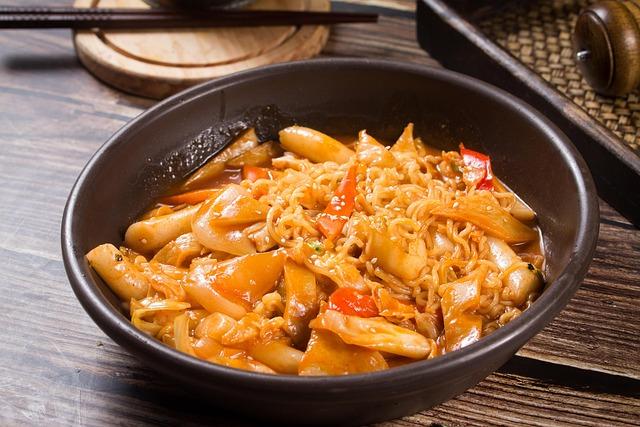
What Is Tteokbokki? (And How Does Vegan Tteokbokki Fit In?)
Tteokbokki is one of the most recognized Korean street food dishes worldwide. Walk through any neighborhood in Seoul, and you'll find street stalls serving cylinder-shaped rice cakes swimming in bright red, sweet-spicy sauce. It's comfort food at its most direct: chewy, saucy, and deeply satisfying.
It can also be served with various side dishes, like boiled eggs, kimchi, and fried tofu.
Understanding the Name and History
- "Tteokbokki" literally translates to "stir fried rice cake"
- The dish originated in the Joseon Dynasty as a refined, soy-based royal court preparation
- The modern red gochujang version emerged in the 1950s, with street vendor Ma Bok-rim in Sindang-dong, Seoul credited with popularizing the spicy sauce version around 1953
- Today, Sindang-dong Tteokbokki Town hosts over 30 specialized stalls drawing millions of visitors annually
The Traditional (Non-Vegan) Build Includes
- Chewy cylindrical rice cakes
- Sliced fish cakes
- Cabbage and scallions
- Sometimes boiled egg
- An anchovy-kelp broth base with gochujang, sugar, and gochugaru
Flavor Profile of Classic Tteokbokki
The sauce is thick and glossy, with slow-building heat from gochujang and gochugaru (around 1,000 to 2,500 Scoville). Sweetness from sugar or corn syrup balances the spice, while anchovy broth provides deep savoriness. The chewy rice cakes offer a signature bouncy texture: soft exterior with a resilient, mochi-like center.
Where Are the Animal Products?
Traditional tteokbokki contains anchovies in the broth, fish cakes simmered in the pot, sometimes egg, and dairy cheese in trendy rosé or cheese versions. The rice cakes themselves are typically vegan. It's everything around them that isn't.
The Vegan Tteokbokki Approach
The vegan approach keeps the same chewy rice cakes and red sauce but swaps vegetable or kelp broth for anchovies, uses fried tofu or tofu pouches instead of fish cakes, and opts for vegan cheese if making cheese tteokbokki. The result hits the same comfort food notes without any animal products.
Why Make Vegan Tteokbokki at Home?
- Complete ingredient control: You guarantee your tteokbokki is fully plant-based. You can choose gluten free gochujang, avoid high-fructose corn syrup, and adjust spice and sweetness for different palates.
- Speed and simplicity: Basic vegan tteokbokki takes roughly 15 to 20 minutes with one pot and under 10 core ingredients: rice cakes, gochujang, gochugaru, soy sauce or tamari, sweetener, vegetable broth, minced garlic, green onions, and oil.
- Cost advantage: A single tteokbokki portion at a restaurant runs $8 to $15. A 1 to 2 lb bag of frozen rice cakes costs $6 to $8 online, and each serving drops to $2 to $4 with pantry ingredients.
- Flavor payoff: With a well-built vegan broth using kelp, dried shiitake, and soy sauce, you still get deep, simmered umami. Kelp delivers 1,600 to 3,200 mg of glutamates per 100g, actually rivaling anchovies' 1,000 to 1,500 mg.
- Product evaluation skills: Cooking tteokbokki yourself helps you understand Korean street food structure, making it easier to evaluate packaged kits sold on Amazon or at Korean markets.
Core Ingredients for Vegan Tteokbokki (And Smart Substitutions)
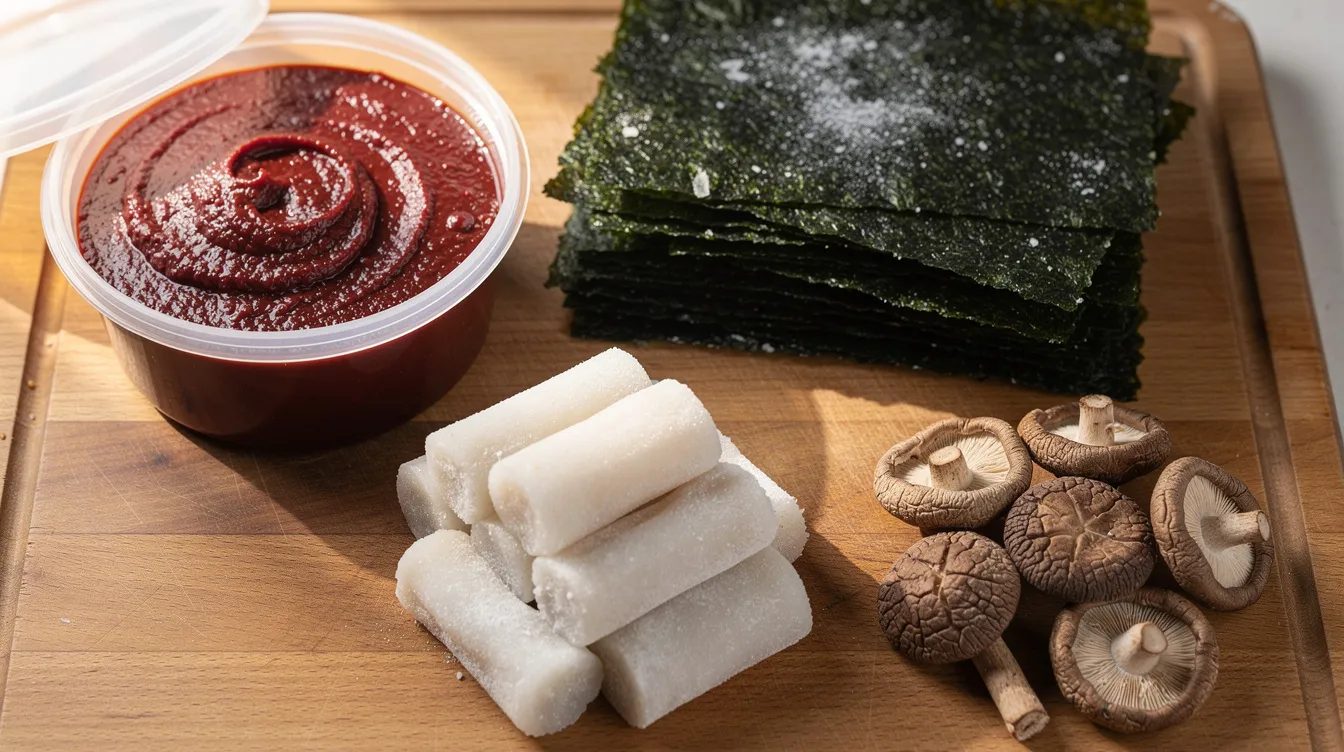
Rice Cakes (Tteok / Garaetteok)
- Plain white rice cakes for tteokbokki are made from rice flour, water, and salt: vegan and naturally gluten free in traditional recipes.
- Cylindrical shapes (2 to 3cm diameter) are standard for street-style tteokbokki because sauce pools in the grooves. Coin-shaped work but don't absorb sauce as well.
Watch out for: Pre-seasoned rice cakes or those packed with sauce. Unless labeled vegan, these often contain hidden seafood flavoring. Fresh rice cakes offer the best texture, but frozen work perfectly with a brief soak.
Gochujang (Korean Red Pepper Paste)
- This fermented chili paste is the heart of tteokbokki sauce. Typical composition includes gochu chilies, fermented soybeans, rice or barley malt, sweetener, and salt.
Vegan concerns: Some brands contain honey or beef extract. Many mainstream Korean brands also use wheat. Look for tubs marked "vegan" and "gluten-free" when necessary. Mother-in-Law's brand offers certified vegan and gluten free options.
Gochugaru (Korean Red Pepper Flakes)
- These sun-dried chili flakes are fruity and smoky rather than sharply hot. Gochugaru adjusts heat level and deepens the sauce's red color. It's naturally vegan across all brands.
How much to use: 1 to 2 teaspoons per 2 to 3 serving batch yields medium spice. Add more if you love heat, or skip entirely for a milder version.
Broth Base
Traditional tteokbokki uses anchovy broth, which obviously isn't vegan. The swap is straightforward and delivers 80 to 90% of the traditional umami:
Traditional |
Vegan Swap |
|---|---|
Anchovy stock |
Dried kelp (dashima) + dried shiitake mushrooms |
Fish-derived umami |
Mushroom bouillon or low sodium vegetable broth |
Quick method |
Kelp powder + soy sauce in water |
- Simmer dried kelp (a 4x4" piece), 4 dried shiitakes, a chunk of onion, and smashed garlic in water for 10 to 15 minutes. Remove the kelp after simmering to prevent bitterness from over-extraction.
Soy Sauce / Tamari
- Soy sauce deepens savoriness and adds salinity. Use about 2 tablespoons per batch.
- For gluten free needs, substitute tamari or certified gluten-free soy sauce.
Sweetener
Street stalls typically use white sugar or corn syrup for that glossy, candy-like finish. At home, you have options:
Sweetener |
Flavor Profile |
|---|---|
Corn syrup |
Glossy, candy-sweet (traditional) |
Maple syrup |
Caramel notes, more complex |
Brown sugar |
Molasses depth |
Agave syrup |
Clean, neutral sweetness |
Coconut sugar |
Subtle caramel, less processed |
Oils and Aromatics
- Use neutral oil for cooking.
- Add toasted sesame oil at the very end. Heat destroys its aromatics.
- Include minced garlic (2 to 3 cloves), sliced green onions, and optionally onion or cabbage for more body.
Protein and Fish Cake Stand-Ins
Swap |
Texture |
Notes |
|---|---|---|
Fried tofu pouches (yuba) |
Chewy, sauce-absorbing |
Closest to fish cakes |
Firm tofu, sliced and pan-fried |
Crispy edges, tofu flavor |
Adds protein, less sauce absorption |
Vegan sausages, sliced on bias |
Smoky, firm bite |
Different texture, adds variety |
Optional Add-Ins
- Sliced carrot
- Napa cabbage
- Bok choi
- Enoki or oyster mushrooms
- Ramen noodles for rabokki style
- Bell peppers
- Vegan shredded cheese for a fusion twist
How to Make Easy Vegan Tteokbokki (Step-by-Step)
A 15 to 20 minute weeknight method using one deep pan or wide pot.
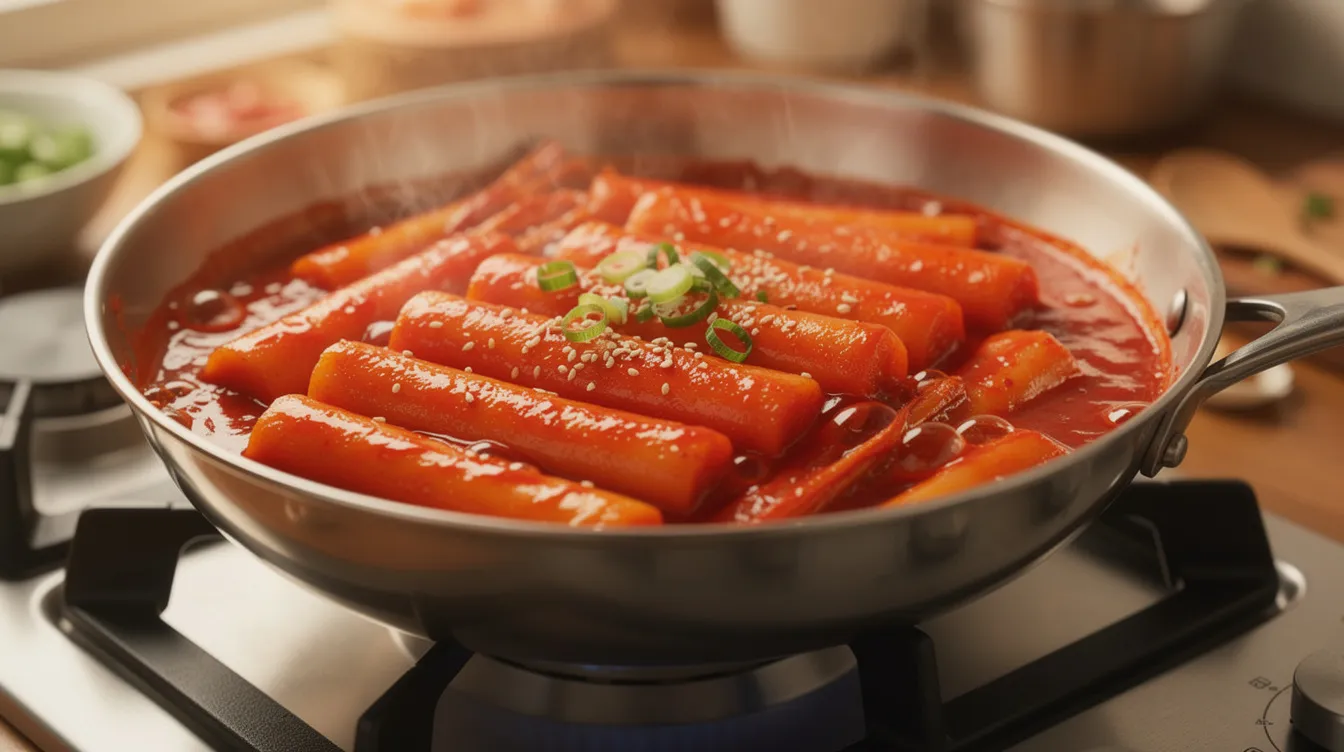
Step 1: Prep the Rice Cakes
Soak refrigerated or frozen rice cakes in warm water for 5 to 10 minutes. This loosens them and prevents clumping during cooking. Overly dried tteok may need a longer soak.
Step 2: Build the Vegan Broth
Bring 4 to 5 cups of water or vegetable broth to a simmer with one 4x4" piece of dried kelp, 4 dried shiitake mushrooms, half an onion roughly chopped, and 2 to 3 cloves garlic smashed. Simmer 10 to 15 minutes. Remove the kelp to avoid bitterness. Leave mushrooms in for more depth if you like.
Step 3: Mix the Sauce Ingredients
In a small bowl, whisk together 3 to 4 tablespoons gochujang, 1 to 2 teaspoons gochugaru, 2 tablespoons soy sauce or tamari, and 2 tablespoons sweetener. Add a ladleful of hot broth and whisk until smooth. This prevents gochujang clumps. Pour the mixture back into the pot.
Step 4: Add Rice Cakes and Vegetables
Drain the soaked tteok. Add them to the simmering sauce along with sliced onion, cabbage, or other quick-cooking vegetables. Stir frequently to prevent sticking.
Step 5: Simmer and Thicken
Simmer uncovered for 8 to 10 minutes until the rice cakes are soft with a bouncy center. The sauce should reduce to a glossy, coat-the-spoon consistency. Starch released from the rice cakes naturally thickens the sauce.
Step 6: Add Protein and Finishing Touches
Add fried tofu pouches, tofu slices, or vegan sausage during the last 3 to 5 minutes. They'll soak up flavor without falling apart.
Finish with sliced green onions, sesame seeds, and a drizzle of toasted sesame oil.
Adjustments
- Sauce too thick? Add a splash of water or broth.
- Want more heat? Add extra gochujang or gochugaru.
- Taste for balance between sweet, salty, and spicy before serving.
Flavor and Texture: What Does Vegan Tteokbokki Actually Taste Like?
Sauce Heat
The heat builds slowly from gochujang rather than hitting sharp and fast. Gochugaru adds a smoky top note. At standard levels, expect medium spice.
Sweetness
Street tteokbokki leans clearly sweet, almost like spicy candy sauce. Vegan home versions can match this or dial it down. Maple syrup introduces more complex sweetness compared to corn syrup's straightforward candy profile.
Umami
Kombu, dried mushrooms, and soy sauce create a deep savory base. The flavor profile is slightly cleaner and more mushroom-forward than seafood-based versions, but still rich and satisfying. Taste tests score vegan versions at 8.5/10 umami compared to 9/10 for traditional. Very close.
Chew Factor
Well-cooked tteok has a unique bouncy texture: soft outside, resilient center. Think ultra-dense gnocchi or very thick mochi. Overcooking makes them mushy; undercooking leaves a hard core. The target is 8 to 10 minutes of simmering.
Sauce Thickness
Good tteokbokki sauce clings heavily to each cylinder but remains fluid enough to scoop with a spoon. Similar to thin gravy or very loose ketchup. The rice cakes' own starch naturally builds this texture.
Overall Experience
A good vegan tteokbokki bowl hits sweet, salty, spicy, chewy, and saucy all at once. It feels like proper Korean comfort food even without the traditional fish components.
Fun Vegan Add-Ons, Variations, and What to Eat With Tteokbokki
Tteokbokki works as a snack but easily becomes a full meal with the right additions. It's a staple in the broader world of Korean soul food comfort dishes.
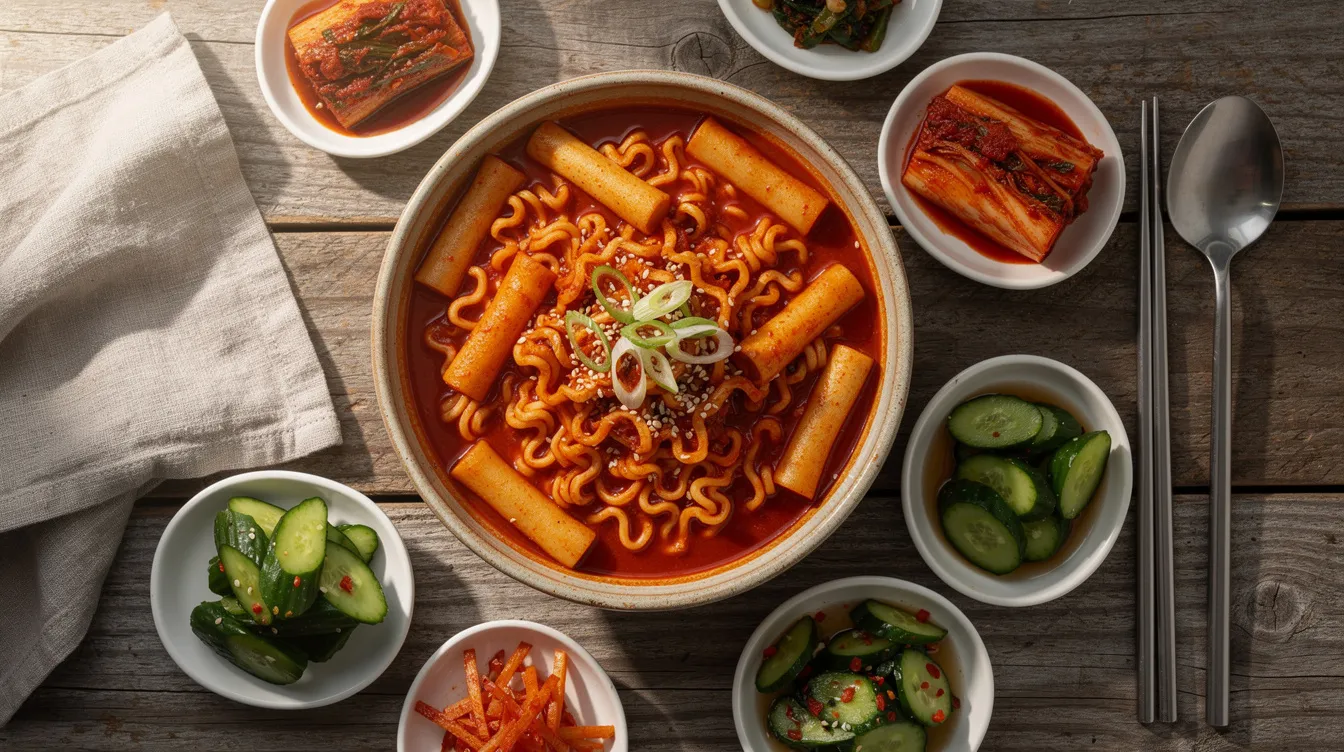
Add-Ons Inside the Pan
Beyond the standard vegetables, consider fried tofu pouches, pan-seared firm tofu rectangles, or specialty vegan fish cake products where available. Napa cabbage, carrots, mushrooms, and green onions add color and texture variety.
Rabokki (Tteokbokki with Ramyun)
Make vegan rabokki by adding a block of vegan instant ramen noodles in the last 3 to 4 minutes of simmering. Skip non-vegan seasoning packets and use extra gochujang and soy sauce instead. This comforting rabokki recipe is a great way to stretch one batch into a bigger meal.
Cheese or Rosé Style
Top hot vegan tteokbokki with shredded vegan mozzarella for that trendy cheese pull. For rosé style, add 1/4 cup of plant-based cream or oat milk to slightly lighten and mellow the spice. This popular variation originated in Seoul and keeps trending globally, much like other viral Korean food trends.
Side Dishes to Pair
- Vegan kimchi (made without fish sauce) and other trending Korean snack-style sides
- Cucumber muchim (spicy cucumber salad with sesame-gochugaru dressing)
- Plain rice to soak up extra sauce
Serving Format
Serve warm in a shallow bowl with plenty of sauce. Garnish with toasted sesame seeds and extra scallions. Eat with chopsticks plus a spoon to chase the sauce.
Buying Vegan-Friendly Tteokbokki Ingredients Online
Rice Cakes
- Select plain frozen or vacuum-packed cylindrical rice cakes labeled "tteokbokki tteok."
- Avoid pre-seasoned versions or those with attached sauce packets unless clearly marked vegan.
- Cylindrical shapes work best. Brands like Bibigo or Paldo offer 1 to 2 lb bags for $6 to $8.
Gochujang
- Look for tubs specifically marked "no animal ingredients" or "vegan."
- Check ingredient labels for fermented soy, chili, grains, and sweetener. Avoid anything listing seafood stock, gelatin, honey, or dairy.
Instant/Packaged Kits
Warning: Many popular Korean brand kits include non-vegan sauce packets built on anchovy or seafood extract. Vegan-friendly kits exist but remain less common. It's usually safer to buy plain rice cakes plus separate vegan sauces or make your own.
Other Pantry Items
- Build a flexible Korean vegan pantry by adding dried kelp, kelp powder, dried shiitake, gochugaru, and soy sauce. These work for other Korean dishes like kimchi jjigae, spicy noodles, or Korean budae jjigae army stew too.
Quality Cues for Online Shopping
- Check recent reviews mentioning texture ("bouncy," "soft," not "mushy" or "hard")
- Look at product photos for minimal ice crystals on frozen types
- Prefer brands specifying "soft" or "for tteokbokki" over generic "rice cakes"
Storing, Reheating, and Leftover Tips for Vegan Tteokbokki
Tteokbokki is best right after cooking, but leftovers can be rescued with proper technique.
- Same-day texture: Spicy rice cakes start to firm up as they cool. The ideal eating window is within 20 to 30 minutes of cooking when they're at peak softness and bounce.
- Fridge storage: Cool leftovers to room temperature, then transfer to an airtight container. Refrigerate for up to 2 to 3 days. Expect the sauce to thicken and rice cakes to harden in the cold.
Reheating on Stovetop (Best Method)
- Add a generous splash of water or vegetable broth to the pan.
- Reheat gently over low-medium heat.
- Stir until sauce loosens and rice cakes soften.
- Avoid high heat. It makes them gluey outside but hard inside.
Microwave Reheating
- Place portion in a microwave-safe bowl.
- Add a spoonful of water.
- Cover loosely.
- Heat in short bursts, stirring between intervals.
- Freezer considerations: Already-cooked tteokbokki doesn't freeze well. Rice cakes become crumbly or tough. Instead, freeze plain rice cakes and make sauce fresh when needed.
FAQ's
These questions address common concerns about making vegan tteokbokki, especially if you're curious about how this dish fits into broader viral tteokbokki and K-food trends.
Is tteokbokki sauce usually vegan at Korean restaurants?
Most restaurant and street stall sauces are not vegan. They rely on anchovy broth plus fish cakes, even when no visible seafood appears in the bowl. This is standard across roughly 95% of Korean stalls.
If eating out, ask specifically whether the base broth contains anchovy or seafood and whether fish cakes are cooked in the same pot. Cross-flavoring happens even if you request "no fish cake." Some modern vegan-focused Korean eateries offer fully plant-based versions, but they remain the exception.
Are all Korean rice cakes (tteok) vegan and gluten free?
Most plain white rice cakes for tteokbokki are made from rice flour, water, and salt: vegan and naturally gluten free. Specialty tteok for desserts may include added sweeteners or flavorings that aren't always vegan. Some manufacturers process in facilities handling wheat, creating cross-contamination risk. For strict dietary needs, check packaging for explicit "gluten-free" or "vegan" labels.
How can I make my vegan tteokbokki less spicy without losing flavor?
Cut the gochujang quantity in half and skip or sharply reduce gochugaru. Compensate with a bit more soy sauce and an extra piece of kombu or mushroom for umami depth. You can also add a splash of plant-based milk or a spoon of vegan cream at the end to create a creamier, rosé-style sauce that softens the heat naturally.
What's the best vegan substitute for Korean fish cakes in tteokbokki?
Thin fried tofu pouches or yuba sheets are the closest match. They become chewy and soak up sauce similarly to traditional fish cakes. Firm tofu sliced thin and pan-fried until golden also works well and adds protein.
Can I turn leftover vegan tteokbokki into another dish?
Yes. Chop leftover rice cakes and toss them into a stir-fry with vegetables and extra gochujang. Adding broth and cooked noodles transforms leftovers into quick rabokki-style noodle soup. If rice cakes are too hard even after reheating, salvage just the sauce as a spicy base for fried rice or noodles.

