


If you've been poking around the Korean snack world for a bit, you've probably seen Yopokki cups everywhere. And then you've seen tteokbokki at Korean restaurants or in recipe videos. They look similar. Same chewy rice cakes, same red sauce. But they're not the same thing.
Here's a breakdown of what actually makes them different, and which one is worth your time depending on what you're after.
Quick Summary:
- Yopokki is an instant tteokbokki brand. It's ready in 3 minutes, comes in lots of flavors, and is sold worldwide.
- Traditional tteokbokki takes 20 to 30 minutes, uses fresh ingredients, and tastes noticeably deeper.
- They both deliver that chewy rice cake fix, but the experience is pretty different once you've had both.
Yopokki vs Traditional Tteokbokki: Overview
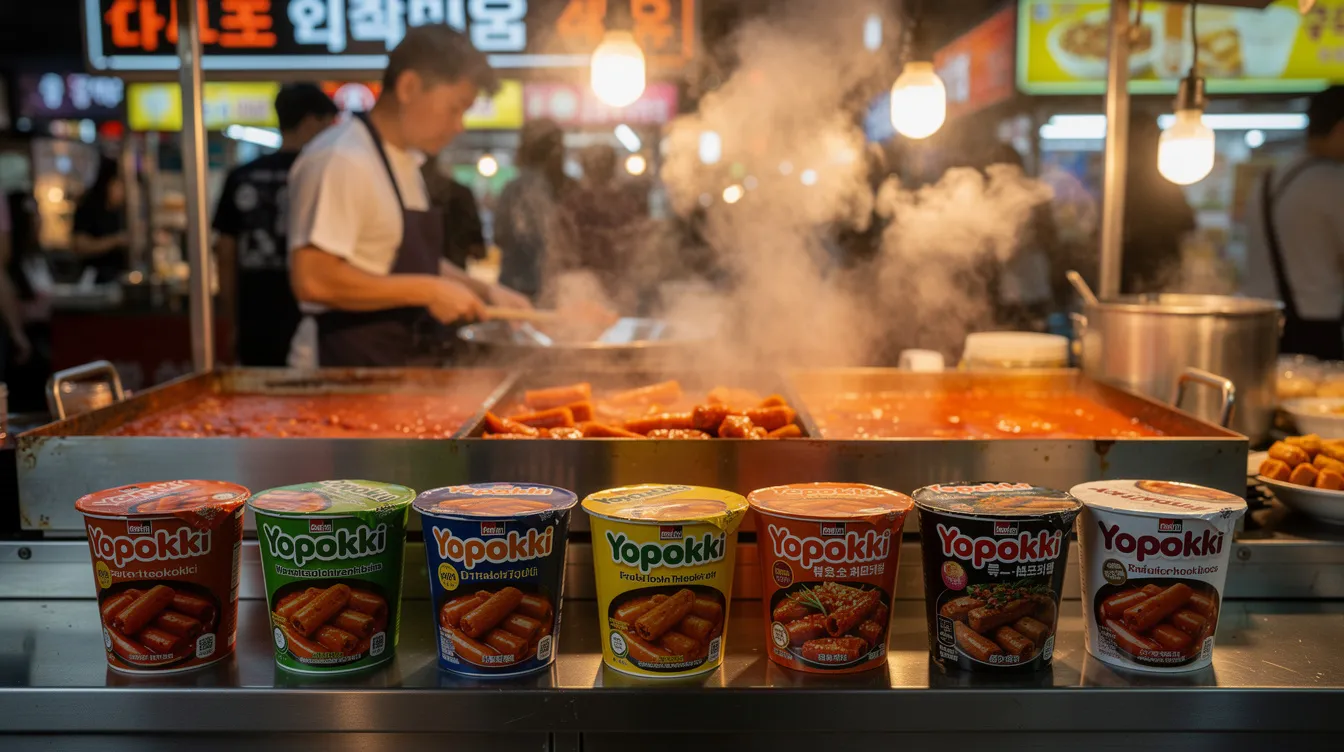
Yopokki is instant. You open the cup, add water, microwave for 2 minutes, and you've got chewy rice cakes in a spicy sauce. The brand has been pushing this format globally and it works well as a quick snack. Popular flavors include spicy, cheese, curry, kimchi, onion butter, and jjajang.
Traditional tteokbokki takes 20 to 30 minutes. You build a broth from anchovies and kelp, soak your rice cakes, make the sauce from scratch, and cook everything together until the sauce thickens properly. The result is more complex and satisfying, but you have to actually be in your kitchen doing it.
Both are chewy and spicy. Yopokki tends to be sweeter and milder. Traditional is richer and hits harder. Your choice really depends on how much time you have and how much flavor complexity you want.
Yopokki vs Traditional Tteokbokki: Key Differences
The core difference is format. Yopokki is engineered for convenience and global shipping. Traditional tteokbokki is a dish you build from scratch using fresh ingredients. Same concept, completely different execution.
Flavor
Traditional tteokbokki builds flavor in layers. The anchovy-kelp broth gives it a savory depth that no instant sauce can replicate. Fermented gochujang adds complexity that goes beyond just being spicy.
Yopokki gives you a consistent, pre-set flavor profile. Good, but the same every time. No anchovy broth, no freshly fermented paste, no real layering.
Time Investment
- Yopokki: about 3 minutes.
- Traditional: 20 to 30 minutes of actual cooking.
Personal Control
- Traditional cooking lets you adjust heat, sweetness, and sauce thickness as you go.
- Instant formats lock you into whatever flavor they decided on at the factory.
Cooking Methods
- Traditional tteokbokki simmers on the stove. The rice cakes soften slowly and absorb the sauce.
- Yopokki uses pre-softened rice cakes that just need hot water to rehydrate.
Preparation Method and Cooking Time
Yopokki Instant Preparation
It really is 3 minutes. Here's the process:
- Open the cup with pre-portioned rice cakes and sauce packet.
- Add water to the fill line.
- Microwave 2 minutes at 1000W (or 2 to 3 minutes at 700W).
- Stir and let it rest for 30 seconds before eating.
You can also do it stovetop. Combine the pouch contents with water in a pan and simmer for about 5 minutes. The texture is slightly better that way.
The flavor is the same every time. That consistency is genuinely useful when you're tired and just want the thing to taste like you expect.
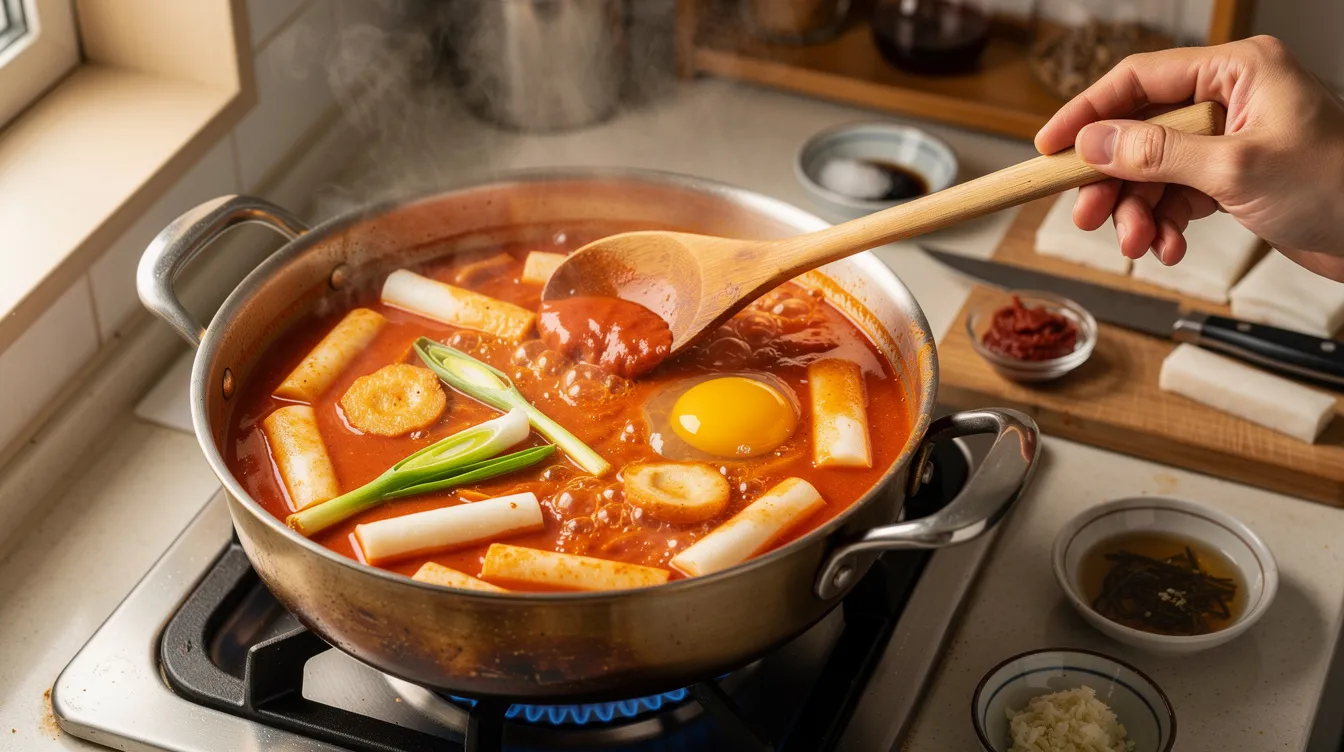
Traditional Tteokbokki Preparation Steps
Traditional tteokbokki takes 20 to 30 minutes and you're actively cooking the whole time. Here's the short version:
- Soak your rice cakes in warm water first to soften them.
- Make a sauce from gochujang, gochugaru, soy sauce, and stock.
- Cook everything together until the rice cakes are tender and the sauce thickens.
The full process:
- Make your anchovy-kelp broth. This is the part that makes traditional tteokbokki taste so different from instant. Don't skip it.
- Soak fresh or frozen rice cakes in warm water for 10 to 20 minutes.
- Mix gochujang, red pepper powder, soy sauce, and sugar or rice syrup until the balance feels right to you.
- Get your fish cakes, vegetables, and boiled eggs ready.
- Simmer everything in the seasoned broth for 5 to 10 minutes until the rice cakes are properly soft.
- Taste as you go and adjust spice and sweetness.
Ingredients and Authenticity
Yopokki Ingredients
Yopokki rice cakes are about 99% rice with some shelf-stability additives like citric acid and grain alcohol. The brand carries HACCP, ISO 22000, and Halal certifications.
The sauce packet for Sweet and Spicy typically includes:
- Tomato ketchup with high fructose corn syrup
- Sugar
- Red pepper paste (contains wheat flour and soy)
- Apple puree
- Onion and garlic powders
- Monosodium glutamate
- Emulsifiers and color stabilizers
These ingredients are optimized for consistent flavor and up to 12 months of shelf life. The sauce tastes engineered rather than cooked. You'll notice the difference once you've had traditional tteokbokki.
Traditional Tteokbokki Ingredients
The core ingredients:
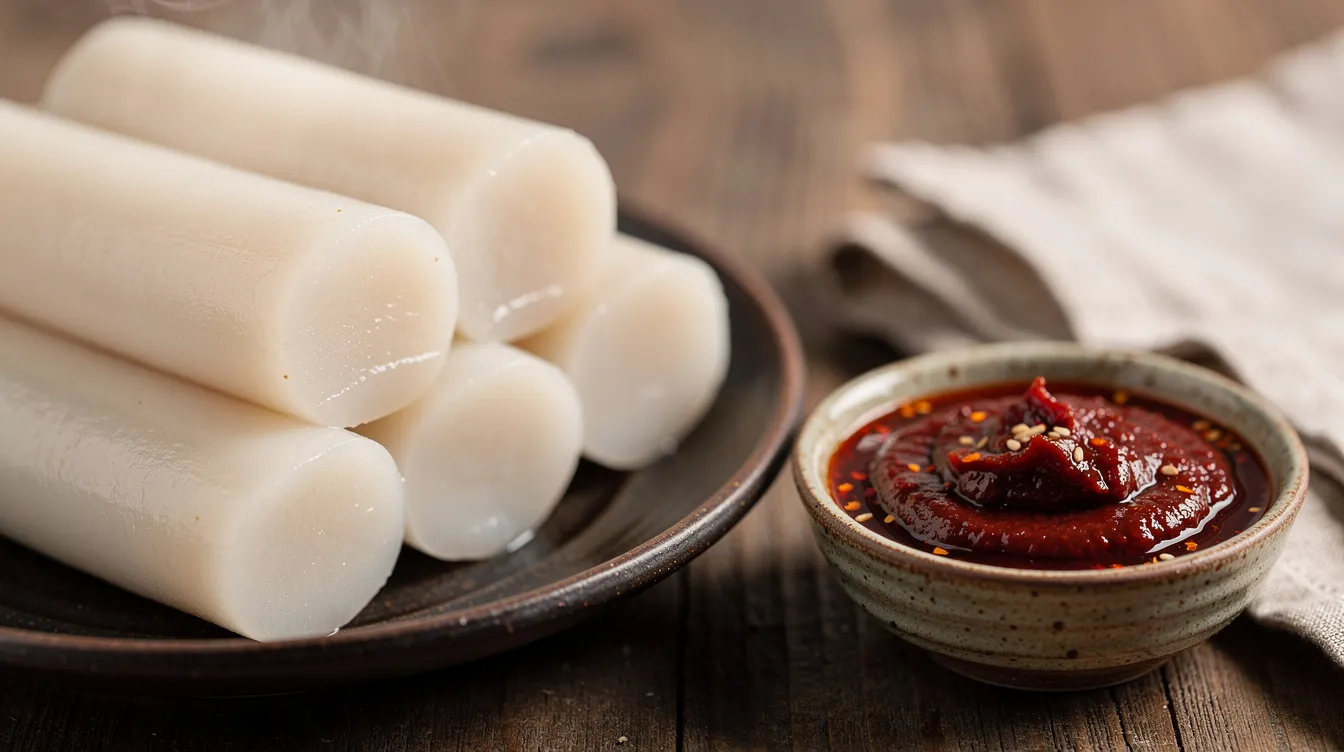
- Fresh or recently made rice cakes
- Good fermented gochujang
- Fresh fish cakes
- Vegetables: cabbage, onion, green onions
- Boiled eggs
- Sesame oil and sesame seeds to finish
You control everything. You pick the quality of the gochujang, how fresh the fish cakes are, what vegetables to add. Nothing needs preserving because you use it the day you buy it.
Flavor Variety and Customization
Yopokki Flavor Options
Yopokki offers a solid lineup of pre-set flavors:
- Sweet and spicy (the classic)
- Spicy (for more heat)
- Cheese
- Curry
- Kimchi
- Jjajang (black bean sauce)
- Onion butter (mild and savory)
- Extra spicy
Some varieties are Halal-certified. Every package of a given flavor tastes identical wherever you buy it in the world. That's the whole point.
The limitation is you can't adjust anything once you open the package. Heat level, sweetness, texture: all fixed.
Traditional Tteokbokki Customization
When you make it from scratch, you control everything:
- Heat: Adjust gochujang and red pepper powder to your level.
- Sweetness: Use more or less sugar, or swap in rice syrup for a different sweetness character.
- Broth depth: Add more kelp or anchovies if you want a stronger base.
- Texture: Cook longer for softer rice cakes, shorter for more chew.
- Add-ins: Throw in ramen noodles for rabokki, melt cheese on top, add cream sauce, or pile in extra vegetables.
Variations and Fusion
Curry Tteokbokki
Curry tteokbokki layers Korean spice with aromatic curry powder. The trick is getting the ratio right. Too much curry and you lose the gochujang depth. Too little and it just tastes like regular tteokbokki with a weird aftertaste. When it's balanced, the heat builds in two stages and it's really good.
Cream Sauce Tteokbokki
This one replaces gochujang with a soy-garlic-cream base. It's for people who love the chewy rice cake texture but can't handle much spice. The cream makes the sauce cling really well, and a drizzle of sesame oil at the end keeps it feeling Korean. This is also what "rose tteokbokki" refers to.
Onion Butter Tteokbokki
Caramelized onions, butter, and a touch of soy sauce. Sweet and savory without any real heat. Add kimchi on the side and you've got something that hits very differently from the red sauce version but still feels satisfying.
Rabokki
Add ramen noodles to your tteokbokki and you have rabokki. Two kinds of chew in one bowl. Rice cakes are firmer and denser, ramen noodles are softer and slippery. The combination works better than it sounds. This is a big street food staple in Korea and very easy to make at home by just adding a block of instant noodles in the last few minutes.
Gungjung Tteokbokki
The old-school palace version. No gochujang. The sauce is soy-based, the flavor is savory and subtly sweet, and it's usually made with vegetables and sometimes beef. This is what tteokbokki looked like before the red sauce version took over in the 1950s.
If you want to introduce tteokbokki to someone who doesn't eat spicy food, gungjung style is the way to go.
Cost and Accessibility
Yopokki Cost and Availability
Yopokki cups run about $2 to $3 per serving in the US. Multi-packs bring the cost down a bit.
The brand ships to over 80 countries and is available at Asian specialty stores, major online retailers, and some mainstream grocery stores. No refrigeration needed, so it's easy to stock up.
Traditional Tteokbokki Cost
Making it at home requires buying several ingredients separately: rice cakes, gochujang, fish cakes, dried anchovies, kelp, vegetables, eggs. The upfront cost is higher, but the cost per serving drops fast once you're making larger batches.
In Korea, restaurant portions run 3,000 to 5,000 KRW (roughly $2 to $4). Outside Korea, fresh ingredients can be harder and more expensive to source.
Nutritional Value and Health Considerations
Yopokki Nutrition
Yopokki Sweet and Spicy contains about:
- 330 calories per serving
- 76g carbohydrates
- 6g added sugars
- 270mg sodium
Traditional Tteokbokki Nutrition
Traditional tteokbokki varies a lot depending on how you make it. At home you can reduce sodium by using less gochujang, control the sugar, add more vegetables for fiber, and skip any artificial additives entirely.
Both versions are carb-heavy because of the rice cakes. That's just the nature of the dish. Traditional versions can be healthier when you're intentional about it, but they can also be just as salty and sweet as the instant version if you're not paying attention.
Cultural Experience and Social Aspects
Traditional tteokbokki is a piece of Korean street food culture. Walk through any Korean neighborhood and you'll find stalls with bubbling pots of it. School kids eat it after class. Neighborhoods like Sindang-dong in Seoul have had tteokbokki stalls running since the 1950s.
There's a whole sensory experience to it: the smell of the sauce, the sound of it bubbling, watching it cook before you eat it. You don't get that from a microwave cup.
Yopokki is designed for solo eating. Quick desk lunch, late-night snack when you can't be bothered to cook. It works really well for that. It's also a solid entry point for people discovering Korean food who don't live near Korean grocery stores.
Yopokki vs Traditional Tteokbokki: Which Should You Choose?
Choose Yopokki when:
- You have 5 minutes and just want the snack
- You can't easily access fresh Korean ingredients
- You want to try different flavors without committing to a full cooking session
- You're new to tteokbokki and want a low-stakes introduction
Choose traditional tteokbokki when:
- You have 30 minutes and feel like actually cooking
- You want the real depth and complexity of the dish
- You want full control over the spice level and ingredients
- You're feeding more than one person and want it to feel like a proper meal
Both are worth having in your life. Yopokki scratches the itch when you need something fast. Traditional tteokbokki is the dish you make when you want the real thing. Try both and you'll quickly understand why these chewy rice cakes have traveled so far from Seoul.

