


Tonkotsu ramen stands as one of Japan’s most recognizable comfort foods—a creamy, pork-forward bowl that has captivated ramen lovers worldwide. For readers exploring both Japanese and Korean ramen options, understanding what makes tonkotsu special helps navigate the growing selection of products available online. This guide covers the essentials: origins, broth production, key differences from other ramen types, and the best tonkotsu options for both ramen shops and home enjoyment. This guide is for ramen enthusiasts, home cooks, and anyone comparing Japanese and Korean ramen options.
Key Takeways
Tonkotsu ramen is a rich and creamy Japanese noodle soup originating from Fukuoka Prefecture, made by boiling pork bones for 10 to 18 hours to create a milky, collagen-rich broth. Key components include thin, springy noodles, flavorful tare seasoning, tender chashu pork belly, and traditional toppings like soft-boiled eggs and green onions. While authentic preparation is time-intensive, pressure cookers and pre-made bases offer convenient alternatives. Tonkotsu ramen stands out for its deep pork flavor, velvety texture, and cultural significance as a beloved comfort food both in Japan and worldwide.
Quick Answer: What Is Tonkotsu Ramen & Why It’s Special
Tonkotsu ramen is a Japanese noodle dish built around a creamy, milky-white broth made from pork bones, originating in Kurume, Fukuoka Prefecture on Kyushu island in 1937. The style has since become one of Japan’s most celebrated regional ramen variations, recognized globally for its rich mouthfeel and intense savory depth.
The defining characteristic is the tonkotsu broth itself: pork bones—including neck bones, femurs, and pig’s trotters—are boiled at high heat for 10 to 18 hours until collagen, marrow, and fat emulsify into the liquid. This process creates the signature cloudy, opaque appearance and sticky, lip-coating texture that separates tonkotsu from lighter ramen styles.
Why does it taste so rich? The extended rolling boil breaks down connective tissue into gelatin while dispersing fat into microscopic droplets throughout the soup. The result is a broth that feels substantial without being heavy—deeply savory from water soluble proteins extracted during the long cook.
On Slurp First Crunch Later, we frequently compare tonkotsu to Korean-style ramyun and snacks, which often achieve similar richness through milk powder or added fats rather than bone emulsification. This article walks through tonkotsu’s history, production methods, core components, differences versus other ramen types, and the best at-home options—including instant ramen—for global readers.
What Is Tonkotsu Ramen? (Origin, Broth, and Core Features)
Tonkotsu translates directly to “pork bone” in Japanese (豚骨), referring specifically to the broth style rather than a seasoning category like miso or shoyu. The term "tonkotsu" comes from the Japanese words "ton" (pork) and "kotsu" (bones). A common point of confusion: tonkotsu should not be mixed up with tonkatsu, which is a breaded, deep-fried pork cutlet served with rice or curry.
The dish traces back to December 1937 in Kurume City, Fukuoka Prefecture, where yatai vendor Tokio Miyamoto created the first version at his stall called Nankin Senryo. His original broth was relatively clear, blending Tokyo-style soy sauce ramen influences with Nagasaki champon’s pork-based soup. The transformation to milky broth happened accidentally around 1946-1947 at a nearby shop called Sanku, when the owner’s mother over-boiled the pot at high heat, emulsifying the liquid into something far richer. This happy accident spread through Hakata in Fukuoka City via over 100 trained cooks in the post-war era.
Modern tonkotsu ramen broth requires boiling pork bones at a rapid boil for 10 to 18 hours. Most recipes use a mix of trotters for maximum collagen, plus neck bones and femurs for marrow depth. Aromatics like garlic, ginger, scallions, charred onion, and sometimes a chicken carcass get added at specific intervals to layer flavor without overshadowing the pork essence.
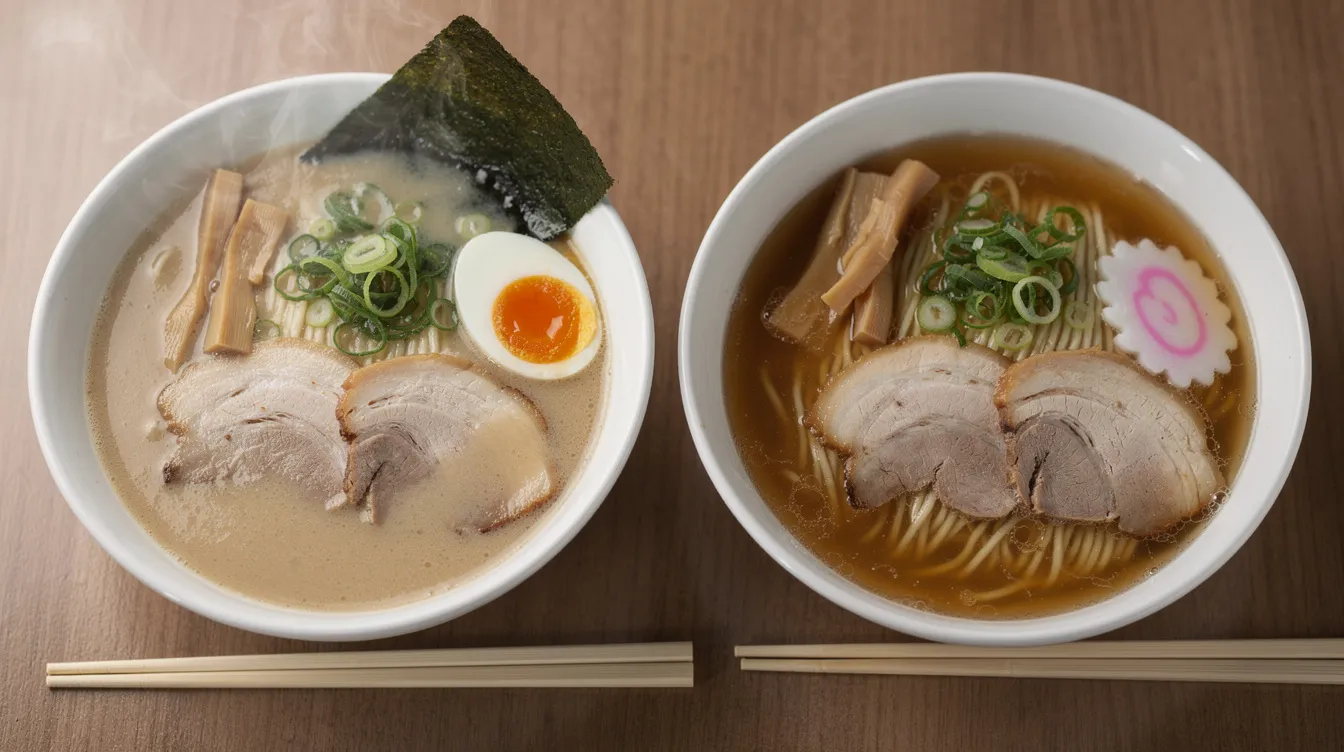
The finished broth appears milky-white to beige, with a glossy fat crown on the surface. It feels thick but remains drinkable, leaving lips sticky from hydrolyzed collagen. The flavor is deeply meaty—savory without necessarily being salty, since salt levels depend on the tare (seasoning base) added separately.
Standard toppings include thinly sliced chashu pork belly with melt-in-mouth fat layers, ajitsuke tamago (marinated soft-boiled eggs with jammy yolks), finely chopped negi green onion for brightness, rehydrated kikurage wood ear mushrooms for textural crunch, toasted nori sheets, sesame seeds, and optional finishing touches like black garlic oil or spicy chili paste.
The noodles are distinctly Hakata-style: ultra-thin, straight wheat strands with a springy bite from kansui (alkaline solution). Most ramen ya offer firmness choices—harigane (extra firm), barikata (firm), futsu (normal), and yawamen (soft)—with cooking times as brief as 30 to 60 seconds.
Restaurant tonkotsu involves fresh 12 to 18 hour broths with nuanced depth, while home versions increasingly rely on concentrated soup base products or pressure-cooked shortcuts that approximate 70-80% of the emulsion quality.
How Tonkotsu Ramen Broth Is Made (Traditional vs Home Methods)
This section provides a process overview rather than a full recipe—walking through the logic of why tonkotsu broth requires such lengthy preparation.
Bone Selection and Ratios
To make tonkotsu ramen properly, bone selection matters significantly. Pig’s trotters provide maximum collagen for gelatinous body (typically 60-70% of the bone mix), while neck bones and femurs contribute marrow richness and fat (30-40%). Some cooks add chopped fat or a chicken carcass for subtle umami rounding.
Traditional stovetop methods require 12 to 18 hours of continuous cooking in a large stock pot. Pressure cooking with an instant pot or similar device cuts this to 1.5 to 3 hours through high pressure extraction, though some argue the result is slightly less milky than a vigorous stovetop pot boil.
The Blanching Step
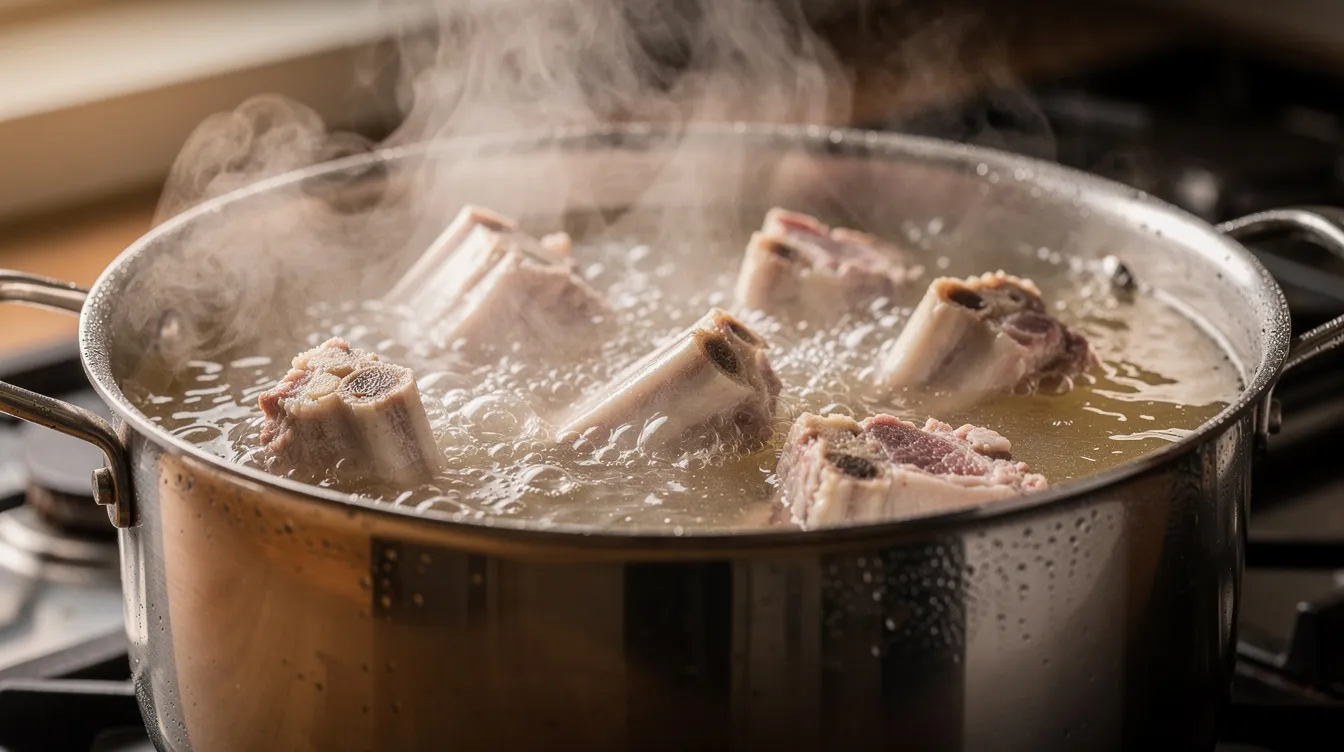
Before the main cook, bones must be cleaned. Bring to a boil in cold water, let the pot boil for 5 to 10 minutes, then discard the liquid. Rinse bones under ice water and scrub away any coagulated blood and impurities. Cleaning the bones before cooking is essential to achieve a clear and flavorful tonkotsu broth, as it removes impurities that can cloud the soup. This step prevents fishy off-notes and ensures a cleaner-tasting yet still fully opaque broth.
Rolling Boil Technique
Unlike clear Western stocks simmered at low heat (80-90°C), tonkotsu demands aggressive heat. Keep the liquid at a rolling boil with the lid ajar or partially cover the pot to maintain vigorous agitation. This constant motion breaks fat into micron-sized droplets while denaturing proteins, forcing them into suspension rather than rising as scum. The tonkotsu broth should be skimmed of impurities during cooking to achieve a clear and rich flavor. Stir the broth occasionally during cooking to help emulsify the fat and dissolve seasonings, ensuring a balanced and integrated flavor.
Aromatics follow a specific timing schedule. Add charred onion and ginger in the first 2-3 hours for sweetness. Introduce garlic halved mid-simmer for mellow roast notes. Optional kombu or dried bonito flakes can go in during the final hour to deepen umami without bitterness—just don’t overdo them.
The traditional method of making tonkotsu broth involves boiling the pork bones vigorously for 6 to 12 hours to achieve a rich, milky soup.
Traditional vs Pressure Cooker
Pressure cookers extract collagen faster through 120-130°C temperatures under high pressure, yielding rich flavor in approximately 1.5 to 3 hours. The trade-off: slightly less aerated texture compared to long stovetop boils due to reduced surface agitation. Serious hobbyists sometimes stack multiple pressure cooker cycles for added depth.
Most home cooks today work with smaller batches, use pressure cookers, or rely on pre-made soup concentrates. Weekend warriors might attempt 10 to 12 hour stovetop sessions, freezing the results in 500-700ml portions for future use.
Core Components of a Tonkotsu Ramen Bowl
Beyond the broth, four components define a proper tonkotsu bowl: noodles, tare, toppings, and aromatic oils—just as core building blocks shape popular Korean street food dishes built around bold flavor and texture. Understanding each helps when reviewing both Japanese and Korean creamy ramen products, since changing any element significantly alters the eating experience.
Noodles
Hakata-style ramen noodles are thin (1-1.5mm diameter), straight, and made from high-gluten wheat flour with kansui for elastic bounce. Cooking time runs just 30 to 60 seconds in boiling water. When serving cooked ramen noodles, timing matters—they continue absorbing broth, which is why many shops ask about firmness preference before cooking.
|
Firmness Level |
Japanese Term |
Texture Description |
|---|---|---|
|
Extra Firm |
Harigane |
Wire-like, barely cooked center |
|
Firm |
Barikata |
Bouncy with slight resistance |
|
Normal |
Futsu |
Balanced, soft but not mushy |
|
Soft |
Yawamen |
Tender throughout |
Tare (Seasoning Base)
Tare is the concentrated seasoning placed in the medium bowl before broth is ladled in. Classic tonkotsu uses either shio (salt based) or shoyu (soy sauce forward) tare. This controls saltiness and core flavor, meaning the same creamy tonkotsu broth can taste different shop to shop depending on tare formulation. Adding more salt or soy sauce adjusts the profile to personal preference.
Chashu Pork
Rolled pork belly gets braised low-and-slow in a mixture of soy sauce, sake, mirin, sugar, and ginger until tender. The standard ratio runs approximately 80:10:5:5 for soy-sake-mirin-sugar. Sliced into thin slices (3-5mm), quality chashu offers a 50/50 balance of lean meat and melting fat.
Ramen Eggs
Ajitsuke tamago starts with a gentle boil—aim for 6.5 to 7 minutes for a 65°C jammy yolk center. Transfer immediately to ice water, peel, then marinate 4 to 12 hours in a shoyu-dashi-mirin mix (roughly 3:1:1 ratio). The result: glossy shells and savory creaminess that complement the rich broth.
Finishing Oils and Toppings
Black garlic oil (mayu) adds smoky bitterness when drizzled atop the bowl—about 10g per serving. Chili oil provides heat for those wanting spice. Standard garnishes include green onion slivers for sharpness, wood ear mushrooms cut crosswise for Q-bounce texture, nori for sea notes, sesame seeds for toasted aroma, and pickled ginger for palate cleansing.
The Difference Between Tonkotsu Ramen and Other Ramen Types
The key distinction: tonkotsu refers to the broth style (emulsified pork bone), while terms like shoyu, miso, and shio describe seasoning methods applicable to various stocks. Tonkotsu’s defining traits are its cloudy opacity and collagen-rich mouthfeel.
Tonkotsu vs Shoyu Ramen
Shoyu ramen typically uses a relatively clear chicken or pork stock simmered 1-2 hours and seasoned primarily with soy sauce. The broth runs lighter—around 2-5% solids versus tonkotsu’s 10-15%—with a cleaner, less sticky finish. Shoyu delivers soy-forward umami, while tonkotsu prioritizes pure pork richness.
Tonkotsu vs Miso Ramen
Miso ramen builds on chicken or pork stock thickened with 20-30% fermented bean paste slurry. Originating in Hokkaido, it offers heartier, earthier warmth compared to tonkotsu’s pork-pure profile. The flavor comes from fermentation rather than bone extraction.
Tonkotsu vs Shio Ramen
Shio ramen uses a light style approach: minimal salt (0.5-1%) on delicate chicken, seafood, or clean pork stock. Tokyo-style shio emphasizes sip-ability and clarity. Tonkotsu’s heavy pork umami and sticky texture contrast sharply with shio’s crisp, refreshing finish.
Tonkotsu vs Korean Creamy Ramens
Korean “tonkotsu-style” instant ramens often simulate creaminess through milk powder and added fats rather than true bone emulsification. Products labeled “paitan” or “creamy pork” offer similar richness but with a dairy-adjacent texture. Traditional tonkotsu relies entirely on natural pork extraction. Both can satisfy cravings for creamy ramen, but the underlying techniques differ substantially, much like the contrast between Japanese comfort bowls and Korean soul food favorites like jjigae and ramyun.
Tonkotsu vs Tonkatsu
Worth repeating: tonkatsu is a panko-crusted pork loin fried at 170°C for 3-4 minutes, served with rice. It has no connection to tonkotsu ramen broth beyond sharing pork as an ingredient.
Regional Variants
Even within tonkotsu, regional differences matter. Kurume (the birthplace) tends toward thicker, more intense broths—some shops practice “yobimodoshi,” reboiling broth across multiple days for fermented depth. Hakata in Fukuoka City favors lighter, thinner-noodle punchy bowls. Tokyo-style tonkotsu-shoyu hybrids blend the creamy pork base with darker, soy-forward seasoning. Fattier versions from certain regions lean into rich back fat additions.
For Korean ramen fans, the first encounter with tonkotsu often comes through instant noodles labeled “Japanese-style pork bone” sold in Korean convenience stores, sitting right beside many of the viral Korean noodle trends that dominate social feeds. These bridge the gap but differ from shop-made broth in both depth and texture, similar to how mayak-style ramyun hacks transform simple packets without fully replicating restaurant dishes.
Best Tonkotsu Ramen Options: From Ramen Shops to Instant Noodles
Finding quality tonkotsu depends on your priorities—authentic shop experiences, accessible chains, or convenient at-home options. Here’s what to look for and where to find it.
Iconic Japanese Regions
Traveling ramen fans often prioritize Hakata (Fukuoka City) for benchmark tonkotsu. The yatai stalls clustered around Nakasu have served quick, punchy bowls since the 1950s, complete with kaedama (noodle refill) culture. Kurume, the dish’s birthplace, offers more old-school, intense versions. Tokyo provides tonkotsu-shoyu hybrids with darker, soy-forward broths for those preferring more complexity.
Global Chains
Ichiran (founded 1960 in Hakata) operates solo-booth ramen experiences with customizable firmness and toppings across 500+ locations worldwide. Ippudo (1985 Hakata origin) emphasizes richer chashu and expanded menus, with heavy presence in the US and Europe. Both deliver consistent 85-90% authenticity compared to independent Fukuoka shops—minus the intimate yatai atmosphere.
What Makes the Best Tonkotsu
Quality indicators include:
- Deep pork flavor without bitternes
- Milky but not grainy broth texture
- Balanced saltiness (not overwhelmingly salty)
- Noodles cooked to proper firmness
- Toppings that complement rather than mask the broth
At-Home Concentrated Bases and Kits
Amazon and Asian online markets stock tonkotsu soup base concentrates (like Hakata Issou or Marutai pouches) that dilute approximately 1:5 with hot water. These deliver roughly 80% of authentic emulsion quality but run saltier for shelf stability—use only 70% of the packet and taste before adding more. Frozen ramen kits with fresh noodles and pre-made chashu offer closer approximations with about 90 minutes total prep.
Instant Tonkotsu-Style Ramen
Several options work well for convenience seekers:
- Japanese brands like Marutai Hakata offer packet ramen with separate oil sachets, achieving the closest milky emulation in the instant category. Ichiran sells freeze-dried versions with customizable spice levels.
- Korean creamy ramens labeled “tonkotsu-style” or “paitan” (Ottogi, Samyang) tend toward milkier, spicier profiles compatible with kimchi additions—different from traditional Japanese subtlety but satisfying for spice-tolerant buyers, especially when you factor in fun collab releases like the K-pop Demon Hunter Nongshim ramen at Costco.
- Fusion approach: Use a quality tonkotsu instant as a base, then layer Korean toppings like kimchi, marinated eggs, or a spoon of gochujang for a hybrid bowl. Some readers find this the best entry point when transitioning from spicy Korean ramyun to richer pork-based styles.
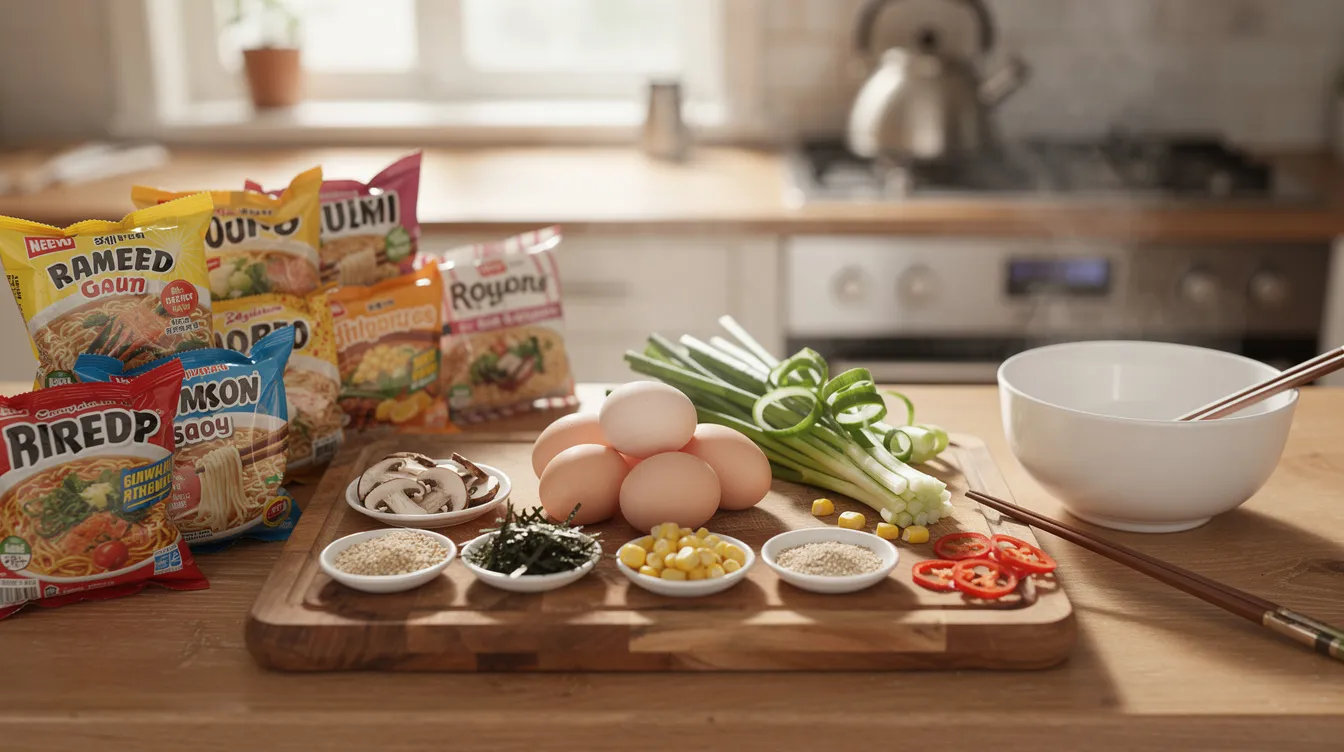
For North American and European readers, shelf-stable instant noodles, frozen ramen kits, and concentrate pouches offer the most accessible options. Upgrade with fresh toppings from any supermarket—soft-boiled eggs, sliced green onion, leftover roast pork—for significant improvement over base products.
Slurp First Crunch Later regularly publishes structured comparisons between creamy Korean ramens and tonkotsu-inspired instant options, helping readers match products to their taste and spice tolerance.
How to Enjoy Tonkotsu Ramen at Home (Without a 12-Hour Pot)
Not everyone can dedicate a full day to boiling bones. Here are practical approaches ranked by effort level.
Weekend DIY Broth
For those wanting authentic results, a pressure cooker method using an instant pot at high pressure for 90 minutes across 2 cycles yields roughly 4 liters from 3-4kg bones. Alternatively, simmer in a dutch oven or stock pot for 10-12 hours on medium heat, stirring occasionally. Strain through a fine mesh strainer (or fine mesh colander), then freeze in 500ml portions. Dilute approximately 1:5 with hot water when ready to serve.
Semi-Homemade Approach
Start with store-bought tonkotsu soup base or frozen ramen kits. Upgrade with fresh Hakata-style noodles boiled separately for 45 seconds barikata, jammy eggs (6.5-minute boil, ice bath, peel carefully), sautéed wood ear mushrooms in a non stick skillet, and a drizzle of black garlic oil. This method balances convenience with quality.
Pure Instant Ramen
Choose a quality tonkotsu-flavored packet with separate tare and oil sachets. Follow package instructions but cook noodles separately to avoid mushiness—combine only before eating. Taste the broth before adding all the ingredients from the seasoning packet; many run salty. Top with sliced green onions, a soft-boiled egg, leftover pork, or even a spoon of Korean chili paste for fusion flavor.
A few tricks improve any home bowl: aim for 6-7 minute eggs with jammy centers at room temperature before cooking. Bring broth to a boil separately from noodles. Let room temp ingredients warm slightly before adding to hot soup. Review recipe timing each attempt to dial in personal preferences.
Storage Notes
Homemade broth keeps refrigerated for 3 days (skim congealed fat daily) or frozen for 1-2 months. Noodles should always cook fresh right before serving—pre-cooked noodles turn mushy quickly.
Pairing Suggestions
Simple sides create an easy ramen night: Japanese-style cucumber sunomono (vinegar-sesame dressed), Korean kimchi for crunch and acidity, or a Korean fusion upgrade like rabokki with chewy rice cakes and ramyun, plus store-bought gyoza pan-fried at medium heat until crispy. These complement without competing.
Storage and Reheating: Keeping Tonkotsu Ramen Delicious
Preserving the rich flavor and creamy texture of your tonkotsu ramen broth is all about proper storage and gentle reheating. After you make tonkotsu ramen, let the broth cool to room temperature before transferring it to airtight containers. This step is crucial for food safety and helps maintain the integrity of the creamy tonkotsu broth. Store the broth in the refrigerator for up to 3 days, or freeze it for up to a month—perfect for enjoying a comforting bowl of ramen whenever the craving strikes.
When you’re ready to reheat, pour the tonkotsu broth into a large stock pot or dutch oven and warm it over low heat, stirring occasionally. Avoid bringing the broth to a rapid boil, as high heat can break the delicate emulsion and affect the soup’s signature silky texture. If you’re short on time, an Instant Pot set to “soup” mode can reheat the broth quickly and evenly without scorching. Always use a fine mesh strainer when pouring the broth to ensure a smooth, restaurant-quality finish.
For cooked ramen noodles, a quick dip in hot water for a few seconds will revive their springy bite before adding them to your steaming bowl of tonkotsu. This simple trick keeps the noodles from turning mushy and helps them soak up the savory flavor of the broth. Top your ramen with thin slices of pork belly, a sprinkle of green onion, and a drizzle of black garlic oil for extra depth. A pinch of dried bonito flakes or a splash of soy sauce can also enhance the taste, bringing your leftovers back to life.
The tools you use matter: a large stock pot or dutch oven is ideal for simmering pork bones and extracting maximum flavor, while a fine mesh strainer ensures your tonkotsu ramen broth stays creamy and free of grit. These are the same techniques perfected in ramen shops across Fukuoka Prefecture, where attention to detail transforms simple ingredients—pork bones, garlic, onion, and more—into a bowl of soup that’s both comforting and complex.
Whether you’re storing a big batch for future meals or reheating a single serving, these tips will help you enjoy every last drop of your homemade tonkotsu. With a little care and the right approach, you can savor the authentic taste and texture of ramen ya favorites right at home—no matter how busy your schedule.
Cultural Context: Tonkotsu Ramen in Everyday Eating
In Kyushu, tonkotsu functions as proletarian comfort food—late-night fuel slurped at standing counters by laborers seeking quick, affordable sustenance. A typical meal takes 10-15 minutes. Loud slurping signals enjoyment rather than rudeness. The kaedama system (ordering additional noodles into remaining broth for ¥200-300) extends value without wasting soup.
Tonkotsu ramen originated in Fukuoka Prefecture on the island of Kyushu in western Japan, where it quickly became a beloved local specialty. The term 'tonkotsu' translates to 'pork bones' in Japanese, with 'ton' meaning pork and 'kotsu' meaning bones, highlighting the dish’s defining ingredient and broth style.
Customization culture runs deep. The firmness dial exists because thin noodles soften quickly in hot broth—choosing harigane or barikata prevents the dish from turning mushy during eating. This reflects the speed-eating ethos of Hakata yatai culture.
The preparation of tonkotsu ramen is considered an art form, with chefs dedicating years to perfecting their broth and techniques, carefully balancing long boiling times, bone selection, and seasoning to achieve the signature creamy, rich tonkotsu broth.
Tonkotsu spread globally during the 1990s-2010s ramen boom, spawning specialized shops in Seoul, Los Angeles, New York, London, and Sydney. Korean diners particularly embrace blending tonkotsu with spicier additions like kimchi or chili oil—echoing the kind words many Korean food lovers have for creamy, warming broths.
Modern variations include spicy tonkotsu (rayu-infused), black garlic tonkotsu, and shio gyokai style tonkotsu enriched with dried seafood, echoing how viral K-snacks and street bites keep pushing flavor boundaries in Korean food culture. These experiments mirror the same creative spirit driving contemporary Korean ramen trends.
Understanding tonkotsu’s background—pork bones, extended boiling, Fukuoka roots—helps readers appreciate both authentic bowls in Japan and the instant or hybrid versions available online. The dish that started as fuel for fish market laborers in Kurume now represents one of Japanese cuisine’s most successful global exports.
Conclusion: Choosing the Right Tonkotsu Ramen for You
Tonkotsu ramen embodies Fukuoka Prefecture’s 1937 pork bone legacy: a milky, collagen-rich broth achieved through 10-18 hours of emulsification, paired with thin springy noodles and intense umami depth. The style defines itself by broth construction rather than seasoning—distinguishing it from shoyu, miso, and shio categories that describe flavor additions applicable to various stocks.
The best tonkotsu options span landmark shops in Fukuoka and Kurume, global chains like Ichiran and Ippudo, frozen kits with fresh components, soup concentrates from Marutai or Hakata Issou, and instant tonkotsu-style ramens available through Amazon and Asian markets.
For travelers: Prioritize at least one Hakata-style tonkotsu bowl in Fukuoka or at a reputable ramen shop abroad—serious eats destinations often highlight these experiences.
For home cooks: Try a pressure-cooker pork bone broth weekend project in a large stock pot or dutch oven, then freeze portions for future bowls.
For convenience seekers: Look for tonkotsu-labeled instant or soup base products with separate oil packets, then upgrade with jammy eggs, sliced green onion, and quality toppings.
Explore more Slurp First Crunch Later guides on Korean instant ramens and creamy ramen hybrids to navigate both Japanese tonkotsu and Korean-style options with confidence when shopping online. The main styles differ in technique, but both deliver the comforting richness that makes creamy ramen universally appealing.
